A power bank that drops quickly feels disappointing. The problem may be real, but it is often a mix of capacity, conversion loss, and device demand.
A power bank may drain fast because rated mAh is measured at the internal battery voltage, not phone output voltage. Fast charging, large phones, tablets, heat, old cells, poor cables, standby drain, and low-quality battery cells can also reduce usable runtime.
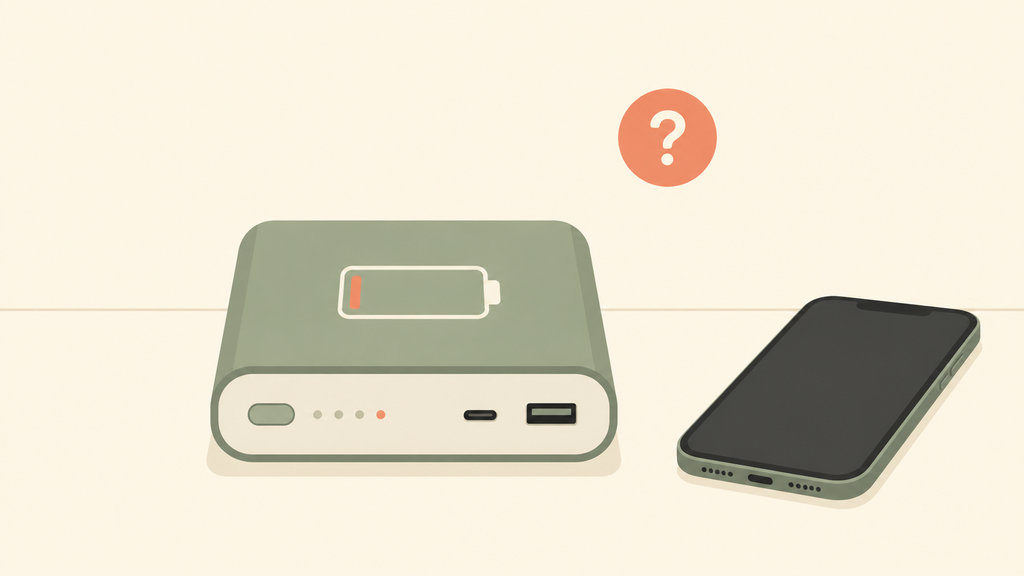
Many customers ask this after buying a power bank that looks powerful on paper. The answer matters for users, but it matters even more for brands that must avoid disappointed reviews.
Why Is Rated Capacity Different From Usable Capacity?
The number on the package looks simple, but power bank capacity is not the same as phone battery percentage. This is where many expectations break.
Rated power bank capacity is usually based on the internal battery cells, often around 3.7V. Phones charge at higher USB output voltages, and conversion creates loss, so usable output capacity is always lower than the printed mAh number.
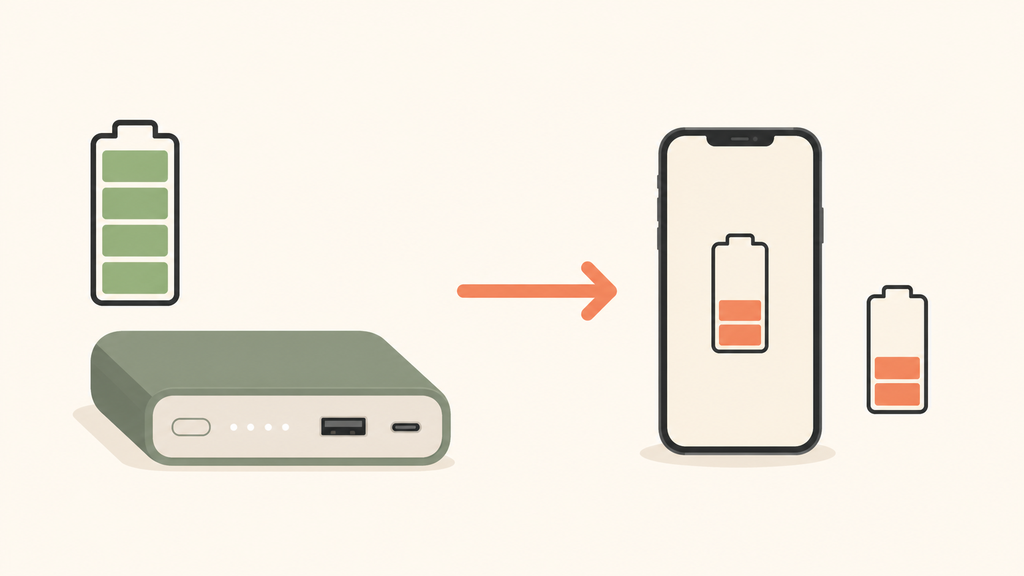
Most power banks use lithium-ion or lithium-polymer cells. The rated mAh is usually based on the cell voltage, not the 5V, 9V, or higher voltage that comes out of the USB port. When the power bank boosts voltage to charge a phone, some energy becomes heat. That conversion loss is normal.
This is why a 10,000mAh power bank does not fully deliver 10,000mAh into a phone. Users may expect two full charges for a 5,000mAh phone, but the real result depends on conversion efficiency, cable loss, phone charging efficiency, phone battery health, screen use, and background apps.
USB Power Delivery allows compatible devices to negotiate power levels for faster and more flexible charging.1 That is useful, but faster charging can also increase conversion work and heat. A power bank that charges a phone quickly may not feel as efficient as a slow low-power output, especially under heavy load.
| Capacity Term | What It Means | Why Users Get Confused |
|---|---|---|
| Cell capacity | Battery cells inside the power bank | Usually printed as mAh |
| Rated energy | Capacity expressed as Wh | Better for comparison |
| USB output | Energy after voltage conversion | Always lower than cell rating |
| Phone received energy | Energy after cable and phone losses | Lower again |
| Real charges | What users actually experience | Depends on device behavior |
In manufacturing, I prefer to discuss watt-hours as well as mAh. Watt-hours make comparison clearer because they include voltage. Airline rules also use watt-hours for lithium batteries, which is one reason power banks need clear capacity labeling for travel markets.2
Still, consumers search for mAh, so brands cannot ignore it. The better approach is to show mAh honestly and explain expected charging performance in plain language. A product page might say the capacity is based on internal cells and actual output varies by device and conditions.
I often see returns caused by expectation mismatch, not product failure. A customer buys a compact 10,000mAh model, charges a large phone while using navigation, and says the power bank drains too fast. The product may be working normally, but the promise was not explained well.
For buyers, the key is to test real output energy, not only check cell labels. A supplier can show impressive mAh numbers, but serious buyers should ask for discharge test data at the advertised output levels.
What Habits Make A Power Bank Drain Faster?
Sometimes the power bank is not the main problem. The connected device may be consuming power almost as fast as it receives it.
A power bank drains faster when charging large devices, fast charging at high wattage, using the phone while charging, charging in heat, using weak cables, powering multiple devices, or leaving low-efficiency accessories connected.
Apple explains that batteries and devices work best within recommended temperature ranges, and heat can affect battery performance and long-term capacity.3 That same practical battery principle matters for power banks. Heat increases stress and can reduce efficiency.
Large phones, tablets, handheld game devices, and laptops demand much more energy than small phones. A power bank that feels excellent with one phone may feel weak with a tablet. If the device is also running video, GPS, gaming, hotspot, or high screen brightness, the power bank drains faster because it is powering both battery charging and active use.
| User Situation | Why Drain Feels Fast | Better Habit |
|---|---|---|
| Phone screen stays on | Device consumes power while charging | Lock the screen when possible |
| Gaming while charging | High load and heat | Pause heavy use |
| Fast charging | Higher conversion load | Use when speed matters |
| Charging two devices | Output is shared | Expect shorter runtime |
| Hot environment | Efficiency and battery stress worsen | Keep it in open air |
| Long or poor cable | More voltage drop | Use a better cable |
| Old power bank | Cell capacity has declined | Replace if runtime drops sharply |
Standby drain is another small but real factor. Some power banks keep low-power circuits active to detect devices or support features such as digital displays, wireless charging, or low-current output modes. This drain is usually modest, but over days or weeks it can matter.
Wireless power banks can also feel less efficient. Wireless charging is convenient, but alignment and heat affect energy transfer. If the phone is misaligned, in a thick case, or warm, more energy can be lost before it reaches the battery.
In customer support, I would ask what device is being charged, whether the phone is used during charging, whether fast charging is active, and whether the power bank gets warm. These questions often explain the issue quickly.
For brands, the lesson is to avoid unrealistic charge-count claims. A clean claim like “charges most smartphones about X times under test conditions” is better than a vague promise. If the target customer owns large phones, tablets, or travel devices, test those devices directly.
Users do not experience mAh. They experience whether the product lasts through a commute, flight, trade show, hike, or emergency. That is the standard brands should design around.
How Should Buyers Test Real Power Bank Runtime?
A sample that looks good is not enough. Runtime must be measured under the same conditions customers will actually use.
Buyers should test power bank runtime by measuring output energy, charging common devices, checking heat, testing different cables, testing fast and standard output modes, and comparing results after aging cycles. Real runtime claims should come from real test conditions.
UL Research Institutes advises users to follow manufacturer instructions for lithium-ion battery products and stop using products that overheat, swell, leak, or smell unusual.4 For brands, that means runtime testing and safety testing should be connected. A product that drains quickly and runs hot may create both performance complaints and safety concerns.
I usually want buyers to test three things: output energy, user scenario, and aging behavior. Output energy tells you what the power bank can deliver through its ports. User scenario testing shows what customers will actually see. Aging behavior shows whether the product stays reliable after cycles.
| Test Area | What To Measure | Why It Matters |
|---|---|---|
| Output energy | Wh delivered through USB | Confirms real capacity |
| Charging time | Time to refill power bank | Sets user expectations |
| Device charges | Common phone and tablet tests | Makes claims realistic |
| Heat | Shell and connector temperature | Reduces complaint risk |
| Cable effect | Included cable versus other cables | Finds weak cable issues |
| Multi-device output | Runtime with two devices | Matches travel use |
| Aging cycles | Capacity after repeated use | Shows long-term quality |
For private-label buyers, I would also check cell supplier consistency. Two samples can look identical outside but use different cell grades inside. Poor cell consistency leads to uneven runtime, higher return rates, and harder quality control.
Another important point is capacity labeling. Power banks sold for travel should clearly show watt-hours when relevant because airline and transport guidance often uses Wh limits.2 A buyer who ignores labeling may face customer confusion or logistics friction later.
Documentation should explain usable capacity carefully. Do not hide conversion loss. Educated buyers and users appreciate clarity. A customer who understands that output is lower than cell rating is less likely to accuse the product of being fake.
EverGreat often helps customers turn vague capacity ideas into practical product definitions: target device, expected charges, charging speed, included cable, thermal limit, certification path, and packaging language. That planning helps brands avoid the classic problem of selling a big number that does not match real use.
The best power bank is not the one with the loudest mAh number. It is the one with honest capacity, stable output, good cells, clear documentation, and runtime that matches the buyer’s target user.
Conclusion
A power bank drains fast when expectations, output loss, device demand, heat, cable quality, and cell aging are not understood or tested properly.
-
USB Implementers Forum, USB Charger (USB Power Delivery). ↩
-
Federal Aviation Administration, PackSafe – Lithium Batteries. ↩ ↩
-
Apple, Batteries – Maximizing Performance. ↩
-
UL Research Institutes, Lithium-Ion Battery Safety. ↩