A USB-C cable can look powerful on the package, but the wrong cable can still slow charging, limit laptop power, or confuse customers.
You need a 240W USB-C cable only if your charger and device can use USB Power Delivery Extended Power Range. For most phones, earbuds, and basic tablets, a 60W or 100W cable is usually enough. For high-power laptops, docks, and premium bundles, 240W can be worth it.
The difficult part is not the number itself. It is knowing when 240W is useful, when it is only marketing, and how cable quality affects real charging performance. I have seen buyers pay for higher cable ratings without checking the charger, device, connector design, or certification plan.
What Does A 240W USB-C Cable Actually Mean?
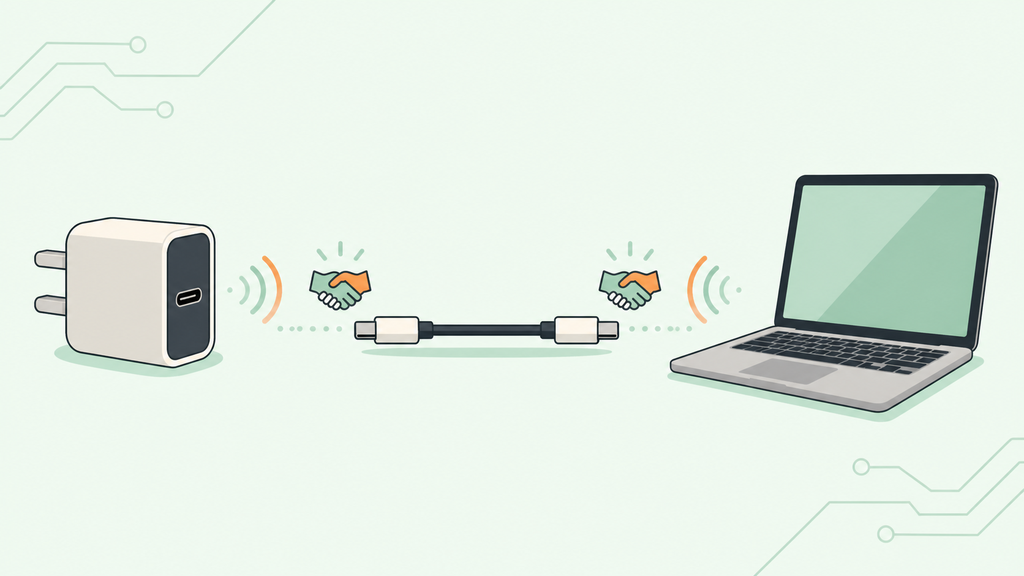
A 240W label sounds simple, but it depends on power negotiation between the charger, cable, and device.
A 240W USB-C cable is designed to support up to 48V and 5A under USB Power Delivery Extended Power Range. The connected charger and device must also support the needed power profile, or the cable will not make charging faster by itself.
USB-C is only the connector shape. It does not automatically mean every cable supports the same power, data speed, or video function. A basic USB-C cable may charge a phone well but fail to support high-power laptop charging. Another cable may support high power but only basic data transfer. This is where many customer complaints begin.
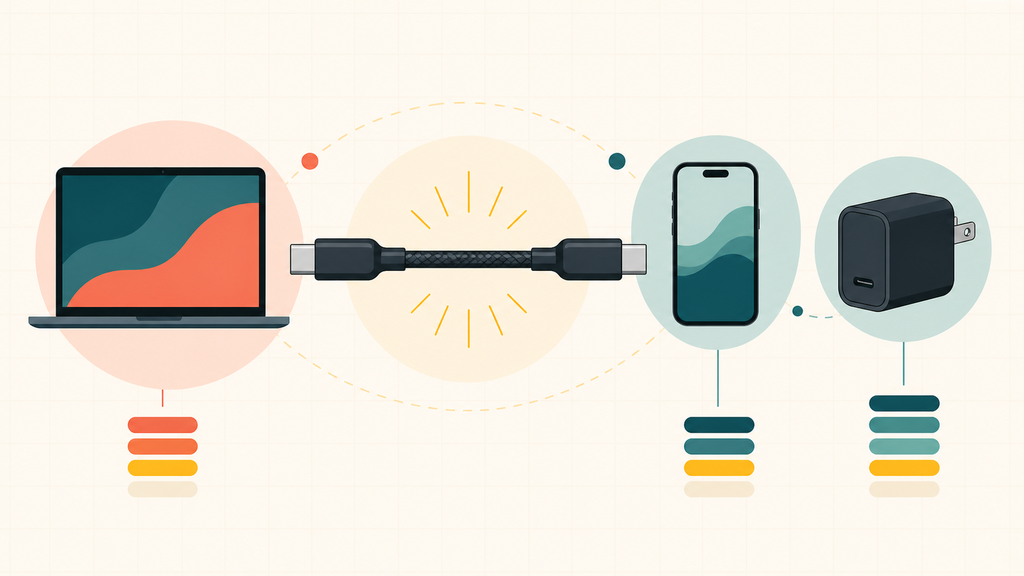
USB Power Delivery is the charging protocol that allows compatible devices to negotiate voltage and current instead of using one fixed output.1 With Extended Power Range, the USB-IF describes support for up to 240W through higher voltage levels.2 In plain English, the cable is part of a team. The charger offers power. The device requests power. The cable must safely support the current and voltage level. If one part does not support the required mode, charging falls back.
For buyers, the first practical point is that 240W is not a magic speed upgrade. If a phone accepts 27W, a 240W cable will not turn it into a 100W phone. If a tablet accepts 45W, the extra cable rating is unused. If a laptop needs 140W or more, the cable rating becomes important because a lower-rated cable may limit the system.
| Cable rating | Common use case | Buyer note |
|---|---|---|
| 60W | Phones, earbuds, small tablets | Often enough for basic charging kits |
| 100W | Many laptops, tablets, power banks | Strong middle ground for premium bundles |
| 240W | High-power laptops, docks, future-ready kits | Useful only when the ecosystem supports it |
I often explain it this way to customers: the cable does not push power into a device. The device and charger agree on a safe level. A better cable expands the possible ceiling, but it does not override the device design.
This matters in manufacturing because the printed wattage becomes a promise. If a brand sells a 240W cable, customers may expect it to work with demanding laptops, fast chargers, monitors, and docks. The product then needs stronger quality control than a simple phone cable. Connector plating, wire gauge, e-marker performance, strain relief, heat rise, and packaging claims all become part of the real product.
When Is A 240W Cable Worth Buying Or Bundling?
The best reason to choose 240W is not because the number looks better. It is because the customer use case needs it.
A 240W USB-C cable is worth buying or bundling when the target users charge high-power laptops, use USB-C docking stations, buy premium GaN chargers, or want one cable that can cover future devices. It is less useful for phone-only charging.
The most obvious use case is laptop charging. Some modern laptops use more power than a phone charger can provide, especially when the battery is low and the computer is under load. A 240W-capable cable gives more headroom when paired with a compatible charger and device. Apple, for example, sells a 240W USB-C Charge Cable for charging and syncing USB-C devices, while also noting that fast charging depends on pairing the cable with a compatible USB-C power adapter.3
Another good use case is a premium charger bundle. If a brand sells a high-wattage GaN wall charger, a weak cable can damage the customer experience. The charger may be capable, but the customer may blame the charger when the cable limits performance. For premium bundles, the cable should match the product promise.
240W can also make sense for USB-C product ecosystems. A travel charging kit may include a wall charger, power bank, cable, and storage pouch. In that case, the cable becomes a trust signal. Buyers want fewer compatibility questions. A higher-rated cable can reduce confusion if the price and quality are controlled.
But 240W is not always the right answer. Promotional product buyers may not need it. A giveaway cable for phones may be judged more on cost, logo printing, packaging, and basic reliability. A 240W cable may raise the bill of materials without improving the end user’s actual experience.
| Buyer scenario | Is 240W useful? | Practical decision |
|---|---|---|
| Phone-only charging cable | Usually no | Use reliable 60W or 100W |
| Laptop cable for retail | Often yes | Check charger and laptop compatibility |
| Premium GaN charger bundle | Yes | Match cable rating to charger claim |
| Corporate gift set | Sometimes | Choose based on audience and budget |
| Low-cost marketplace cable | Risky | Avoid overclaiming if QC is weak |
In my experience, the most balanced decision for many brands is a two-tier line. Use a 60W or 100W cable for basic phone accessories. Use 240W for premium laptop, travel, or GaN charger bundles. This gives the sales team a clean story and prevents the entry-level product from becoming too expensive.
There is also a margin point. A higher-rated cable can support premium pricing, but only if customers understand why it matters. If the package says only "240W" and nothing else, many buyers will not know what they are paying for. Better packaging explains the compatible use cases: laptop charging, high-wattage chargers, USB-C PD, durable connector design, and safe daily use.
What Should Brands Check Before Sourcing 240W USB-C Cables?
A 240W cable should be treated as an electrical product, not just a printed accessory.
Brands should check e-marker support, wire structure, connector quality, heat rise, bend testing, charging compatibility, data function, labeling accuracy, and certification evidence before sourcing 240W USB-C cables. The supplier should prove the cable performs safely, not just print 240W on the jacket.
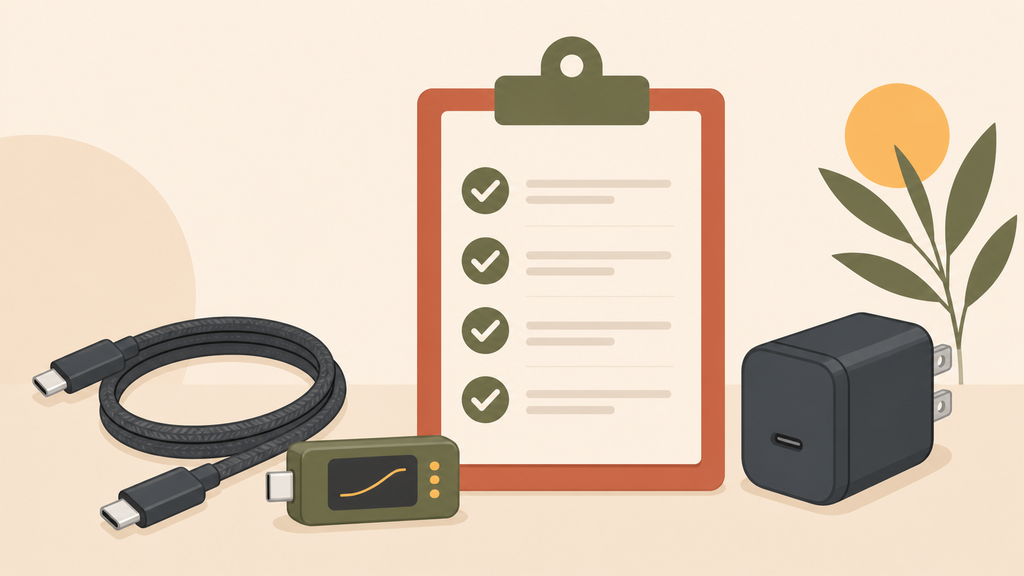
The first checkpoint is the e-marker. Higher-power USB-C cables need internal identification so compatible chargers and devices can understand what the cable supports. If a supplier cannot explain the e-marker, the claimed wattage should be questioned. Buyers should ask for clear specifications, test reports, and sample testing before mass production.
The second checkpoint is heat. High power means the cable must handle current without unsafe temperature rise. A cable may work for a short demo and still perform poorly during long charging. In sample approval, I prefer testing with realistic loads, not only checking whether a phone icon says fast charging. A laptop charging test under workload is more useful than a five-minute phone test.
The third checkpoint is mechanical life. Customers bend cables near the connector every day. A premium cable needs a strong strain relief design, good outer jacket material, and stable connector assembly. A cable that passes electrical testing but fails after one month in a backpack will still create returns.
Data function should also be defined. Many customers assume a USB-C cable can do everything: charging, data transfer, video, and docking. That is not true. USB-C cables can vary widely in data capability. Intel’s Thunderbolt information, for example, separates power delivery support from high-speed data and display use cases.4 If a cable is only for charging, the product page and packaging should say so clearly.
| Sourcing checkpoint | Why it matters | What to ask the supplier |
|---|---|---|
| E-marker | Enables correct power recognition | What chip is used and what rating is encoded? |
| Wire gauge | Affects current handling | What structure supports 5A charging? |
| Heat rise | Protects user safety | Can you provide load test results? |
| Connector build | Affects long-term reliability | What plating and strain relief are used? |
| Data speed | Prevents customer confusion | Is this charge-only, USB 2.0, or higher speed? |
| Labeling | Reduces compliance and return risk | Are package claims matched to test evidence? |
For private-label projects, I also suggest checking the whole product story. If the cable is bundled with a 140W or 200W charger, the cable claim should match the charger claim. If the cable is sold alone, the listing should explain compatible device types instead of relying only on a large wattage number.
EverGreat often helps buyers compare these tradeoffs before confirming a cable. A startup brand may want the strongest specification, but the better decision may be a reliable 100W cable if most customers use phones and tablets. A laptop accessory brand may need 240W because its users will test the product with high-wattage chargers on day one.
The safest sourcing habit is simple: define the use case before choosing the rating. Then test the cable as customers will use it. The supplier should not only answer "Can you make 240W?" The better question is "Can this cable support our product promise consistently, safely, and with documentation?"
Conclusion
A 240W USB-C cable is valuable for high-power USB-C ecosystems, but most phone users do not need it. Match the cable rating to the real use case.
-
USB Implementers Forum, USB Charger (USB Power Delivery). ↩
-
USB Implementers Forum, USB Power Delivery and USB-C Extended Power Range guidance. ↩
-
Apple, 240W USB-C Charge Cable (2 m). ↩
-
Intel, Thunderbolt Technology Overview. ↩