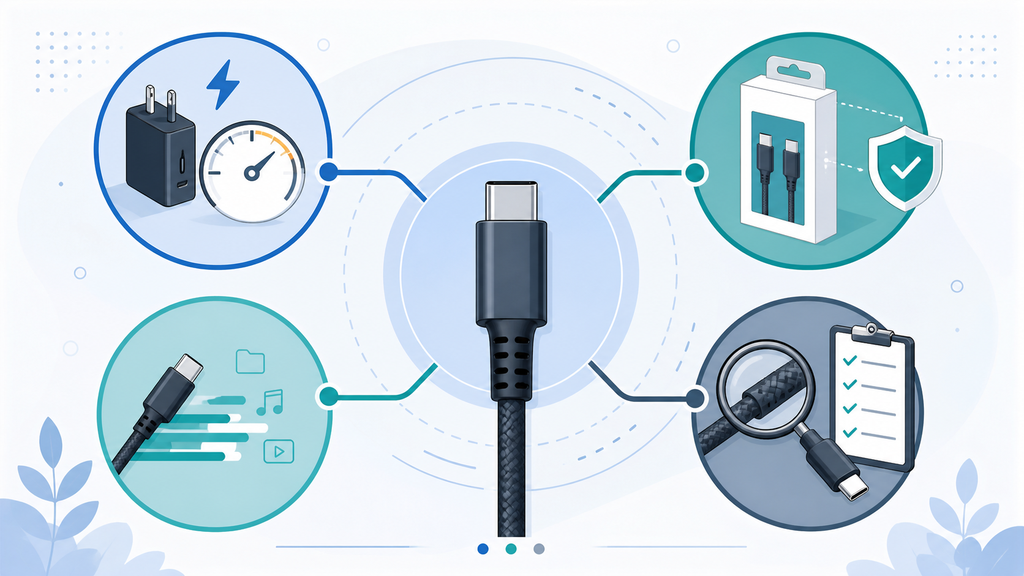
A 5000mAh magnetic power bank looks slim and convenient. Then customers ask why it does not fully charge their phone.
A 5000mAh magnetic power bank is enough for daily top-ups, travel backup, and emergency use, but it usually will not deliver a full 5000mAh to the phone. Conversion loss, wireless charging heat, phone size, and battery health reduce real usable output.

Many buyers ask this before choosing a private-label model. The answer depends less on the printed capacity and more on the use case.
How Much Charge Can A 5000mAh Magnetic Power Bank Really Give?
It usually gives less than the printed capacity because voltage conversion and wireless charging losses reduce usable energy.
A 5000mAh magnetic power bank may provide roughly one useful top-up for many phones, but the exact result depends on battery voltage, conversion efficiency, wireless or wired output, phone battery size, temperature, and whether the phone is used while charging.

The number 5000mAh is useful, but it is easy to misunderstand. Power bank cells are usually rated at nominal cell voltage, while phones receive power after voltage conversion. That conversion is not perfect. Wireless charging adds more loss because energy moves through coils and creates heat.
This is why a user should not expect a 5000mAh power bank to fully deliver 5000mAh into the phone battery. A wired connection is usually more efficient than wireless charging. A magnetic wireless top-up is more convenient, but convenience costs energy.
| Use case | 5000mAh magnetic pack fit | Main tradeoff |
|---|---|---|
| Commute top-up | Good | Limited reserve |
| Emergency backup | Good | Not for many cycles |
| Full travel day | Sometimes | Depends on phone |
| Laptop charging | Poor | Too little power |
| Heavy gaming use | Weak | Heat and load are high |
Phone battery size also matters. A compact phone and a large flagship phone do not need the same energy. If the user charges while streaming video, using navigation, or gaming, the phone consumes energy while receiving it. The battery percentage may rise slowly or stop near a certain level.
Heat is another factor. Wireless charging is convenient, but it can run warmer than wired charging, especially when the phone is misaligned or inside a thick case. Phone makers manage temperature to protect the device. Apple explains that charging may slow or stop when an iPhone becomes too warm.1 This can make a small magnetic power bank feel weaker than expected.
For brands, the user promise should be honest. I would not market a 5000mAh magnetic power bank as an all-day unlimited charger. I would position it as a slim daily backup, emergency top-up, or travel companion for people who value portability.
EverGreat often helps customers decide whether 5000mAh, 6000mAh, or 10000mAh fits their channel. A promotional gift may prefer slimness and price. A retail travel product may need more capacity. The best capacity is the one that matches how the buyer plans to sell it.
I also like to test the same model with one old phone and one new phone. Older batteries can behave differently, and heavy background apps can make a small power bank look weaker than it really is in practice.
Is 5000mAh Better Than 10000mAh For Magnetic Power Banks?
5000mAh is usually slimmer and easier to carry, while 10000mAh gives more energy but adds weight and magnetic stress.
A 5000mAh magnetic power bank is better for slim daily carry, while a 10000mAh model is better for longer backup time. Higher capacity adds thickness and weight, which can make magnetic attachment less comfortable and less stable.
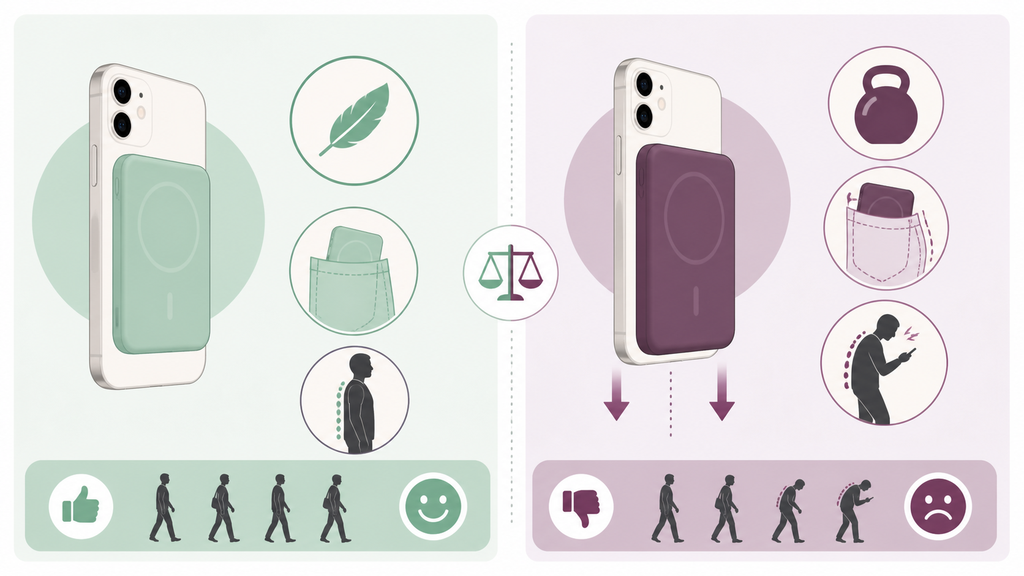
Capacity is not only an energy decision. It is also a product experience decision. A magnetic power bank sits behind the phone. If it is too heavy, the phone feels awkward. If it is too thick, it may interfere with grip, camera bump, or pocket use.
Many buyers like 10000mAh because the number looks better online. I understand that. Bigger numbers sell easily. But the magnetic use case is different from a traditional cable power bank. The product becomes part of the phone while the user holds it.
| Option | Advantage | Limitation |
|---|---|---|
| 5000mAh | Slim, light, easy to carry | Limited backup |
| 6000mAh | Slightly more reserve | Still compact if designed well |
| 10000mAh | Longer runtime | Heavier and thicker |
| Wired power bank | Better efficiency | Less convenient |
| Magnetic wireless | Easy top-up | More heat and loss |
Magnet strength alone does not solve weight. A heavier product puts more downward force on the attachment. If the phone case is thick, smooth, or not magnetic, a larger power bank may slide more easily. This is why capacity, shell texture, magnet layout, and target phone models should be tested together.
Qi2 magnetic alignment is designed to improve wireless charging alignment in supported products.2 That helps reduce placement problems, but it does not change basic physical tradeoffs. A large battery still weighs more than a small one. A thick case still adds distance.
For B2B buyers, I recommend choosing capacity based on the channel. Promotional customers often want a product that looks clean, feels light, and can carry a logo well. Retail electronics buyers may want stronger specifications. Travel customers may accept more weight if the pack gives longer backup.
There is also a cost and certification angle. Higher capacity can increase cell cost, housing size, thermal challenge, and shipping considerations. Lithium battery transport documents and watt-hour labeling may become more important as capacity rises. The FAA explains that power banks are treated as spare lithium batteries for air travel and must be carried in carry-on baggage.3
At EverGreat, I would rather help a customer launch the right 5000mAh product than push a larger number that disappoints users. A slim battery that does its job clearly can create better reviews than a heavy battery that promises too much.
What Should Brands Check Before Selling 5000mAh Magnetic Power Banks?
Brands should test real usable output, wireless heat, magnet strength, case compatibility, charging speed, and customer expectations.
Before selling 5000mAh magnetic power banks, brands should test wired and wireless usable output, temperature rise, magnet alignment, case compatibility, drop risk, charging speed, safety documentation, and whether the product promise matches real daily use.
The first check is real output. Charge several phone models from a low battery level and record how much percentage increase the power bank provides. Test both wired and wireless modes if the product supports both. Do not rely only on theoretical capacity.
The second check is temperature. A slim magnetic product has limited room for heat. Battery cells, coils, PCB, magnets, and casing all sit close together. The U.S. Consumer Product Safety Commission warns that lithium-ion batteries can present fire and injury risks when damaged, overheated, or poorly handled.4 Buyers should treat thermal design seriously.
| Test item | Why it matters |
|---|---|
| Usable output | Prevents capacity complaints |
| Wireless temperature | Reduces heat anxiety |
| Magnet hold | Prevents drops |
| Case compatibility | Reduces returns |
| Label accuracy | Supports trust |
| Safety documents | Supports market access |
Customer expectation may be the biggest risk. If the product page says “5000mAh” but the user expects a full phone charge, reviews may be harsh. A better product page explains it as a daily top-up power bank, not a replacement for a large travel bank.
The included cable matters too. A magnetic power bank often charges wirelessly but recharges through USB-C. If the cable is poor, the user may think the power bank is slow or defective. Bundled accessories should be tested with the final product.
For private-label brands, packaging should avoid exaggerated claims. It can highlight slim design, magnetic convenience, and emergency backup. It should not imply perfect efficiency or universal case compatibility.
Support teams should ask how the user charged, whether the case was thick, whether the phone got hot, and whether the phone was used heavily during charging. These questions explain many real-world complaints.
The best 5000mAh magnetic power bank is not the one with the biggest promise. It is the one that feels light, attaches well, stays within temperature limits, and gives a useful top-up when the customer needs it.
Conclusion
A 5000mAh magnetic power bank is enough for slim daily backup, but honest capacity, heat, and case expectations matter.
-
Apple describes temperature-related charging behavior in its iPhone temperature guidance. ↩
-
The Wireless Power Consortium explains Qi and Qi2 through its official Qi resources. ↩
-
The FAA explains lithium battery and power bank travel handling in its PackSafe guidance. ↩
-
The U.S. Consumer Product Safety Commission provides lithium-ion battery safety guidance through its battery safety resources. ↩