A power bank fire is rare, but one bad cell, damaged pack, or poor design can turn a small charging problem into a serious safety event.
Yes, a power bank can catch fire if its lithium-ion battery enters thermal runaway, is physically damaged, overheats, is poorly manufactured, or is charged with unsafe electronics. Stop using any power bank that swells, leaks, smells strange, becomes unusually hot, or makes popping sounds.
This topic attracts attention because it touches real fear. But fear alone does not help buyers or users. The useful question is what causes the risk, what warning signs matter, and how brands can reduce the chance of dangerous products reaching customers.
Why Can A Power Bank Catch Fire?
Most power banks are safe in normal use, but they store a lot of energy in a small case.
A power bank can catch fire when heat, internal short circuit, overcharge, crush damage, poor cell quality, weak protection circuits, or manufacturing defects cause the battery to fail. The highest-risk situation is thermal runaway, where battery heat and chemical reactions escalate quickly.
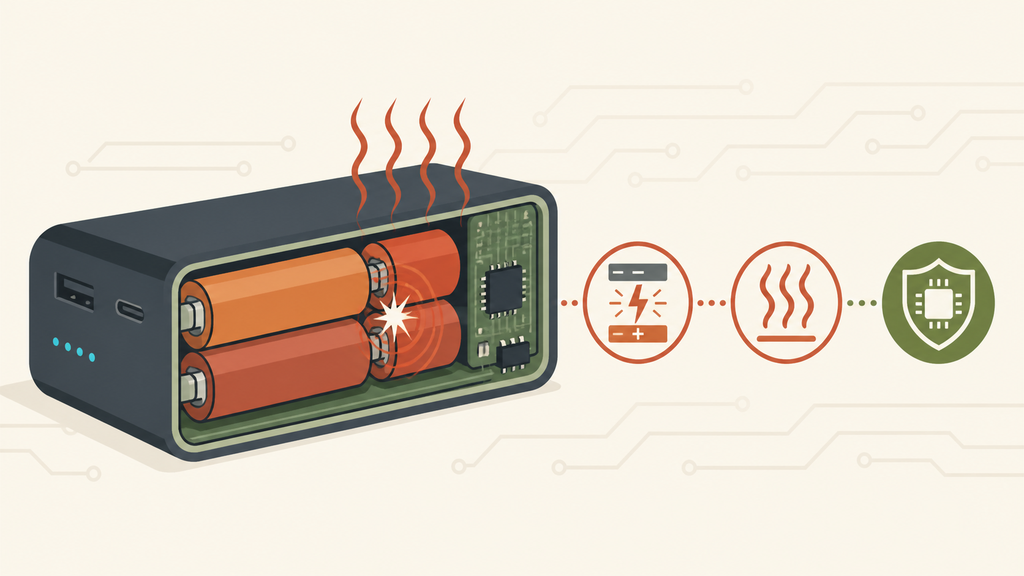
A power bank is not just a plastic box with a number printed on it. Inside, it usually has lithium-ion or lithium-polymer cells, a protection circuit, ports, wires, firmware, insulation materials, and a mechanical shell. All of these parts must work together. If one part fails badly enough, the battery can become unsafe.
The most serious failure mode is thermal runaway. UL Research Institutes explains that thermal runaway can happen when a battery cell releases heat faster than it can dissipate it, which can lead to fire or explosion in severe cases.1 For a user, this may look sudden. For a manufacturer, it is usually the end result of a chain of failures.
Physical damage is one common trigger. A dropped, crushed, bent, or punctured power bank can suffer internal damage even if the case still looks usable. A cell separator can be weakened. A wire can loosen. A solder joint can shift. The user may only notice heat or swelling later.
Poor charging electronics are another risk. A power bank should control charging voltage, current, over-discharge, over-current, and temperature. If the protection design is weak, the product may not respond correctly to abnormal conditions. This is why a cheap power bank with a large printed capacity can be more dangerous than it looks.
| Risk factor | What can go wrong | Buyer concern |
|---|---|---|
| Low-quality cells | Higher chance of internal failure | Supplier traceability matters |
| Poor protection circuit | Abnormal charging may continue | Electrical design must be checked |
| Physical damage | Internal short circuit risk | Packaging and user warnings matter |
| Heat exposure | Battery aging and stress increase | Storage and transport need control |
| Overstated capacity | Product may use weak cells or design | Claims must match test evidence |
I have seen buyers focus too much on capacity and price. They compare 10,000mAh, 20,000mAh, and 30,000mAh like the product is only a spreadsheet. But a power bank is an energy product. Cell sourcing, circuit design, assembly quality, and test discipline decide whether the product is stable after months of real use.
This is especially important for private-label projects. Once a brand logo is printed on the case, the customer does not blame the anonymous cell vendor. They blame the brand. That is why safety must be discussed before mass production, not after a complaint.
What Warning Signs Mean You Should Stop Using A Power Bank?
Many unsafe batteries give warning signs before a serious event, but users often ignore them.
Stop using a power bank immediately if it is swollen, leaking, smoking, smelling chemical or sweet, making hissing or popping sounds, charging abnormally, or becoming too hot to touch. Move it away from flammable items and follow local disposal guidance.
UL Research Institutes advises users to watch for signs such as odor, heat, change in shape, leakage, and strange noises from lithium-ion battery products.2 These signs should not be treated as small annoyances. They can mean internal battery damage or chemical failure.
Swelling is one of the most visible warnings. It can happen when gas builds up inside a battery cell. A swollen power bank should not be pressed flat, punctured, charged, or used again. The user may think, "It still works." That is the dangerous part. A battery can still output power while becoming unsafe.
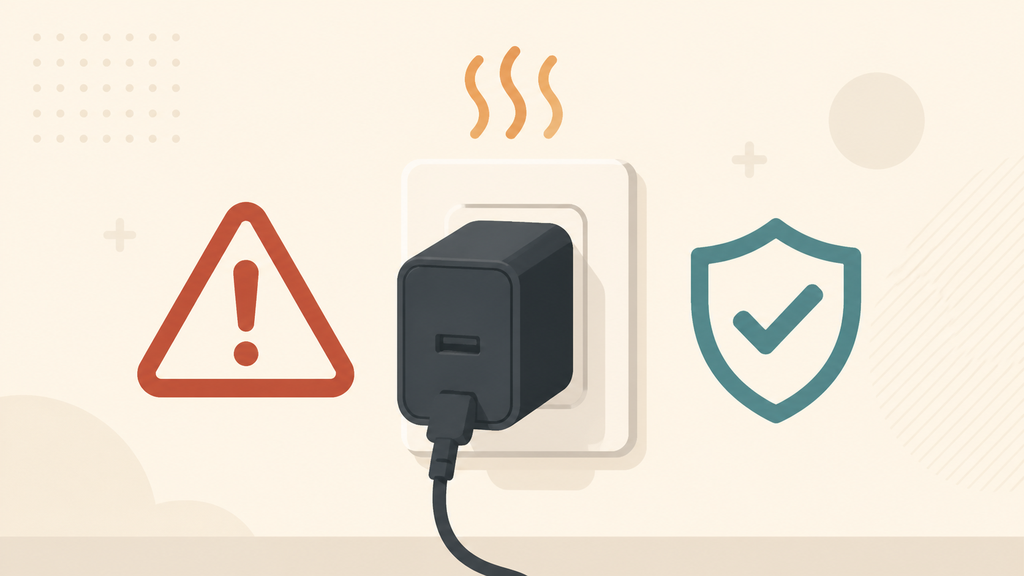
Heat is another warning sign, but it needs judgment. A power bank can become slightly warm during fast charging. That is normal. It is not normal for it to become painfully hot, smell strange, shut off repeatedly under light load, or heat up while sitting unused. If heat appears with swelling, odor, smoke, or sound, the product should be treated as unsafe.
Charging behavior also matters. If a power bank keeps starting and stopping, charges far slower than before, drains quickly, or shuts off under normal use, it may have an aging battery, damaged port, weak cable, or protection issue. Not every strange charging symptom means fire risk, but it does mean the product should be inspected rather than forced.
| Warning sign | User action | Brand-side lesson |
|---|---|---|
| Swollen case | Stop using and do not charge | Improve cell quality and storage control |
| Chemical smell | Move away from people and heat | Add stronger user warnings |
| Unusual heat | Disconnect and monitor safely | Check thermal and load testing |
| Smoke or hissing | Treat as urgent danger | Review failure escalation process |
| Repeated shutdown | Stop forcing use | Improve troubleshooting guidance |
The Consumer Product Safety Commission has warned consumers to stop using certain defective power banks when reports included exploding, igniting, and swelling.3 Recalls and safety warnings are a reminder that battery problems are not only technical. They become brand, legal, and customer-service problems.
For EverGreat customers, I recommend clear user instructions in the manual and product page. Tell users not to use swollen or damaged products. Tell them to keep the power bank away from heat and flammable materials. Tell them to stop use if the product smells unusual or becomes excessively hot. These lines may look basic, but they reduce misuse and make support conversations clearer.
How Can Brands Reduce Power Bank Fire Risk Before Mass Production?
Fire risk is not solved by one certificate or one sample test. It needs a complete sourcing and quality process.
Brands can reduce power bank fire risk by choosing traceable cells, validating protection circuits, checking battery certifications, testing heat rise, controlling assembly quality, using safe packaging, documenting transport rules, and giving users clear warning instructions.
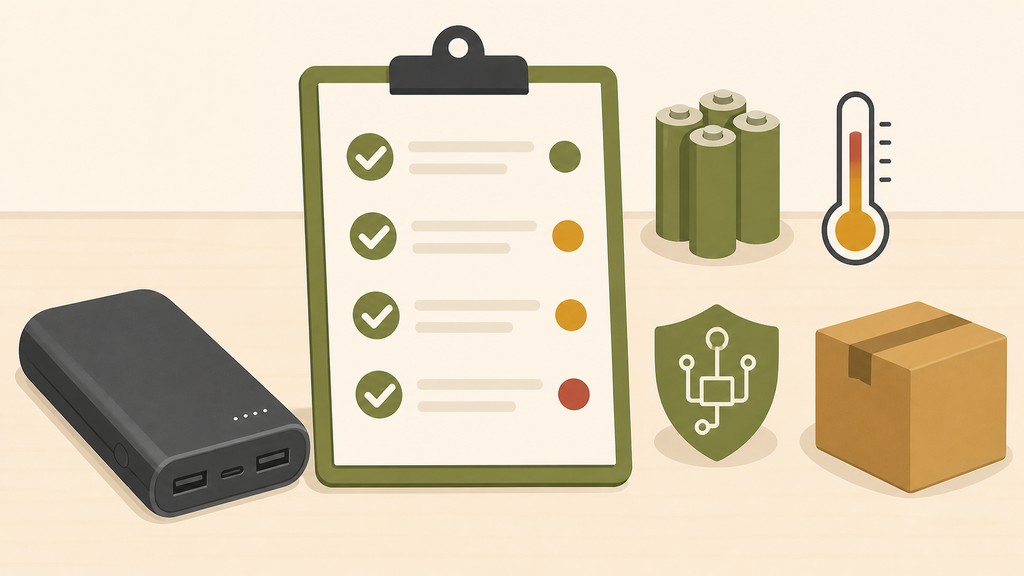
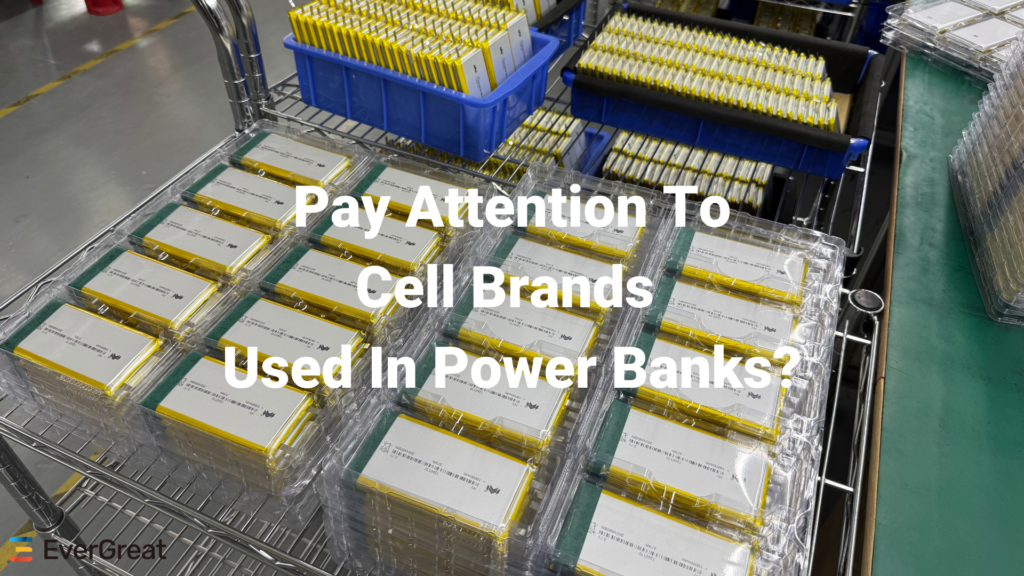
The first decision is cell sourcing. A supplier should be able to explain the cell brand, grade, capacity, batch traceability, and safety documentation. If the answer is vague, the buyer should slow down. Cells are the heart of the product. A beautiful case and strong logo cannot compensate for unstable cells.
The second decision is protection design. A power bank should include protection against overcharge, over-discharge, over-current, short circuit, and overheating. The specific design depends on the product, but the buyer should not accept generic words such as "safe battery" without asking what protection is included and how it was tested.
The third decision is real load testing. A sample that charges one phone once is not enough. Buyers should test charging, discharging, high-load output, fast charging, multi-port use, recharge behavior, heat rise, and aging conditions. If the product is a high-capacity model, thermal performance matters even more because more energy is stored inside the case.
Transport rules also matter. The FAA says spare lithium batteries, including power banks, must be carried in carry-on baggage, and damaged or recalled lithium batteries should not be carried unless they meet special conditions.4 For brands, this affects manuals, travel product pages, customer support scripts, and distributor guidance.
| Checkpoint | What to request | Why it matters |
|---|---|---|
| Cell documentation | Cell model, batch, and test data | Reduces unknown battery risk |
| Protection circuit | Protection list and design details | Prevents abnormal charging failures |
| Heat testing | Temperature data under load | Shows real-use stability |
| Assembly control | Insulation, soldering, and case fit checks | Reduces internal short risk |
| Packaging | Drop and pressure protection | Prevents transport damage |
| User warnings | Clear stop-use instructions | Reduces misuse after warning signs |
I often find that new brands want to move quickly after seeing a good-looking sample. Speed matters, but batteries reward patience. A few extra days spent checking cells, thermal behavior, labeling, and documentation can prevent months of damage control later.
EverGreat’s role in these projects is to help buyers connect product design with real-world use. If the product is for travel, we think about heat, baggage rules, and user instructions. If it is a promotional gift, we think about simple charging behavior and safe storage. If it is a high-capacity fast-charging model, we pay more attention to cells, protection design, and heat.
The right question is not "Can this supplier make a cheap 20,000mAh power bank?" The better question is "Can this supplier prove that the battery, electronics, assembly, and documentation are controlled well enough for our customers?" That question is less exciting than a low price, but it protects the brand.
Conclusion
A power bank can catch fire, but most risk is preventable. Stop using damaged batteries and source products with verified cells, protection, and testing.
-
UL Research Institutes, What Is Thermal Runaway?. ↩
-
UL Research Institutes, Know Your Battery. ↩
-
U.S. Consumer Product Safety Commission, CPSC Warns Consumers to Immediately Stop Using Yiisonger Power Banks. ↩
-
Federal Aviation Administration, PackSafe – Lithium Batteries. ↩