A phone charger looks harmless until it gets too hot, smells strange, or melts near the plug. That small warning can become serious.
Yes, a phone charger can catch fire if it is poorly designed, counterfeit, overloaded, damaged, overheated, or used with a bad cable or outlet. Stop using any charger that smells burnt, sparks, buzzes, melts, becomes extremely hot, or leaves scorch marks.
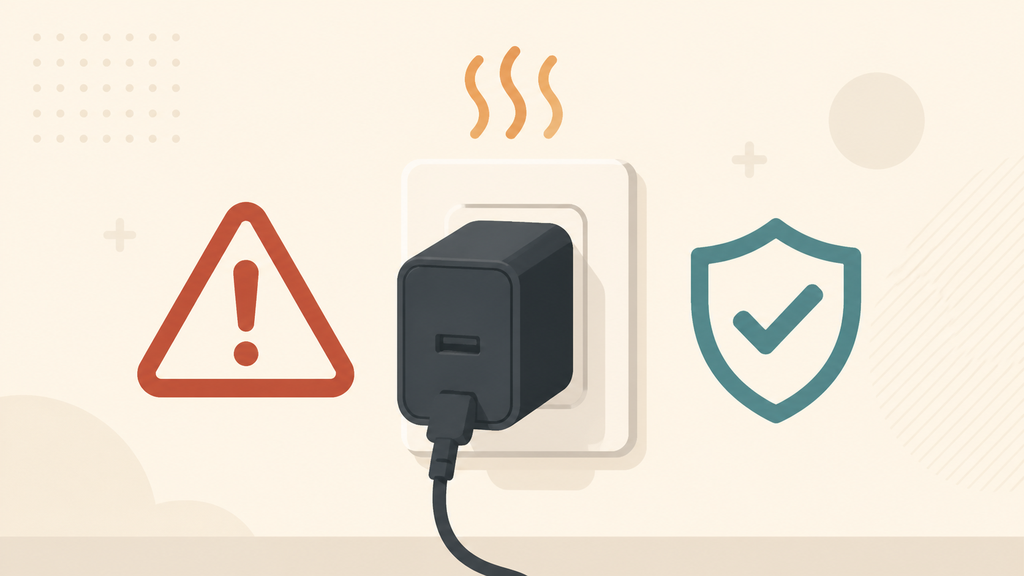
Most phone chargers work safely every day. The risk comes from ignoring the wrong details: cheap components, weak insulation, damaged cables, poor heat control, and unclear product claims. For buyers, the lesson is simple. A charger is not only a plastic shell with wattage printed on it.
Why Can A Phone Charger Catch Fire?
A charger fire usually starts with heat, poor contact, weak components, or unsafe design.
A phone charger can catch fire when internal components overheat, insulation fails, a connector has poor contact, a cable is damaged, the outlet is unsafe, or the charger lacks proper protection. Low-quality and counterfeit chargers create higher risk because safety design and testing may be missing.
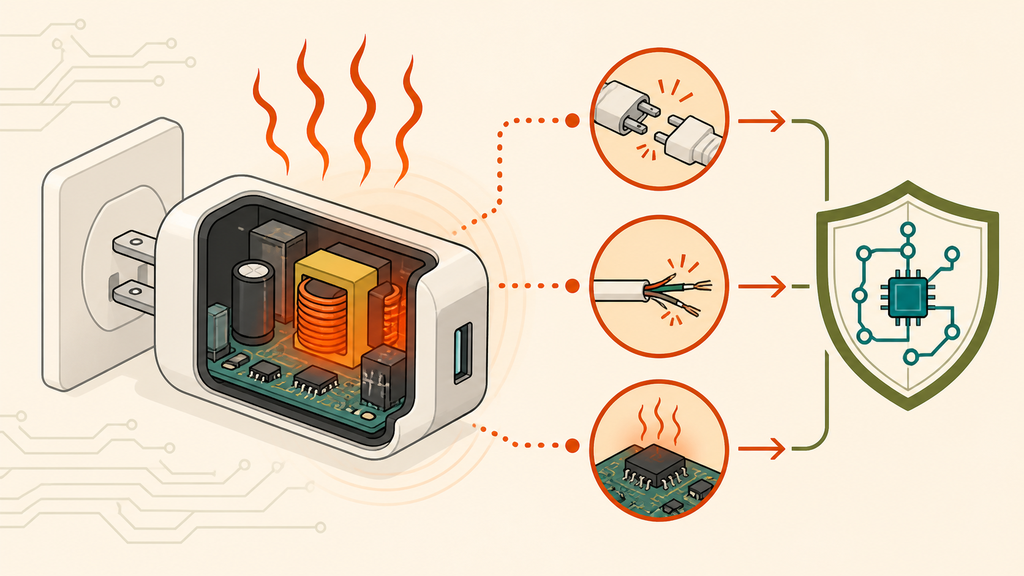
A wall charger converts AC power from the outlet into DC power for a phone, tablet, or accessory. That conversion creates heat. A good charger controls that heat through circuit design, component selection, enclosure material, spacing, protection functions, and testing. A bad charger may still charge a phone, but it may not handle stress safely.
The first risk is poor internal design. If a charger uses weak capacitors, poor transformers, thin insulation, or bad soldering, heat can build up. The charger may buzz, smell burnt, or become too hot. In a serious failure, the plastic case may deform or melt.
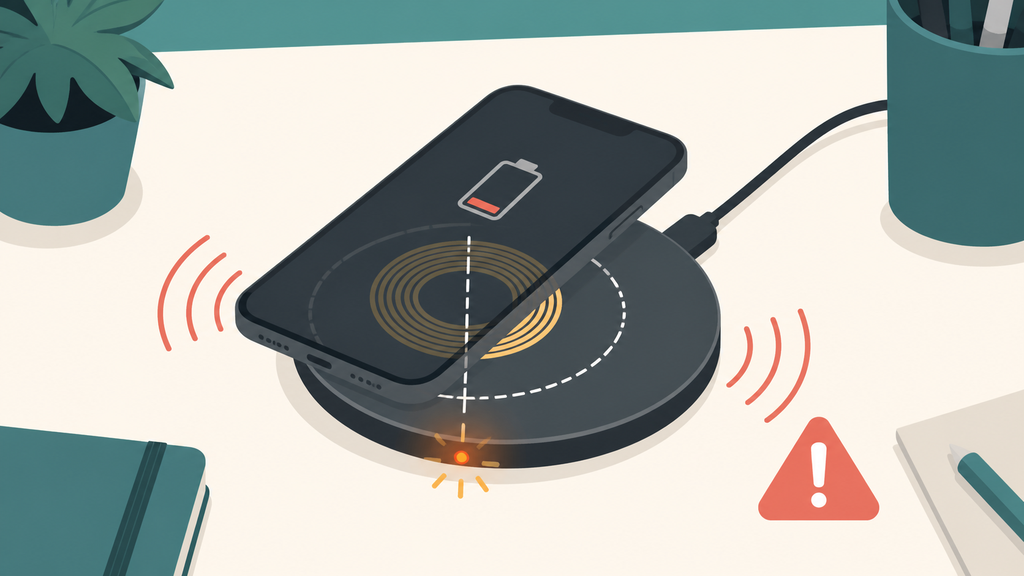
The second risk is poor connection. A loose outlet, bent plug, worn cable, dirty port, or damaged connector can create resistance. Resistance creates heat. Users often blame the phone, but the heat may come from the wall plug, USB port, or cable end. If the hot area is localized, the connector should be checked carefully.
The third risk is overload or mismatch. Many customers now use one charger for phones, tablets, power banks, earbuds, and sometimes laptops. USB Power Delivery allows compatible devices to negotiate charging levels, but the whole system still depends on a safe charger, proper cable, and compatible device.1 A charger should not be judged by wattage alone.
| Risk factor | What users may notice | Buyer-side concern |
|---|---|---|
| Poor components | Heat, odor, buzzing | Supplier quality control |
| Weak insulation | Melting, electrical smell | Safety design and spacing |
| Loose connector | Hot plug or cable end | Mechanical durability |
| Bad cable | Intermittent charging | Bundle quality |
| Overload | Shutdown or overheating | Rating accuracy |
Apple tells users to avoid damaged cables or chargers and to keep charging accessories in well-ventilated areas during use.2 That advice matters because heat is part of the safety picture. A charger covered by bedding, trapped behind furniture, or used near heat can run hotter than expected.
In manufacturing, I often see buyers compare chargers only by wattage and price. That is risky. A 20W charger, 35W charger, and 65W charger need different layouts and thermal decisions. Higher power does not automatically mean danger, but it leaves less room for lazy design.
What Warning Signs Mean You Should Stop Using A Charger?
The most dangerous mistake is treating warning signs as normal aging.
Stop using a phone charger if it smells burnt, makes crackling or buzzing sounds, sparks, leaves black marks, melts, becomes painful to touch, charges intermittently, or heats the plug or cable end. Replace both the charger and cable if the fault is unclear.
Electrical Safety Foundation International advises replacing damaged electrical cords and avoiding running cords under rugs or furniture where heat or damage can be hidden.3 The same logic applies to phone charging accessories. A cable or charger that looks slightly damaged can become worse during daily use.
Burnt smell is one of the clearest warning signs. It may come from overheated plastic, insulation, dust, or internal components. Users should not keep testing it to see if the smell goes away. Disconnect it, let it cool in a safe place, and stop using it.
Scorch marks are another serious sign. A black mark near the plug, USB port, or wall outlet means heat was high enough to damage material. The outlet may also be part of the problem. If the wall socket is loose, discolored, or hot, the charger should not be moved to another outlet without checking the electrical issue.
A charger that is warm is not always unsafe. Fast chargers can become warm during normal operation. The concern is abnormal heat: painful to touch, hotter than similar chargers, concentrated near one point, or paired with smell, sound, melting, or shutdown.
| Warning sign | What to do | Why it matters |
|---|---|---|
| Burnt smell | Stop using immediately | May indicate overheating insulation |
| Sparks | Unplug if safe | May indicate poor contact or fault |
| Melted case | Replace charger | Internal heat may be severe |
| Hot plug | Check outlet and plug | Contact resistance can create heat |
| Intermittent charging | Test cable and charger separately | Fault may be hidden |
The Consumer Product Safety Commission regularly posts recalls for electrical and charging products when fire, shock, or burn hazards are found.4 For brands, this is a reminder that a charger problem does not end at a refund. It can become a recall, channel dispute, or reputation problem.
I recommend that brands write simple stop-use language in manuals. Customers should know that smell, melting, sparks, and scorch marks are not normal. Clear warnings reduce risky behavior and help support teams respond faster.
How Should Brands Source Safer Phone Chargers?
Safer sourcing starts before the sample looks good. It starts with proof.
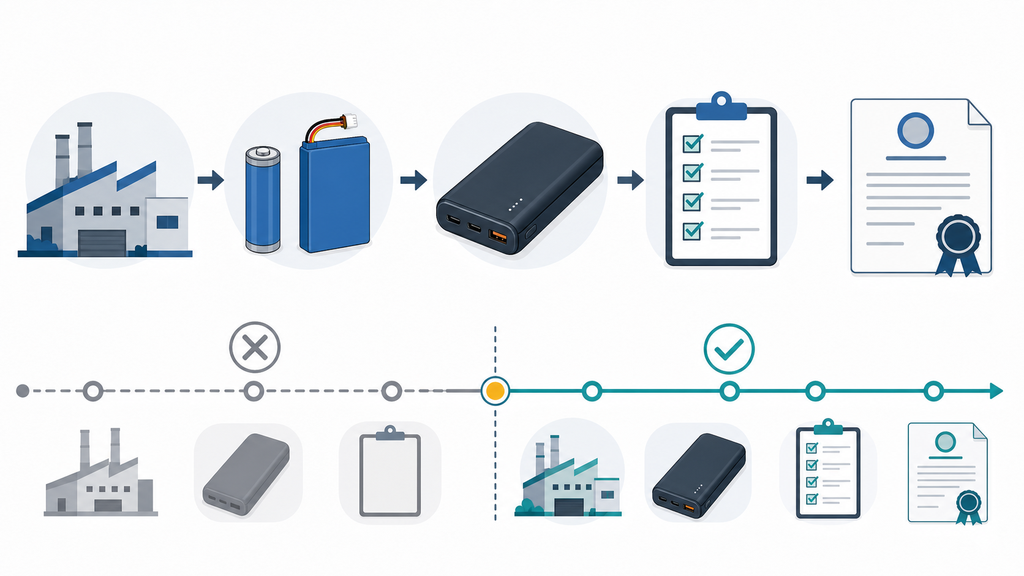
Brands should source phone chargers by checking safety certification plans, component quality, thermal testing, protection functions, plug quality, cable compatibility, production inspection, labeling accuracy, and after-sales response. A supplier should explain how safety is designed and tested.
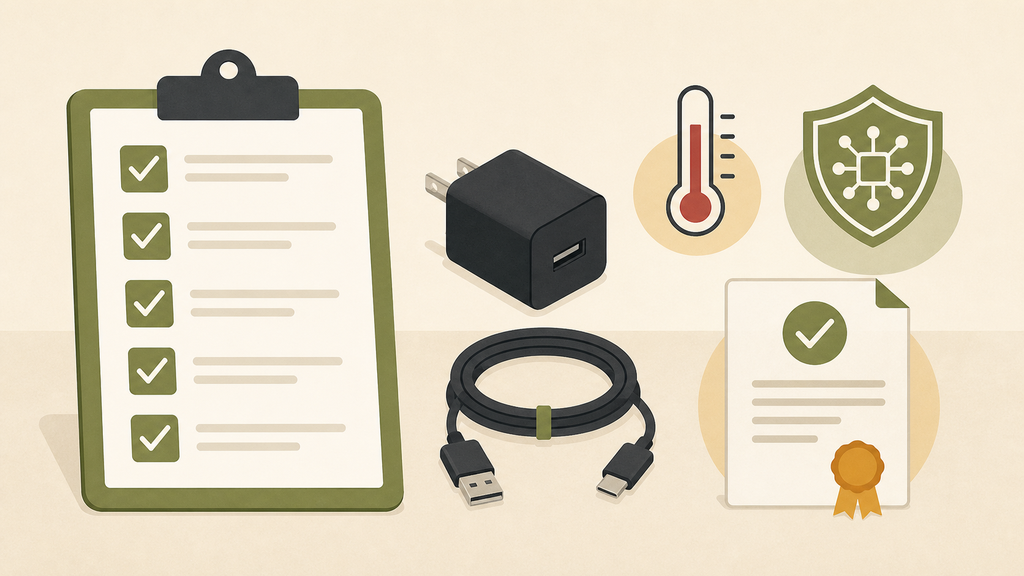
The first checkpoint is market requirement. A charger for the U.S., EU, U.K., or other markets may need different plugs, labeling, test reports, and compliance documents. Buyers should ask about the destination market before quoting. A charger that is acceptable in one channel may not be acceptable in another.
The second checkpoint is thermal performance. A charger should be tested under load, not only turned on for a few minutes. If the product is a multi-port GaN charger, buyers should test all realistic charging combinations. Some chargers look stable with one phone but become hot when two or three ports are used.
The third checkpoint is cable pairing. A good charger can still create complaints when bundled with a weak cable. If a brand sells a fast-charging kit, the charger and cable should be tested together. The package claim should match the real combined performance.
| Sourcing checkpoint | What to ask | Practical reason |
|---|---|---|
| Certification plan | Which market and standard path? | Prevents launch delays |
| Heat rise test | What happens under full load? | Shows real safety margin |
| Protection design | Over-current, short-circuit, over-temperature? | Reduces abnormal failure risk |
| Plug quality | Is the plug stable and well fitted? | Prevents hot contact points |
| Cable match | Is the bundle tested together? | Reduces customer complaints |
| Inspection process | What is checked in production? | Keeps quality consistent |
EverGreat often helps buyers separate real safety from marketing words. "High quality" is not enough. The supplier should provide a test plan, explain component choices, and support documentation for the target market. This is especially important for startups because one bad charger issue can consume the whole support team.
I also suggest checking samples from more than one production batch when the project is important. A golden sample from the sales desk may look perfect, but mass production depends on repeatable component sourcing and inspection. If the supplier changes a capacitor, plug part, plastic material, or PCB layout without notice, the safety margin can change. Buyers should make change control part of the purchase agreement, not a polite hope after shipment.
The best charger project balances speed, cost, and evidence. A cheap charger may look profitable at first, but poor safety design can erase that profit quickly. A reliable charger may cost more, but it protects the customer, the sales channel, and the brand.
Conclusion
A phone charger can catch fire when heat, damage, poor contact, or weak design is ignored. Source chargers with verified safety, not just wattage.
-
USB Implementers Forum, USB Charger (USB Power Delivery). ↩
-
Apple Support, Important safety information for iPhone. ↩
-
Electrical Safety Foundation International, Extension Cord Safety Tips. ↩