Many people leave chargers in the wall all day. It feels harmless, but cheap or damaged chargers can quietly add risk.
It is usually safe to leave a quality phone charger plugged in with no device attached, and modern chargers use very little standby power. The bigger concerns are poor-quality chargers, damaged cables, heat, loose outlets, dust, moisture, and leaving chargers under fabric or in tight spaces.
I hear this question from both everyday users and charging-product buyers. The answer is not simply yes or no, because charger safety depends on design quality, certification, environment, and how the product ages.
Does A Plugged-In Charger Waste Electricity?
People worry that a charger in the wall keeps pulling power forever. It does use some power, but modern regulated chargers should use very little when idle.
A plugged-in phone charger can consume standby power, but current energy-efficiency rules limit no-load power for many external power supplies. The cost is usually small for one charger, but quality and compliance still matter.
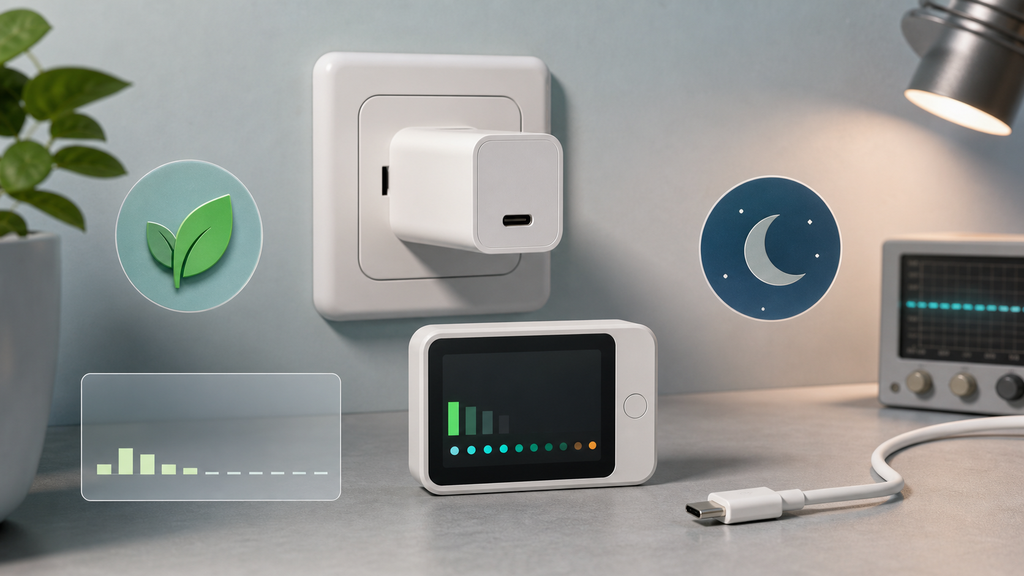
The U.S. Department of Energy regulates external power supplies, including limits related to no-load power consumption.1 The European Union also sets ecodesign requirements for external power supplies, including efficiency and no-load conditions.2 These rules exist because small power supplies are everywhere, and tiny losses add up across millions of homes and offices.
For a user, the electricity cost from one compliant modern phone charger left plugged in is usually low. The bigger issue is what kind of charger it is. A well-designed charger has standby circuitry, insulation, thermal controls, and protection components. A poor charger may still work, but it can run warmer, waste more energy, or age faster.
In manufacturing, I see no-load power as one small part of the full design. It is measurable, but it does not tell the whole safety story. A charger can have low standby power and still have weak insulation. Another charger can be efficient but have poor connector fit or a fragile enclosure. Buyers should look at the full product, not one number.
| Question | Practical Answer | Buyer Meaning |
|---|---|---|
| Does it use power when idle? | Yes, usually a very small amount | Check efficiency compliance |
| Is standby power the main risk? | Usually no | Heat and build quality matter more |
| Should users unplug everything? | Useful but not always necessary | Clear instructions reduce anxiety |
| Are all chargers similar? | No | Cheap designs vary widely |
| Does higher wattage mean higher idle waste? | Not always | Test the exact model |
For brands, standby performance should be verified with the exact adapter design, not assumed from the advertised wattage. A 20W charger, 30W GaN charger, and 65W multi-port charger may have different standby behavior. Multi-port chargers also need testing with no devices, one device, and several devices attached.
There is also a marketing lesson here. Some customers ask about electricity waste because they are really asking, “Is this charger well made?” Product pages should explain standby efficiency in plain language, but they should not exaggerate savings. A claim like “energy-saving design with low no-load power” is useful when supported by test data. A vague “zero power waste” claim is risky and usually not technically accurate.
For EverGreat projects, I prefer to test no-load power together with temperature, protection behavior, plug fit, and aging. That gives the buyer a clearer view of real-world reliability.
When Can A Plugged-In Charger Become Unsafe?
Most charger accidents do not start with a perfect charger in a clean outlet. They start with poor quality, physical damage, heat buildup, moisture, or misuse.
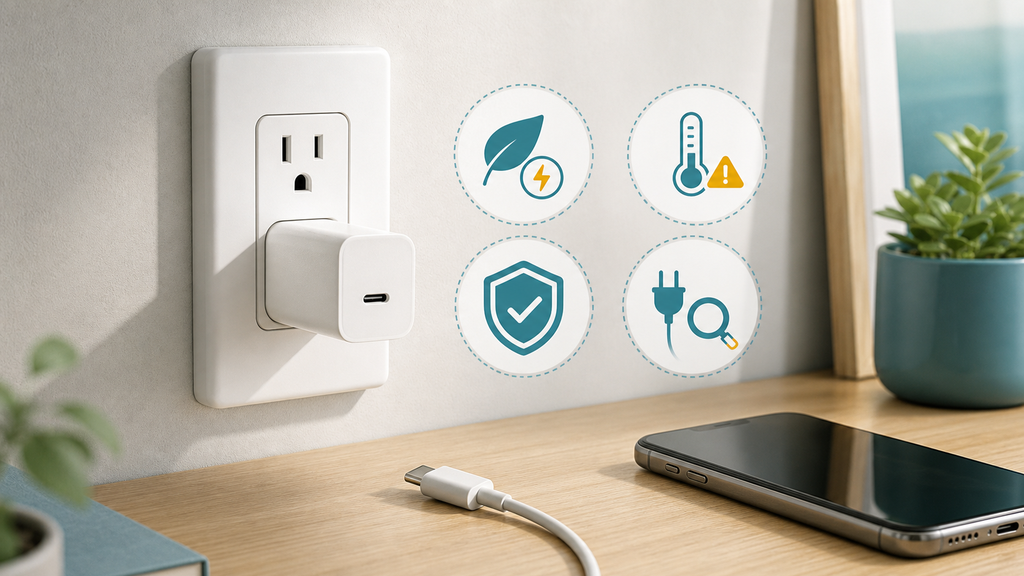
A plugged-in charger becomes unsafe when it is fake, uncertified, cracked, buzzing, unusually hot, exposed to water, covered by fabric, used in a loose outlet, or connected to a damaged cable. Stop using any charger that smells, sparks, or overheats.
UL Research Institutes warns that counterfeit or poor-quality chargers can present electric shock and fire risks, especially when they lack proper safety construction and testing.3 That is why “it charges my phone” is not enough as a safety standard. A dangerous charger may work normally until stress exposes a weakness.
I often find that users judge chargers by speed and price first. They notice 20W, 30W, 65W, or “fast charge” before they notice safety markings, enclosure quality, plug alignment, or cable condition. This is understandable, but it is exactly where low-quality products win short-term sales and create long-term complaints.
Heat is the most obvious warning sign. A charger can feel slightly warm during use, especially under high load, but it should not become uncomfortable to touch or smell like hot plastic. If a charger stays hot even with no device attached, that is a serious warning. If it buzzes, flickers, arcs, or sits loosely in the outlet, unplug it.
| Warning Sign | Possible Cause | Recommended Action |
|---|---|---|
| Hot with no device attached | Internal fault or poor design | Stop using it |
| Buzzing or crackling | Component or outlet problem | Unplug immediately |
| Burn smell | Overheating insulation or plastic | Replace and inspect outlet |
| Cracked case | Exposed internal risk | Do not use |
| Loose wall fit | Poor plug contact | Try another outlet or charger |
| Cable is frayed | Short or overheating risk | Replace cable |
| Charger under pillow or blanket | Heat trapped | Move to open air |
The outlet matters too. A good charger cannot fix a damaged wall socket. Loose contacts increase resistance and heat. Dust, moisture, and bathroom use add additional risk. Charging products should be used in dry, ventilated areas, not behind wet counters or under bedding.
Another hidden risk is stacking accessories. A charger plugged into a poor extension strip, then connected to a weak cable, then used with a phone under a pillow is not the same as the charger sitting alone in a clear outlet. Users experience the whole system, not each product in isolation.
For brands, safety instructions should be direct and practical. Avoid long legal paragraphs that customers ignore. Tell users not to use cracked chargers, damaged cables, wet outlets, or covered charging setups. Add clear advice about heat and smell. Good instructions help customer service teams handle complaints faster and reduce misuse-related returns.
The safest rule is simple: a quality charger in a good outlet is usually fine; a suspicious charger should not stay plugged in at all.
How Should Brands Design Chargers Users Trust?
Users may ask a simple home-safety question, but importers should hear a deeper product-quality question. Trust is built before the charger reaches the wall.
Brands can build more trustworthy chargers by using certified designs, testing no-load power, checking thermal performance, verifying insulation, choosing durable enclosures, matching cables correctly, and writing clear instructions for heat, damage, moisture, and storage.
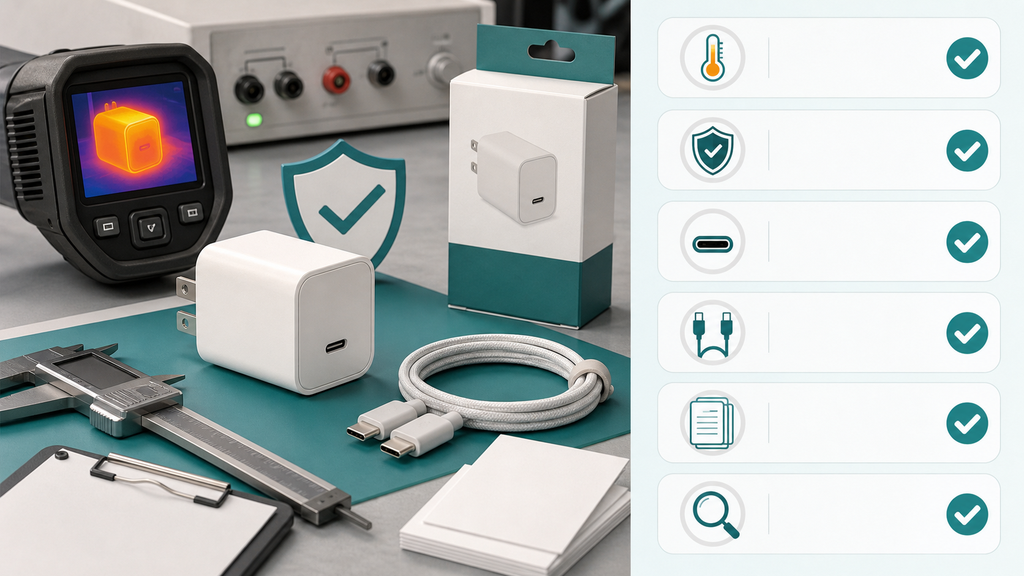
In my experience, charger buyers sometimes focus too heavily on output wattage. A 30W charger that is stable, cool, compliant, and well documented may create fewer returns than a higher-watt model that wins the spec sheet but runs hot in real homes.
For private-label projects, I would start with four checks: electrical compliance, thermal behavior, mechanical durability, and user communication. Electrical compliance covers the standards and market requirements. Thermal behavior covers how the charger performs at full load, light load, and no load. Mechanical durability covers plug pins, enclosure strength, port retention, and cable strain. User communication covers the manual, packaging, and support scripts.
| Design Area | What To Check | Why It Matters |
|---|---|---|
| No-load power | Idle consumption test | Supports efficiency claims |
| Thermal design | Shell temperature under load | Prevents heat complaints |
| Protection circuits | Overcurrent, overvoltage, short protection | Reduces fault risk |
| Insulation | Internal spacing and safety design | Protects users from shock |
| Port durability | USB-C insertion and retention | Reduces loose connection returns |
| Cable pairing | Current rating and connector quality | Prevents heat and slow charging |
| Documentation | Clear warnings and use conditions | Reduces misuse |
Multi-port chargers need extra attention. A 65W or 100W charger may allocate power differently when one device, two devices, or three devices are attached. If the product page promises too much without explaining shared output behavior, users may think the charger is defective. This is not only a technical issue; it is a communication issue.
GaN chargers also need thoughtful positioning. GaN can help make chargers smaller and more efficient, but a compact design still needs good thermal layout and quality control. Smaller size should not become an excuse for poor heat dissipation. Buyers should ask suppliers for test data, not just a nice enclosure sample.
I have seen projects where the first sample looked excellent, but long-duration load testing showed shell temperature concerns. That kind of issue is much cheaper to fix before tooling and packaging are finalized. Once a product ships, heat complaints become reviews, returns, and customer service cost.
EverGreat usually helps customers compare not only the charger, but the whole charging set: wall adapter, cable, packaging, certification path, and target user scenario. A charger for office desks, travel kits, school programs, and promotional gifts may need different priorities.
The final goal is not to make users afraid of leaving chargers plugged in. It is to give them a product that behaves predictably. Low standby power, stable temperature, clear markings, and honest instructions make a charger easier to trust.
Conclusion
A quality charger can usually stay plugged in safely, but poor products, heat, damage, moisture, and loose outlets are the real risks.
-
U.S. Department of Energy, External Power Supplies. ↩
-
European Commission, External power supplies ecodesign and energy labelling. ↩
-
UL Research Institutes, Counterfeit Electrical Products. ↩