A tiny spark at the outlet can make anyone nervous. Sometimes it is normal contact arcing. Sometimes it is a warning.
A charger may spark when plugged in because electricity jumps briefly as the plug contacts the outlet. A tiny single spark can be normal, but repeated sparks, burning smell, heat, loose outlets, or damaged plugs need immediate attention.

I understand why this question gets attention. A spark is visible, sudden, and easy to associate with fire. The right answer is not panic. The right answer is to separate normal plug-in behavior from real electrical risk.
Is A Small Spark Normal When Plugging In A Charger?
A very small spark can happen when metal prongs first touch the outlet, especially if the charger has internal capacitors.
A small, quick spark can be normal when plugging in a charger because current flows instantly into the adapter. It is not normal if the spark is large, frequent, noisy, smoky, or combined with heat or a loose outlet.
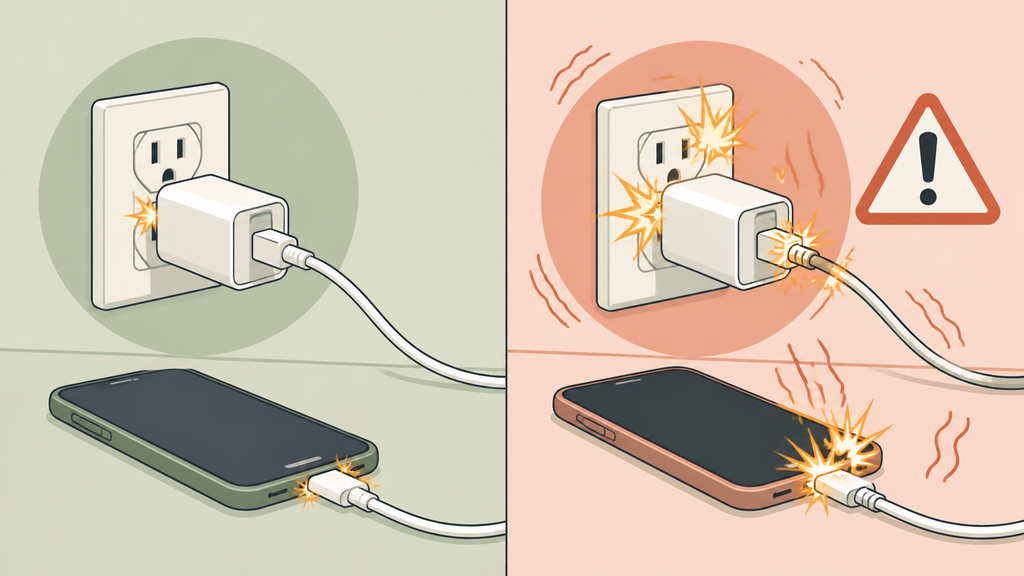
Many chargers contain capacitors and switching circuits. When the plug first touches the outlet, the charger may draw a brief inrush current. If contact happens at just the right moment, a tiny spark can appear. This can be more visible in a dark room.
The problem is not every spark is the same. A small single flash at insertion is different from repeated sparking, crackling, smoke, black marks, or a hot plug. Electrical safety organizations advise users to pay attention to damaged cords, warm outlets, and other signs of unsafe electrical conditions.1 A charger spark should be judged with those signs in mind.
| Spark behavior | Likely meaning | What to do |
|---|---|---|
| Tiny single flash | Possible normal contact arc | Monitor |
| Repeated sparks | Loose contact or outlet issue | Stop using |
| Spark with smell | Heat or material failure | Disconnect safely |
| Black mark on plug | Arcing or poor contact | Replace or inspect |
| Outlet feels loose | Worn receptacle | Use another outlet |
Users often blame the charger first. Sometimes the charger is the problem. Sometimes the wall outlet is old, loose, or dirty. A loose outlet can create poor contact with the plug. Poor contact creates heat and arcing. That is more serious than a one-time tiny spark during insertion.
For brands, the key point is user education. If the manual only says “plug in charger,” it misses a real support issue. A short safety note can explain that users should stop using a charger if they see repeated sparks, smell burning, feel heat, or notice a damaged plug or outlet.
For B2B buyers, plug quality and mechanical fit matter. A charger with weak prongs, poor casing alignment, or low-quality materials may not seat well. That can create user fear even before electrical performance is considered.
What Charger Problems Can Cause Sparking?
Sparking can come from a damaged plug, poor internal design, loose prongs, counterfeit products, overload, moisture, or a bad wall outlet.
A charger can spark because of loose plug contact, damaged prongs, poor insulation, internal component failure, moisture, overload, or a worn wall outlet. Repeated sparking should be treated as unsafe until checked.
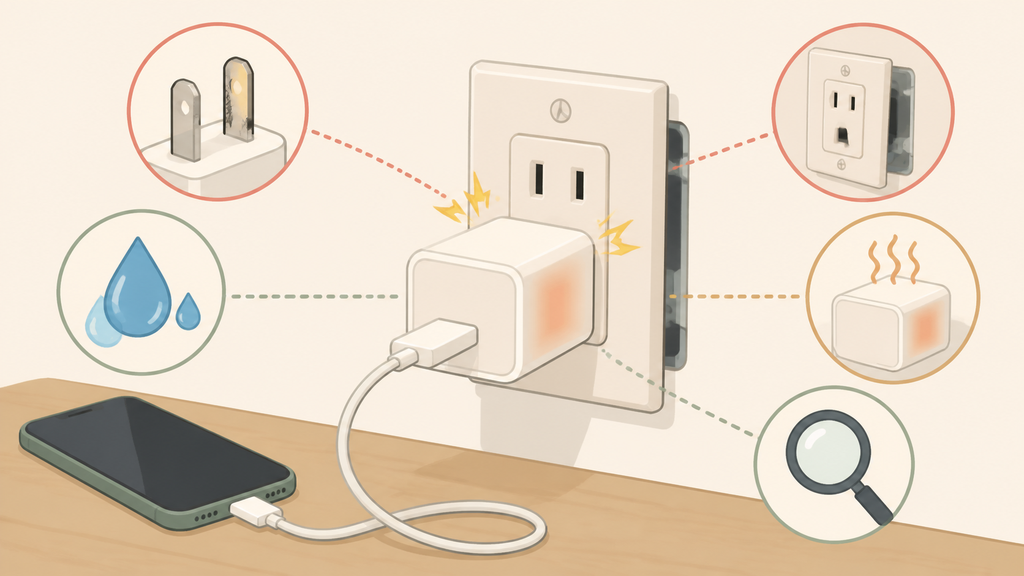
A charger is a small product connected directly to mains power. That means mechanical quality and electrical design both matter. If the plug does not fit well, contact can be inconsistent. If insulation distance is poor, internal failure risk increases. If materials are weak, heat can deform the housing.
Counterfeit or uncertified accessories can add risk. Apple warns that counterfeit or uncertified accessories may have charging problems, connector issues, and potential device damage.2 For wall chargers, the risk can extend beyond device performance because the adapter connects to household power.
Moisture is another cause. A charger used in a bathroom, kitchen, humid travel bag, or near spilled liquid should not be plugged in until fully dry and inspected. Water can create unintended paths for current. A user may only see a spark, but the root cause may be contamination.
Overload can also contribute. A multi-port charger loaded beyond its design may heat up or behave unstably. A cheap extension strip or loose adapter stack can make contact worse. The user may think the phone charger sparked, while the real issue is the outlet, plug strip, or overloaded setup.
| Cause | What it looks like | Buyer concern |
|---|---|---|
| Loose outlet | Plug moves easily | Home electrical risk |
| Damaged plug | Bent or blackened prongs | Replace charger |
| Moisture | Spark after wet exposure | Stop using |
| Poor materials | Heat or deformation | Supplier quality |
| Counterfeit charger | Unstable behavior | Certification risk |
Certification is part of responsible sourcing. Requirements vary by market, but serious charger buyers should confirm electrical safety, EMC, labeling, and documentation before shipment. FCC equipment authorization may apply to many electronic devices in the U.S., and buyers should understand the compliance path before import.3 Safety marks should be supported by real reports, not only printed on a shell.
At EverGreat, we treat sparks as a customer trust issue. Even if a small spark can be normal, a product should not feel cheap, loose, or uncertain. Good plug fit, strong housing, clear instructions, and responsible testing all reduce fear.
How Should Users And Brands Respond To Charger Sparks?
Users should stop using unsafe-looking chargers, and brands should build clear support and quality-control rules before complaints happen.
If a charger sparks repeatedly, smells burnt, feels hot, has damaged prongs, or fits loosely, stop using it. Brands should test plug fit, thermal behavior, materials, and certification before selling chargers.
For users, the safest response is simple. If the spark is tiny and happens once when inserting the plug, observe the charger. If it happens repeatedly, switch outlet and charger. If any heat, smell, smoke, black mark, or crack appears, stop using the charger. Do not open the charger. Wall adapters can contain dangerous voltages.
Users should also inspect the outlet. A loose wall socket should be repaired by a qualified electrician. A charger cannot perform safely if the power source is poor. Extension cords and power strips should also be checked for damage, overload, and poor fit.
For brands, response begins before the product ships. Sample testing should include plug insertion feel, prong strength, housing material, heat rise, long-session charging, and repeated plug cycles. If the product is a travel charger, test different outlet types and adapters carefully. A charger that works electrically but feels loose mechanically will still create complaints.
| Control point | Why it matters |
|---|---|
| Plug fit test | Reduces arcing from poor contact |
| Heat test | Catches overload and material problems |
| Housing material review | Prevents deformation |
| Certification review | Supports legal market access |
| Support script | Helps users respond safely |
The support script should be clear and calm. Ask: Was the spark tiny or large? Did it happen once or repeatedly? Is the outlet loose? Is there heat, smell, smoke, or black marking? Was the charger wet or damaged? These questions help separate normal contact arcing from a product or electrical fault.
From a manufacturing perspective, I prefer conservative decisions. If a sample sparks repeatedly, smells, or heats unusually, reject it. Do not rely on a supplier saying “this is normal” without data. A charger is too close to the user’s home, phone, and trust to treat visible sparks casually.
For importers, this issue should also be reflected in inspection standards. Check prong alignment, plug retention, shell gaps, and visible metal burrs. Run a basic charging load test, then inspect the plug area for heat or discoloration. If the product uses foldable prongs, test the hinge because weak folding mechanisms can create poor contact over time.
Customer-facing language should be direct. A tiny flash during insertion may occur, but repeated sparking is not something to normalize. Users should move to another outlet, stop using damaged accessories, and contact support if the charger or outlet shows marks, odor, or heat.
Brands should also record spark-related complaints separately from general charging complaints. If several users report the same plug type, outlet region, or batch code, the pattern can reveal a mechanical fit problem or material issue. That information is useful for supplier correction and future tooling decisions.
Conclusion
A tiny one-time spark can be normal, but repeated sparks, heat, smell, or loose contact should be treated as unsafe.
-
The Electrical Safety Foundation International provides home electrical safety guidance through its home safety resources. ↩
-
Apple explains risks from counterfeit or uncertified accessories in its identification guidance for Lightning connector accessories. ↩
-
The FCC provides equipment authorization information through its RF device authorization resources. ↩