Overnight charging feels convenient, but it also makes users worry about battery aging, heat, and safety. The real answer is more practical than scary.
Charging your phone overnight is usually not bad if you use a quality charger, keep the phone cool, and avoid covering it. Modern phones manage charging automatically, but heat, damaged accessories, and unsafe locations can still create problems.
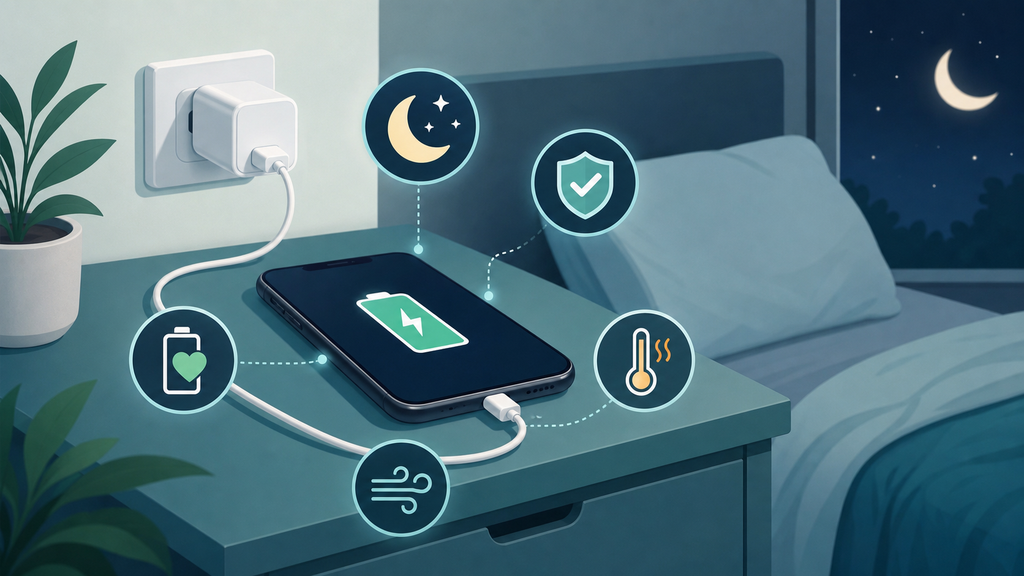
Many customers ask me this because they charge at night, then notice battery health dropping months later. Overnight charging is not a simple yes-or-no issue. It is a habit, accessory, temperature, and safety question.
Does Overnight Charging Damage The Battery?
People often think a phone keeps forcing power into the battery all night. That idea sounds logical, but modern phones do not work that simply.
Overnight charging does not usually overcharge a modern phone. The phone controls charging and slows or stops when needed. Battery aging is more affected by heat, high battery level time, charging habits, battery age, and overall usage cycles.
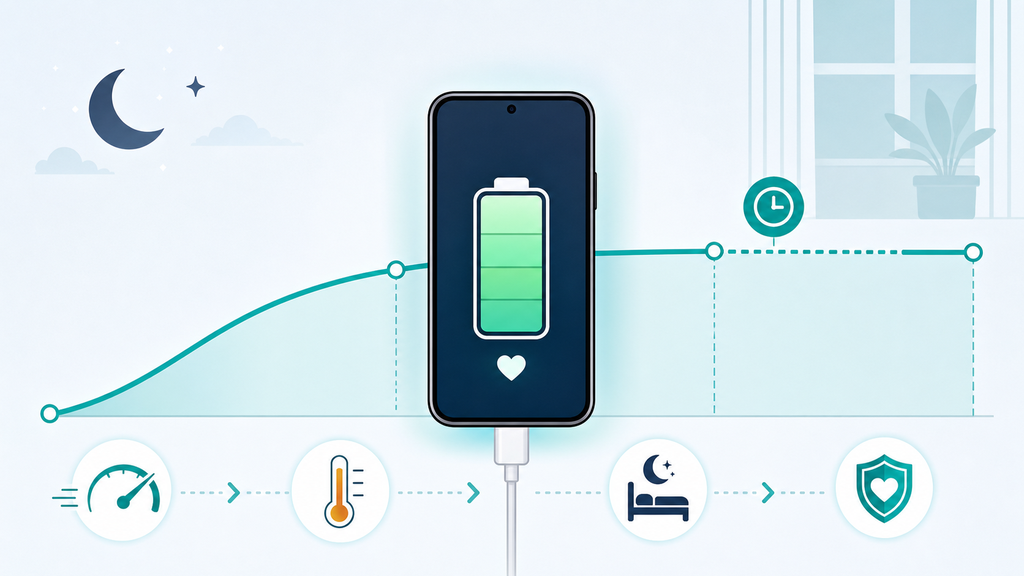
Apple explains that its lithium-ion batteries use fast charging to reach about 80 percent capacity, then switch to slower trickle charging.1 Apple also says Optimized Battery Charging can delay charging past 80 percent in certain situations to reduce battery aging.2 Google has a similar idea for Pixel phones. Its Adaptive Charging feature can steadily charge the phone over several hours and finish near the user’s wake time when the feature conditions are met.3
These features exist because battery health is not only about whether the phone reaches 100 percent. It is also about how long the battery stays warm, how long it stays near full charge, and how often the user cycles it deeply. A phone left plugged in overnight may sit near a high state of charge for hours. Modern software tries to manage that, but software cannot fix every poor charging setup.
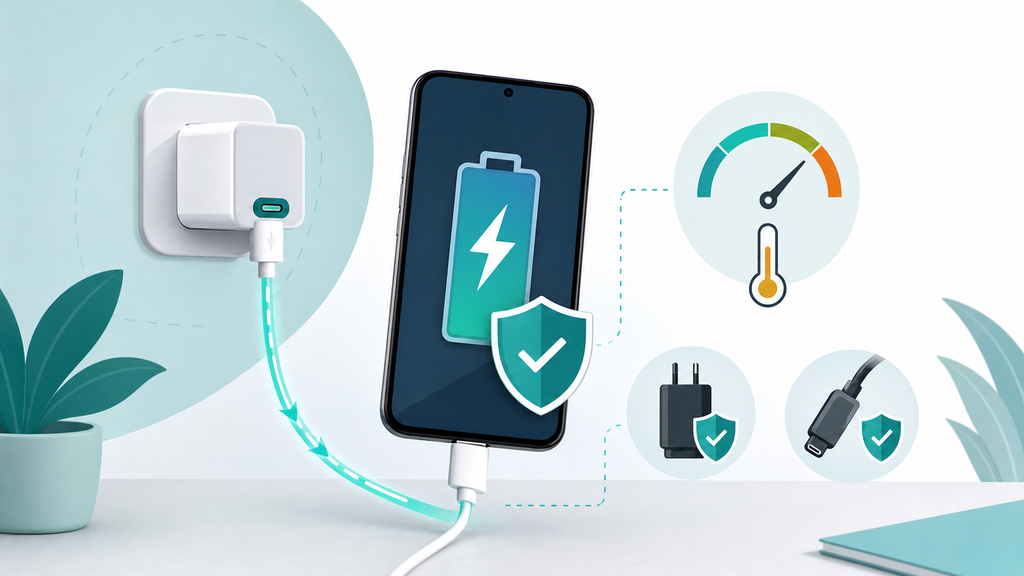
In manufacturing, I see overnight charging as a system behavior. The phone battery management system makes the final decision. The charger supplies power. The cable carries current. The environment controls heat release. A safe charging habit needs all four parts to work together.
| Factor | Why It Matters Overnight | Practical Meaning |
|---|---|---|
| Phone software | Controls charge rate and charging limit | Keep the phone updated |
| Battery temperature | Heat speeds battery stress | Avoid pillows, blankets, sunlight, and hot rooms |
| Charger quality | Poor design can run hot or unstable | Use certified or reliable accessories |
| Cable condition | Damaged conductors and loose plugs create risk | Replace worn cables |
| Battery age | Older batteries handle stress less well | Expect slower charging and lower capacity over time |
The biggest misunderstanding is the word "overcharge." A modern phone should not keep pushing uncontrolled current into a full battery. The bigger concern is battery stress. If the phone stays warm under a pillow for seven hours, the heat matters. If the phone is on a cool nightstand with a proper charger, the risk is much lower.
For users, I would not panic about overnight charging. I would adjust the habit. Turn on optimized charging features if the phone offers them. Put the phone on a hard surface. Remove a thick case if the phone often gets warm. Use a charger and cable that fit the device well. These small steps matter more than chasing perfect charging percentages every day.
For brands and importers, this topic affects product trust. A charger that works fine in a five-minute showroom test may feel different after hours of overnight use. Long-duration thermal testing is useful because it reveals warm shells, unstable cables, and confusing user experiences before customers find them.
When Can Overnight Charging Become Unsafe?
Most overnight charging is routine, so users become careless. That is exactly why small risks can become serious when they happen while everyone is asleep.
Overnight charging becomes unsafe when the phone, charger, cable, or power bank is damaged, covered by bedding, exposed to heat, placed on a soft surface, or made with poor-quality parts that lack proper protection.
Fire departments often give the same practical advice: charge lithium-ion devices on a hard surface, keep them away from exits, stop using damaged batteries or chargers, and avoid charging devices under pillows or on beds. The Seattle Fire Department specifically warns people not to charge devices on beds, under pillows, or on couches, and to avoid charging while sleeping when possible.4
That advice can sound stricter than normal consumer behavior. Many people still charge at night. The useful lesson is not that every night charge will become dangerous. The lesson is that charging location matters because nobody is watching the device.
I have seen three common risk patterns in charging products:
| Risk Pattern | What Usually Happens | Better Habit |
|---|---|---|
| Covered phone | Heat cannot escape | Charge on an open nightstand |
| Damaged cable | Connector warms or disconnects | Replace the cable immediately |
| Cheap charger | Shell gets hot or output is unstable | Use a reliable charger |
| Power bank in bed | Heat and pressure build up | Charge on a hard surface |
| Loose wall outlet | Plug sparks or sits poorly | Use a safe outlet |
The charger does not need to be expensive, but it should be designed and tested properly. A low-quality charger may still light up a phone screen. That does not mean the internal insulation, transformer, thermal protection, and output control are good. A cable can also look fine from the outside while the connector has poor contact.
Power banks need special care overnight. A power bank contains its own lithium-ion battery, charging circuit, and output circuit. If it is charging a phone while also being recharged, the thermal load can increase. Some products support pass-through charging, but that feature needs careful design. I do not like treating pass-through as a default overnight habit unless the product was clearly designed and tested for it.
For EverGreat projects, I prefer clear user instructions over vague safety warnings. A good manual should say where to charge, what to avoid, what kind of adapter to use, and when to stop using a cable or power bank. This protects the user and also reduces after-sales disputes.
For private-label buyers, I would ask suppliers for thermal test results, protection design notes, cable bend testing, and charger compatibility recommendations. It is not enough to ask whether the product "supports fast charging." Overnight use is a long-duration trust test.
What Is The Best Way To Charge Overnight?
The goal is not to turn charging into a ritual. The goal is to build a habit that is easy, safe, and kind to the battery.
The best overnight charging habit is to use a quality wall charger and cable, place the phone on a hard open surface, enable optimized charging, avoid heat, remove thick cases if needed, and stop using damaged accessories.
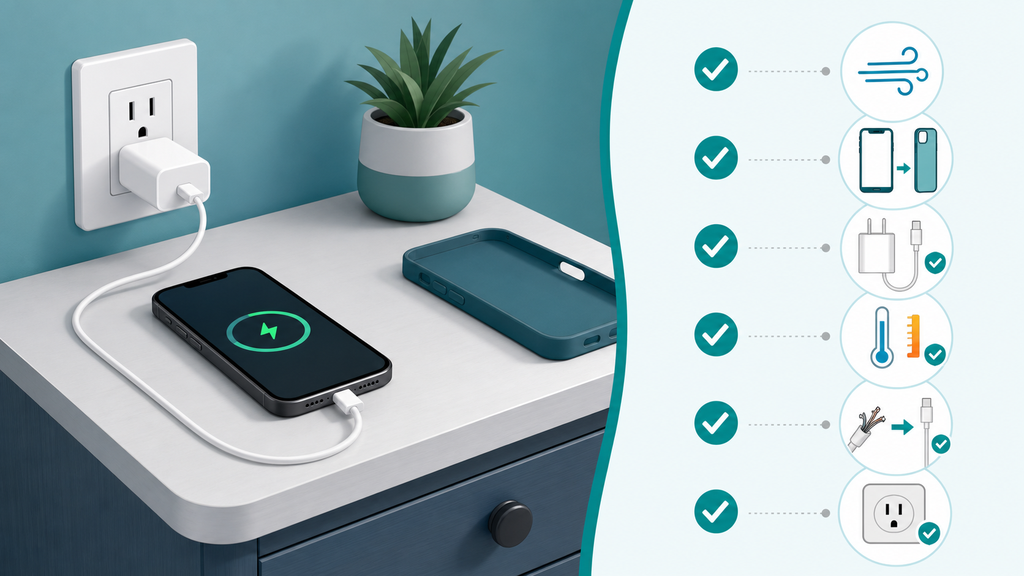
Start with the surface. A nightstand, desk, or open shelf is better than a bed or sofa. Airflow matters because charging creates heat. If the phone sits under a blanket, the same normal heat becomes trapped heat. That is the difference between a normal habit and a bad habit.
Next, check the accessory chain. A proper charger should match the phone’s supported charging method. A proper cable should fit firmly and not feel warm at the connector. If the phone only gets warm with one cable, replace that cable. If the charger shell becomes unusually hot, stop using it. If the phone warns about temperature, let it cool before charging again.
| User Goal | Recommended Habit | Why It Helps |
|---|---|---|
| Protect battery health | Enable optimized charging | Reduces time spent at full charge when supported |
| Reduce heat | Charge in open air | Helps the phone release heat |
| Improve safety | Avoid beds and pillows | Keeps heat away from soft materials |
| Avoid cable problems | Replace loose or damaged cables | Reduces connector heat and unstable charging |
| Keep speed predictable | Use the right adapter | Prevents slow or unstable overnight charging |
Wireless charging needs extra attention. It is convenient on a bedside table, but alignment and case thickness affect heat. If the phone is not centered on the charging pad, efficiency drops. More energy becomes heat. A thick wallet case, metal ring, or magnetic accessory can also cause problems. For wireless overnight charging, I prefer a charger with clear alignment, stable input power, and enough airflow.
Some users ask whether they should unplug at 80 percent. If the phone offers an 80 percent limit or optimized charging mode, that is a good practical option for people who want to reduce battery stress. If the user needs full battery every morning, optimized charging is usually easier than manual unplugging. The best habit is the one users can actually keep.
Brands should think about overnight charging at the product design stage. A bedside charger, travel charger, magnetic power bank, or cable kit should be tested in realistic conditions. Test with a thick case. Test in a warm room. Test with common phone models. Test after repeated cable bends. Test multi-port charging when another device is connected.
In my experience, customers forgive normal limits when the product explains them clearly. They are less forgiving when a charger gets hot, a cable feels loose, or the manual says nothing. A good charging product should make ordinary habits safer, not demand perfect behavior from every user.
Conclusion
Overnight charging is usually fine with good accessories, airflow, and optimized settings. Avoid heat, bedding, damaged cables, and low-quality chargers.
-
Apple, Batteries – Why Lithium-ion?. ↩
-
Apple Support, About Optimized Battery Charging on your iPhone. ↩
-
Google Pixel Phone Help, Adaptive Charging. ↩
-
Seattle Fire Department, Lithium-ion Battery Safety. ↩