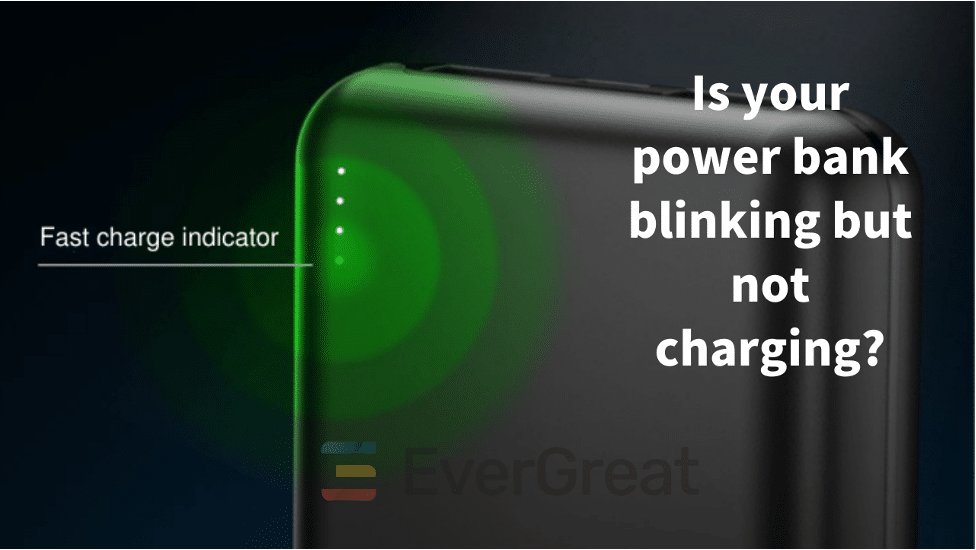
A slow-charging power bank wastes time, creates support complaints, and often points to a mismatch between capacity, charger, cable, and input design.
Your power bank may charge slowly because the wall charger is weak, the cable is not rated for enough current, the power bank has low input wattage, the battery is large, the USB-C PD profile is not negotiated, or temperature protection is limiting charging speed.

Many people only compare power banks by output speed, but the input side matters just as much. If a product can charge a phone quickly but takes all night to recharge itself, users will still see it as inconvenient. For brands and importers, slow input charging can become a hidden after-sales problem unless the product specification, accessory set, and user instructions are planned together.
What Are The Most Common Reasons A Power Bank Charges Slowly?
Slow charging is frustrating because users usually blame the power bank first, even when the charger or cable is the real bottleneck.
The most common reasons are a low-power wall charger, an old USB-A cable, weak input wattage, large battery capacity, poor cable quality, device temperature, and protocol mismatch. A high-capacity power bank needs a charger and cable that match its supported input rating.
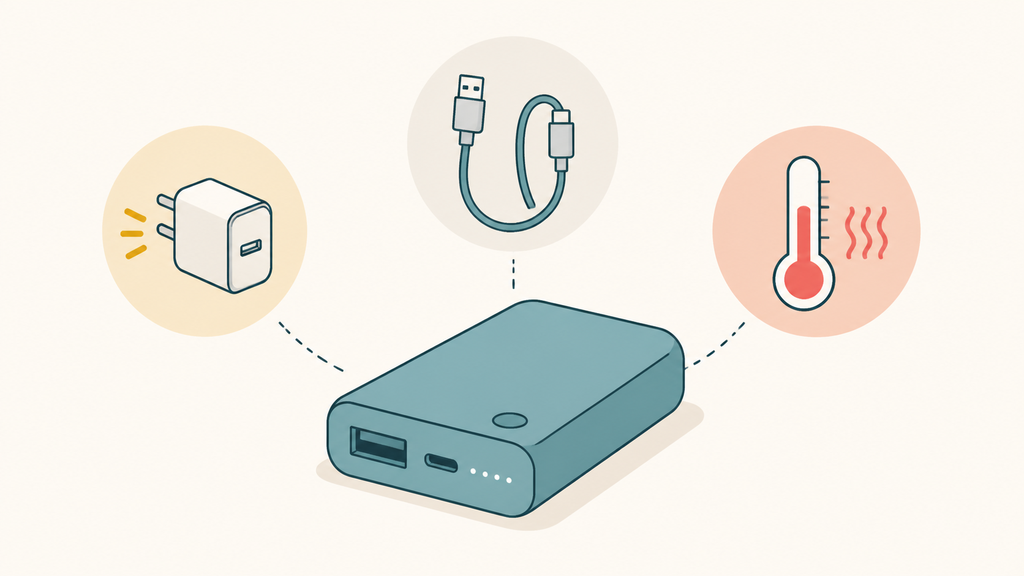
The first thing I check is the wall charger. Many users still plug a large power bank into an old 5W or 10W phone charger. That may work, but it can be painfully slow. A 20,000mAh power bank connected to a weak charger may need many hours to refill, especially after conversion loss and battery management limits are included. If the same power bank supports 18W, 30W, or 45W input, the user needs a compatible charger to benefit from that design.
The second bottleneck is the cable. A cable is not just a piece of wire. Cable quality affects current, voltage drop, heat, connector stability, and protocol behavior. USB-C charging can involve communication between the charger, cable, and device. USB-IF explains USB Power Delivery as a negotiated charging system that can support much higher power levels when the full system is designed correctly.1 If the cable is damaged, poorly made, or not rated for the needed current, the power bank may fall back to a lower charging level.
Input wattage is another key point. Some power banks advertise fast output but only support low input. For example, a model may offer 22.5W or 30W output but only 10W or 18W input. That means it may charge your phone fast, but recharge itself slowly. This is not always a defect. Sometimes it is a cost, size, or heat-control decision. The issue is whether the packaging and product page make that clear.
Capacity also matters. A 5,000mAh power bank can recharge quickly even with moderate input. A 20,000mAh or 30,000mAh model simply has more energy to refill. Users often compare charging time without comparing battery size, which leads to unrealistic expectations.
| Cause | What it means | Practical fix |
|---|---|---|
| Weak wall charger | Input power is limited before it reaches the power bank | Use a charger that matches the rated input |
| Low-rated cable | The cable cannot carry enough current reliably | Use a proper USB-C cable |
| Low input design | The power bank itself supports only modest input | Check input wattage before buying |
| Large capacity | More battery energy takes longer to refill | Expect longer charging time for larger models |
| Heat protection | Charging slows to protect the battery | Charge in a cooler, ventilated place |
In my experience, many complaints are not caused by a failed battery. They come from a mismatch between the power bank’s advertised output, its actual input capability, and the accessories the user owns. For B2B buyers, this is why I prefer to review the full charging experience before confirming a model, not only the biggest number on the front label.
How Long Should A Power Bank Take To Recharge?
Customers often expect a large power bank to recharge like a phone, then think something is wrong when it takes much longer.
A small 5,000mAh power bank may recharge in 2-3 hours with suitable input. A 10,000mAh model often needs 3-5 hours. A 20,000mAh model may need 5-8 hours or more, depending on input wattage, efficiency, temperature, and charging curve.
Charging time is not calculated by capacity alone. You also need to consider input power, conversion efficiency, and the charging curve. Lithium-ion charging is usually faster in the earlier stage and slower near full charge because the protection circuit manages voltage, current, and temperature. That final percentage can feel slow, but it helps protect the battery.
Here is a simple way to think about it. A power bank with higher input wattage can refill faster, but only if the charger and cable support that input. If a 20,000mAh model supports 30W input, using a 10W charger will not magically become 30W. The system will be limited by the weakest part.
| Power bank capacity | Typical input design | Rough recharge expectation |
|---|---|---|
| 5,000mAh | 10W-18W | About 2-3 hours |
| 10,000mAh | 18W-30W | About 3-5 hours |
| 20,000mAh | 20W-45W | About 5-8 hours |
| 27,000mAh+ | 30W-65W | Often 6-10+ hours |
These ranges are not promises. They are practical expectations I use when talking with customers. Real charging time depends on cell capacity, rated voltage, firmware, protection settings, cable resistance, charger quality, and room temperature. It also depends on whether the power bank supports pass-through charging. Charging a phone from the power bank while the power bank is recharging can slow the process and add heat.
Temperature deserves attention. Apple notes that lithium-ion batteries can be affected by temperature and that high heat can permanently affect battery capacity.2 Power banks also use lithium-based cells, so responsible design slows or stops charging under unsafe temperature conditions. A user may see slower charging if the power bank is warm after heavy use, sitting in direct sun, or placed under bedding or inside a bag.
For brands, the key is expectation management. If you sell a 20,000mAh travel power bank, do not only advertise how many times it can charge a phone. Also explain the recommended wall charger and expected recharge time. This reduces support tickets and helps users understand that a large battery needs more time or higher input power to refill.
From a manufacturing side, I also look at input heat during testing. A product that accepts high input but becomes too hot may create more problems than a slightly slower product with stable temperature behavior. A well-balanced 30W input design can be better than an aggressive 45W input design if the enclosure, cells, and PCB layout are not ready for the heat.
What Should Buyers Check Before Choosing A Fast-Recharge Power Bank?
Fast recharge sounds simple in marketing, but it changes the whole product design and quality-control plan.
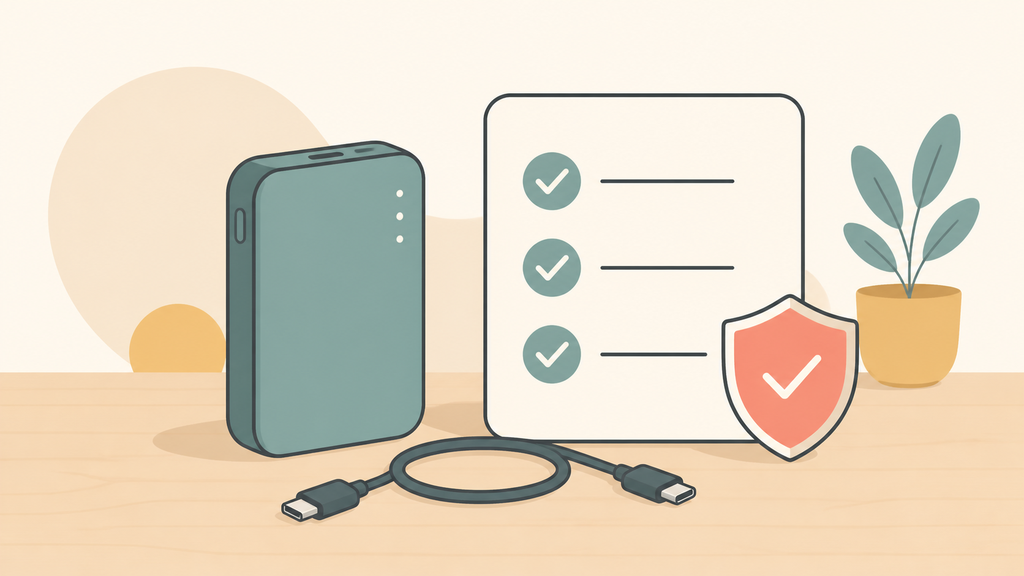
Buyers should check input wattage, USB-C PD support, included cable rating, charger recommendation, battery capacity, heat performance, safety protections, certifications, and whether the claimed recharge time was tested with realistic accessories.
The most important specification is input wattage. Many product listings highlight output first because users care about charging phones and laptops. But for a serious product brief, input should sit next to output. If the target user is a commuter with a compact phone power bank, 18W input may be acceptable. If the target user is a traveler using a 20,000mAh or laptop-capable model, 30W-45W input may create a much better experience.
The charging port also matters. USB-C input is now the practical default for modern designs, especially when the product supports USB Power Delivery. USB-IF also provides information on certified USB products and compliance programs, which is useful when brands want a cleaner accessory ecosystem and clearer quality expectations.3 A low-cost product may still use older input options, but brands should understand the tradeoff: lower accessory compatibility, slower recharging, and weaker premium positioning.
Cable planning is a common sourcing mistake. A buyer may approve a 30W or 45W input power bank, then include a basic cable that cannot reliably support the user experience. The result is a support problem that looks like a power bank defect. In retail, the included cable, manual, carton label, and product page should all align with the charging claim.
Safety documentation is also part of the decision. UL’s consumer battery safety guidance emphasizes using compatible charging equipment and watching for signs such as excessive heat, odor, leakage, or swelling.4 For an importer, this connects directly to supplier evaluation. Ask for protection design details, cell supplier information, test records, and certification planning before placing a large order.
Here is the checklist I would use before choosing a fast-recharge model:
| Buyer question | Why it matters |
|---|---|
| What is the maximum input wattage? | Defines how fast the power bank can recharge |
| Which charger was used for the recharge-time claim? | Prevents unrealistic marketing claims |
| Is the cable rated for the needed current? | Protects real-world performance |
| Does it support USB-C PD input? | Improves compatibility with modern chargers |
| How hot does it get during input charging? | Reduces safety and comfort complaints |
| What happens near full charge? | Explains the slower final charging stage |
| Are protections documented? | Supports import and quality review |
| Is the user manual clear? | Reduces after-sales confusion |
I often advise customers to create two specification levels instead of forcing one product to fit every price point. A value model can focus on dependable 18W input and simple phone charging. A premium model can support 30W or 45W input, USB-C PD, a better cable, and clearer recharge-time claims. This gives the sales team an honest product ladder and helps the customer choose by use case.
For EverGreat projects, we usually review the full charging loop: wall charger to power bank, power bank to device, multi-port behavior, temperature, cable, and packaging claims. That process is slower than copying a competitor listing, but it prevents expensive misunderstandings. A fast-recharge power bank should feel fast because the whole system supports it, not because the headline number looks attractive.
Conclusion
A slow-charging power bank usually has a bottleneck. Match input wattage, charger, cable, capacity, and heat design before blaming the battery.
-
USB Implementers Forum, USB Charger (USB Power Delivery). ↩
-
Apple, Batteries – Maximizing Performance. ↩
-
USB Implementers Forum, Cables and Connectors. ↩
-
UL Research Institutes, Know Your Battery. ↩