A burning smell from a charging cable feels small at first, but it can signal heat, damage, or unsafe contact.
A charging cable may smell like burning because the connector is overheating, the wire is damaged, the cable is overloaded, the charger or port has poor contact, insulation is melting, or dirt and corrosion create resistance. Stop using it immediately and inspect the cable, charger, device port, and outlet.
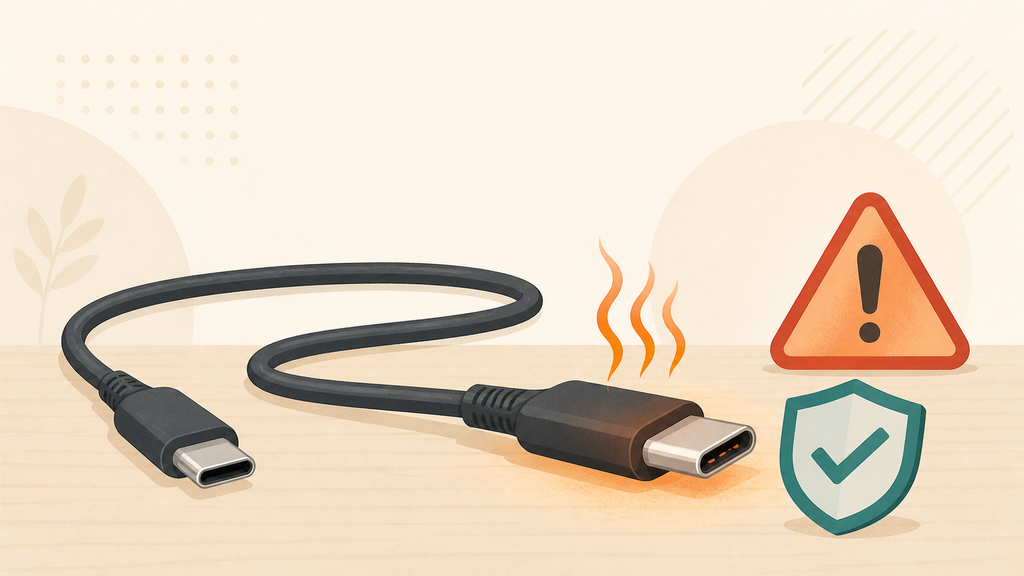
This is a high-anxiety problem because the user can smell risk before seeing damage. It is also a common after-sales issue for brands. The hard part is knowing whether the cable is the root cause or only the first place the problem becomes visible.
Why Can A Charging Cable Smell Burnt?
Burnt smell usually means heat is affecting plastic, insulation, or connector material.
A charging cable can smell burnt when electrical resistance creates heat at the connector, when internal wires are broken, when the cable is bent or crushed, when the charger delivers more current than the cable can handle, or when the device port has dirt, liquid, or corrosion.
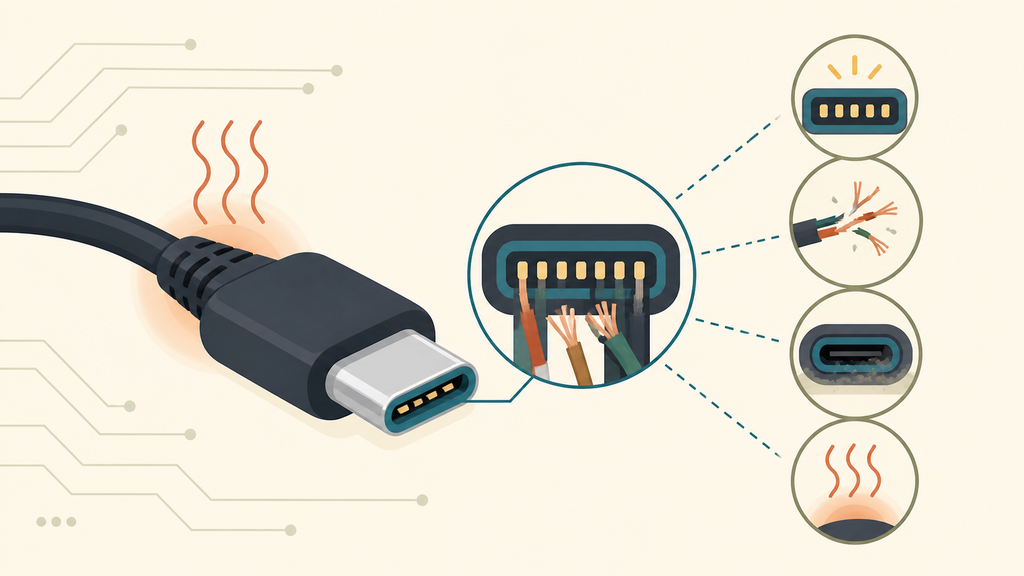
A charging cable looks simple, but it has conductors, insulation, shielding, connector pins, solder joints, strain relief, and an outer jacket. These parts are small. When contact is poor or current is too high for the cable quality, heat can build quickly at one point.
Connector heat is one of the most common causes. The cable may be loose in the phone, power bank, or charger. A tiny contact area carries current. Resistance increases. The connector becomes hot. Plastic around the plug may soften or smell.
Internal wire damage is another common cause. Users bend cables near the connector thousands of times. A wire strand can break inside while the outer jacket still looks normal. The cable may work only at a certain angle. That intermittent contact can create heat and smell.
Liquid and dirt make the problem worse. A phone port with pocket dust, corrosion, or moisture can cause poor contact. Apple advises users not to use a damaged cable or charger and warns that using damaged accessories can cause fire, electric shock, injury, or damage.1 That is a strong signal: cable damage should not be treated as cosmetic.
| Cause | What users notice | Practical check |
|---|---|---|
| Loose connector | Hot plug, unstable charging | Try a known good cable |
| Broken wire | Charges only at an angle | Replace cable |
| Dirty port | Smell near device side | Inspect port carefully |
| Weak cable | Heat during fast charging | Check cable rating |
| Bad charger | Heat near USB port | Test with another charger |
USB-C has added another layer. A USB-C cable may support different power and data levels depending on design. USB Power Delivery can negotiate charging between compatible products, but the cable still needs to safely handle the current.2 A low-quality cable may look like a normal USB-C cable while failing under fast charging stress.
In my experience, many cable complaints are not about the whole cable. They are about one weak point: the connector, strain relief, soldering, or jacket material. This is why a cable can pass a quick charging demo but fail after daily bending in a bag.
When Should You Stop Using A Smelly Charging Cable?
The short answer is immediately. Do not keep testing a cable that smells burnt.
Stop using a charging cable immediately if it smells burnt, feels hot at either end, has black marks, exposes wires, melts, sparks, buzzes, or charges intermittently. Replace it instead of taping it, bending it back, or using it only when supervised.
A burnt smell is not a feature of fast charging. Fast charging can create warmth, but it should not smell like melted plastic or chemicals. If the smell appears only with one cable, the cable is the first suspect. If it appears with multiple cables, check the charger, device port, and wall outlet.
The safest first step is to disconnect power. Let the cable and charger cool. Do not touch a melted area while it is hot. Do not plug the same cable into another expensive device to test it. A bad cable can damage a port or cause another overheating event.
Electrical Safety Foundation International recommends replacing damaged cords and warns against using cords that are cracked, frayed, or damaged.3 A phone cable is smaller than a household extension cord, but the logic is the same. Damaged insulation and poor contact should not be repaired with tape for normal use.
| Warning sign | Stop-use level | Why |
|---|---|---|
| Burnt smell | Immediate | Insulation or plastic may be overheating |
| Hot connector | Immediate | Contact resistance may be high |
| Black mark | Immediate | Material has already overheated |
| Exposed wire | Immediate | Shock and short risk |
| Intermittent charging | Replace soon | Hidden break may worsen |
For users, the right decision is simple: cables are replaceable; devices and safety are not. If a cable smells burnt, replace it. If the charger or phone port also smells or looks damaged, stop using those parts too.
For brands, the after-sales lesson is more subtle. A customer may report "the cable smells burnt," but the real cause may be the charger, device port, or misuse. Support teams need a clear troubleshooting script: where was the heat, which device was used, which charger, how old was the cable, any visible damage, and whether another cable repeats the issue.
What Should Brands Check Before Buying Charging Cables?
A cable should be selected for the charging promise, not only appearance.
Brands should check cable current rating, connector quality, bend life, wire gauge, insulation material, strain relief, fast-charging compatibility, heat rise, labeling accuracy, and production inspection before buying charging cables. The cable must match the charger and device use case.
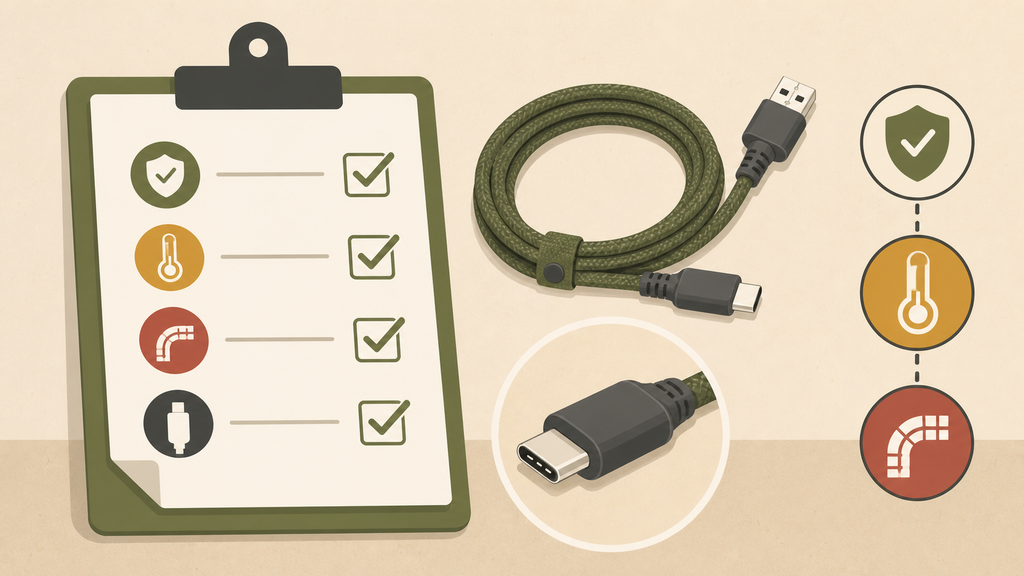
The first sourcing mistake is buying by look. A braided jacket, metal shell, or thick cable can look premium while hiding weak soldering or poor connector fit. A simple cable with good materials and stable assembly may perform better than a decorative one.
The second mistake is ignoring the bundle. If a brand sells a 65W charger with a cable, the cable should support that use case. If the cable is only suitable for basic phone charging, the product page should not imply laptop-level fast charging. Packaging claims should match real test results.
The third mistake is weak bend testing. Many failures happen near the connector because customers pull and bend the cable there. Buyers should ask for bend test data, connector pull strength, insertion testing, and sample checks after bending. A cable that smells or heats after the connector loosens is a product design problem, not only user behavior.
| Buyer checkpoint | What to ask supplier | Why it matters |
|---|---|---|
| Current rating | What power level is supported? | Prevents overload claims |
| Connector fit | Is contact stable after use? | Reduces heat points |
| Wire structure | What gauge and material are used? | Affects resistance |
| Strain relief | How is bending controlled? | Reduces hidden wire breaks |
| Heat rise test | What happens under load? | Shows safety margin |
| Labeling | Are claims accurate? | Reduces returns and disputes |
The Consumer Product Safety Commission posts recalls when charging cables or electrical accessories create fire or burn hazards.4 These cases remind brands that a cable is not a throwaway accessory from a risk perspective. It can carry the brand name and affect trust.
EverGreat usually recommends building cable selection around the final kit. A cable for a phone-only promotional gift can be simple and reliable. A cable for a GaN charger bundle needs stronger current handling and clearer ratings. A cable for laptops needs stricter compatibility and documentation.
I also like to test cables after real handling, not only straight out of the package. Bend the connector area, plug and unplug it repeatedly, test it with the intended charger, and check heat at both ends. If a cable only performs well when it is new and perfectly straight, it may not survive daily use. This kind of simple abuse test often reveals weak strain relief before customers do.
The best question is not "Can this cable charge?" Almost any sample can charge once. The better question is "Can this cable keep charging safely after bending, travel, fast charging, and real customer use?" That is where strong supplier testing pays for itself.
Conclusion
A burnt-smelling charging cable should be replaced immediately. Brands can prevent this issue by matching cable design, testing, and claims to real charging use.
-
Apple Support, Important safety information for iPhone. ↩
-
USB Implementers Forum, USB Charger (USB Power Delivery). ↩
-
Electrical Safety Foundation International, Extension Cord Safety Tips. ↩