A cable looks simple until returns, slow charging complaints, and mismatched claims damage a new product launch.
Brands should choose USB-C charging cables by matching power rating, data speed, connector quality, compliance evidence, packaging claims, and target device use. A private label cable should be specified as a product system, not treated as a cheap accessory.
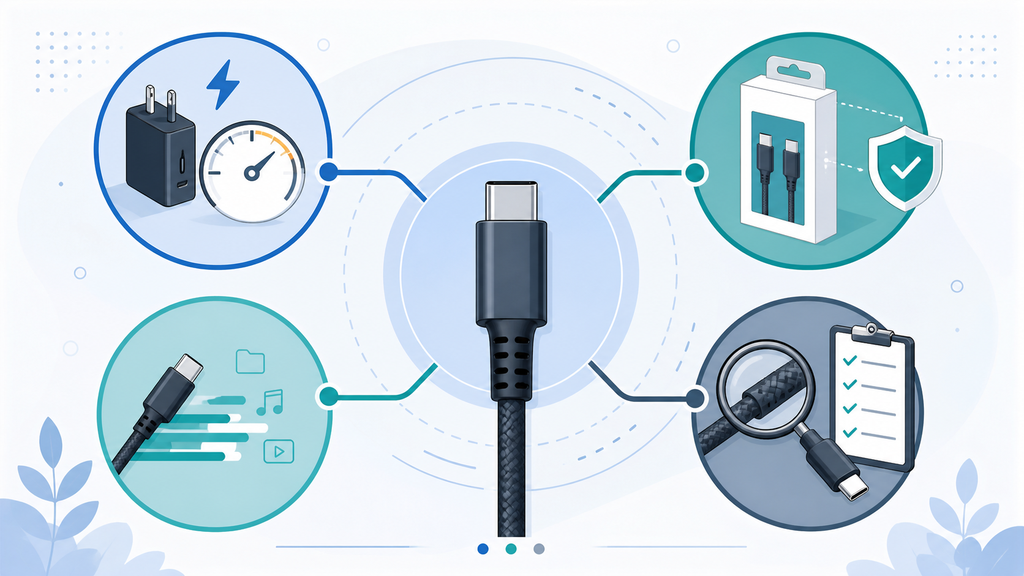
I often find that buyers compare only length, color, and price. The real decision is deeper because the cable controls user trust every time a device charges.
What Cable Specifications Matter Before Sampling?
Unclear specifications create samples that look correct but cannot support the buyer’s real charging or data promise.
The most important specifications are connector type, cable length, current rating, power rating, data speed, jacket material, bend life target, and packaging claim.
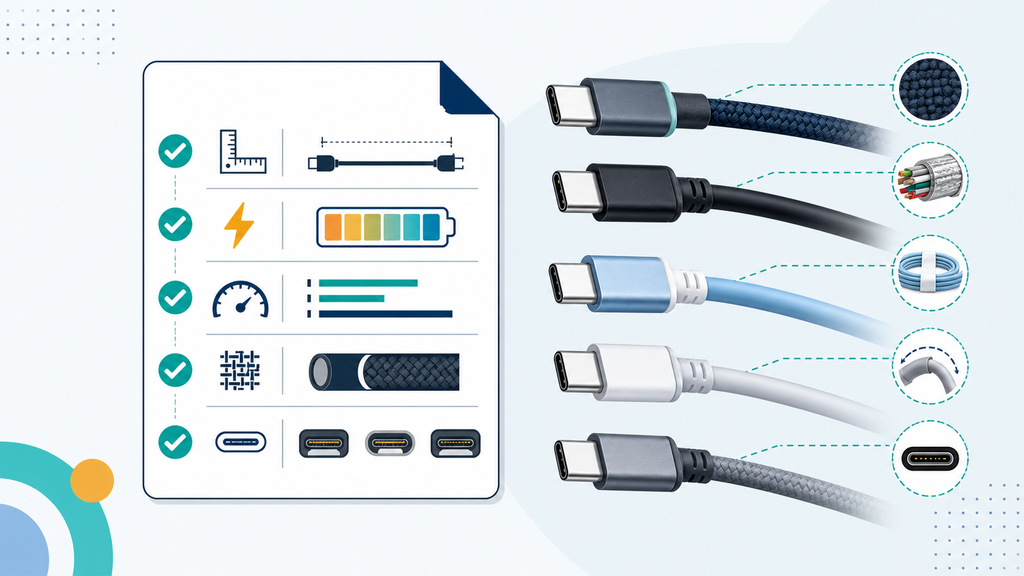
In my experience, the first mistake is asking for "a USB-C cable" without defining the exact job. USB-C describes the connector shape, not the full cable performance. A 60W cable, a 100W cable, a 240W cable, and a USB 2.0 charging cable can look similar to a normal user. They do not carry the same commercial promise. The USB-IF says USB Power Delivery can support higher power use cases over a full-featured USB Type-C cable and connector up to 240W.1 That does not mean every USB-C cable should be sold as 240W. It means the claim must match the design, components, and test evidence.
I usually ask buyers to start with the device scenario. Is the cable bundled with a power bank? Is it sold as a phone accessory? Will it support tablets, laptops, or only daily phone charging? Will the customer expect data transfer, or only charging? A cable for a promotional gift has different priorities from a cable for a retail electronics brand. The promotional buyer may care about color, logo position, and delivery speed. A retail buyer needs stronger packaging accuracy and fewer after-sales complaints.
| Decision Point | Practical Question | Why It Matters |
|---|---|---|
| Power claim | 60W, 100W, or 240W? | Prevents overclaiming and user complaints |
| Data speed | Charging only or data transfer? | Avoids wrong customer expectations |
| Length | 0.3m, 1m, 1.5m, or 2m? | Affects resistance, feel, and cost |
| Jacket | PVC, TPE, braided, or silicone feel? | Changes price, durability, and brand image |
The next step is to turn the specification into a sample sheet. The sheet should include electrical target, connector shell material, strain relief design, color tolerance, logo method, packaging wording, and required documents. This may feel slow at the beginning, but it saves time later. When the sample arrives, the buyer can check the real product against the agreed sheet instead of relying on memory or sales messages.
EverGreat often helps customers define this kind of product sheet before sampling. It is not only a technical document. It is a communication tool between buyer, factory, packaging team, and quality inspection team. When every side reads the same cable promise, the chance of wrong samples and wrong claims becomes much lower.
How Do Compliance And Market Rules Affect Cable Decisions?
Weak compliance planning can turn a simple cable order into a retail, customs, or customer-service problem.
Compliance affects cable decisions through USB-IF claims, EU common charger rules, labeling accuracy, safety documents, and the buyer’s sales channel requirements.
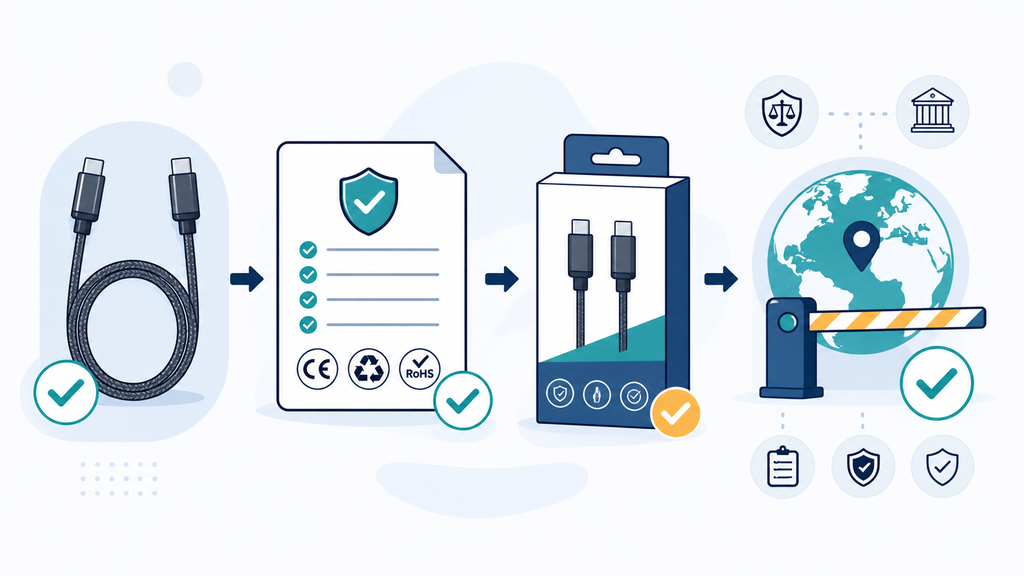
For many brands, USB-C is no longer just a convenience feature. It is tied to market access and consumer expectations. The European Union’s common charger directive requires many categories of radio equipment to use USB-C for wired charging and sets rules for fast-charging interoperability.2 This regulation is mainly about devices, not every standalone cable. Still, it changes the market. Retail buyers, distributors, and consumers now expect charging products to make clearer USB-C claims.
This is where private label buyers need discipline. A package that says "fast charging" may be legally and commercially weaker than a package that says the exact supported power under the right conditions. A cable marked for high wattage should not be paired with vague test records. A cable promoted for laptop use should not be based on the same low-cost construction used for a short phone giveaway cable. The more specific the claim, the more carefully the buyer should verify the design.
USB-IF also maintains a document library where buyers can find current USB specifications, compliance documents, and test-related materials.3 Most buyers do not need to read every standard. They do need to know that USB performance claims come from a structured ecosystem, not from casual marketing words. If the sales channel asks for certified logos, the brand must understand logo licensing and certification requirements before artwork is printed.
| Claim On Packaging | Buyer Should Confirm | Common Risk |
|---|---|---|
| USB-C fast charging | Supported power and charger conditions | Customer expects all chargers to perform the same |
| 100W or 240W | Cable construction and supporting evidence | Claim exceeds actual design |
| Data transfer | Real transfer level and connector design | Charging cable sold as data cable |
| Certified logo | Proper authorization and evidence | Logo misuse or retail rejection |
I have seen projects where the cable itself was acceptable, but the retail package created the risk. The factory made a charging cable, while the buyer’s marketing team wrote a data-transfer claim. The problem appeared only after the sales team prepared the listing. At that stage, changing packaging delayed shipment and increased cost.
A better method is to review compliance and claim language before mass production. Buyers should ask suppliers for realistic wording, test support, and product limitations in plain English. A good supplier will not push the highest claim just to win an order. A good supplier will explain which claim can be supported and which claim may create after-sales pressure.
What Supplier Signals Reduce Quality And After-Sales Risk?
A low cable price can hide unstable materials, poor connector fit, and weak problem tracing after shipment.
Strong supplier signals include a clear BOM, controlled connector sourcing, bend and plug testing, batch records, honest claim review, and fast after-sales response.
Cable quality problems often feel small at first. A connector feels loose. The jacket turns sticky. A customer says charging is slow. A retailer sees higher return rates than expected. Each problem is small by itself, but together they hurt the brand. This is why I pay attention to supplier behavior before the purchase order, not only after defects appear.
The first signal is whether the supplier can explain the bill of materials. The buyer should know the conductor material, connector shell, jacket material, strain relief design, and any chip or marker requirement for higher power cables. The supplier does not need to expose every confidential factory detail, but they should explain the grade level and the tradeoff. A cheaper jacket may help a promotion budget. A better strain relief may reduce returns for daily-use retail cables.
The second signal is testing behavior. For USB Type-C cable and connector work, USB-IF lists compliance documents and test materials, including a Type-C connectors and cable assemblies compliance document in its official library.4 A private label buyer may not perform full certification for every simple project, but the supplier should still understand mechanical fit, electrical continuity, charging behavior, and visual inspection. If the supplier only says "no problem" without test method or inspection records, the buyer has little protection.
| Supplier Signal | What It Shows | Buyer Benefit |
|---|---|---|
| Clear BOM options | Material control | Fewer surprise substitutions |
| Pre-production sample report | Process discipline | Easier approval before mass production |
| Batch inspection records | Traceability | Faster response if a complaint appears |
| Honest claim limits | Long-term thinking | Lower return and channel risk |
The third signal is response style. I trust suppliers who explain problems early. If a buyer asks for a very low price and a premium claim, the supplier should show the compromise. Maybe the cable can meet the target price with a simpler jacket. Maybe the cable can keep the premium feel but needs a higher cost. Maybe the power claim should be reduced to match the intended charger and device use.
EverGreat’s role in these projects is often to connect the technical, sourcing, packaging, and customer-service sides. A cable is not difficult because it has many parts. It is difficult because many teams make small assumptions. When those assumptions are not checked, the final product may disappoint users even if the factory delivered on time.
Conclusion
Choose USB-C cables by real use, supported claims, supplier control, and after-sales risk before private label production starts.
-
The USB-IF Power Delivery page supports the point that USB-C power capability depends on the proper cable, connector, and PD implementation. ↩
-
Directive (EU) 2022/2380 is the official EU legal source for common charger and USB-C interoperability requirements affecting many device categories. ↩
-
The USB-IF document library is the official source for USB specifications, compliance documents, and test materials. ↩
-
This USB-IF compliance listing supports the need to treat connector and cable assembly quality as a documented engineering issue, not only a price issue. ↩