Are you feeling confused about power bank compliance? Many brands worry about changing rules, but the real issue is not knowing what certificates truly mean for your products. This uncertainty can put your entire business at risk.
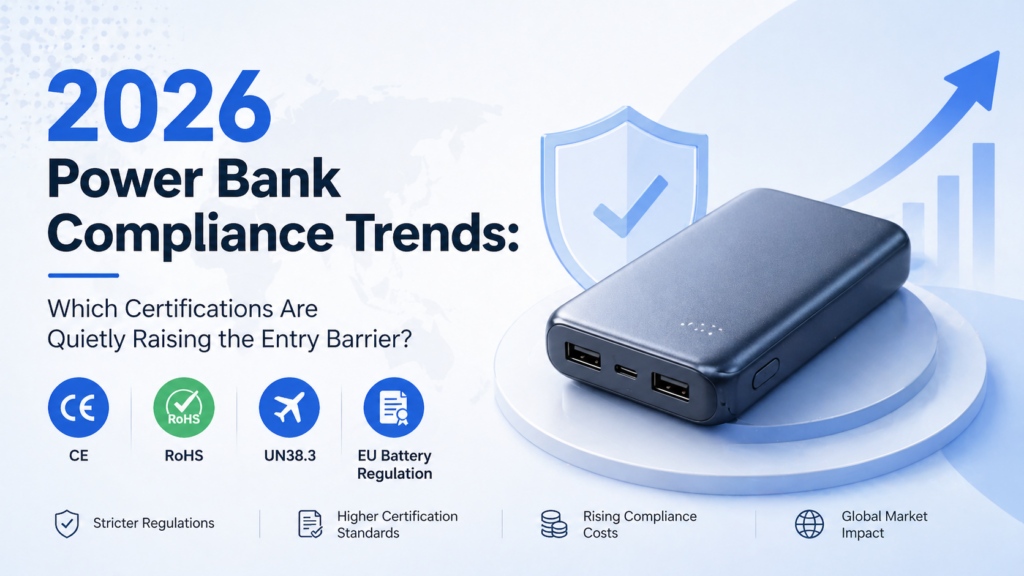
As we head into 2026, compliance is no longer just a final box to check. It is becoming a key factor from the very start of product design. The EU Battery Regulation 2023/1542 brings big changes, making certifications like CE, RoHS, and UN38.3 more vital than ever for power bank sellers.
I see many businesses struggling to keep up with these shifts. It is not just about getting a piece of paper; it is about making sure your product truly meets safety and quality standards every single time. Let’s look closely at what these changes mean and how you can stay ahead.
EU Battery Regulation 2023/1542 Explained: What It Means for Power Bank Sellers in 2026?
Are you worried about the new EU Battery Regulation affecting your power bank sales? Many sellers are unsure about what this complex rule means for them. Not understanding it can lead to market access problems and costly fines.
The EU Battery Regulation 2023/1542 introduces strict requirements for battery sustainability, safety, and labeling. For power banks, it means mandatory carbon footprint declarations, due diligence for raw materials, and a "digital product passport" by 2026. This adds new layers of compliance for all sellers in the EU market.
The EU Battery Regulation (EU) 2023/1542 officially entered into force on August 17, 2023, and became mandatory on February 18, 2024. While already in force, its various requirements have different mandatory enforcement dates stretching into the future. From where I stand, I have seen the early signs of this change. It is not just about making a product that works. It is about proving that it was made responsibly, from the very first component. This new regulation is a game-changer. It pushes compliance much further back into the supply chain. We need to look at everything from where materials come from to how they are processed. This means power bank sellers cannot just rely on their final assembly partner anymore. They must ensure every step meets these tough new rules. For example, my team recently helped a client trace their battery cell origins to ensure they met upcoming due diligence requirements. This step adds time and cost, but it is now essential. If you want to sell in the EU, you must show a clear path for every part of your battery. This will make sure it is sustainable and ethical. This new rule also demands a "digital product passport," which is a whole new level of transparency. It means every power bank will have a QR code. This code will link to detailed information about its history, materials, and carbon footprint. For brands, this is a big task. It needs deep cooperation with manufacturers who can provide this data accurately. It means the manufacturer needs strong internal systems to track all this information.
Key Aspects of the EU Battery Regulation 2023/1542
- Carbon Footprint Declaration:
- What it is: Manufacturers must calculate and declare the carbon footprint for each battery model. This will cover the entire lifecycle. Carbon footprint requirements for rechargeable industrial batteries, which some larger power banks may be classified as, become mandatory on February 18, 2026.
- Impact: This requires detailed data collection from raw material extraction to manufacturing. It favors suppliers with transparent, green production processes.
- Due Diligence Obligations:
- What it is: Companies must show they have responsible sourcing practices for materials like cobalt and lithium. This is to avoid human rights abuses and environmental damage.
- Impact: This means deeper checks on the supply chain. It may lead to choosing suppliers who can prove ethical sourcing.
- Digital Product Passport:
- What it is: Each battery will get a unique ID. This will link to an electronic record with information on its model, manufacturing, and components.
- Impact: This demands advanced data management from manufacturers. It will help consumers and authorities track products easily. While the regulation outlines a passport for larger industrial batteries by February 18, 2027, the Commission will assess extending these requirements to portable batteries (typically under 2 kWh) by December 31, 2030.
- Removability and Replaceability of Portable Batteries:
- What it is: Portable batteries incorporated into products, including power banks, must be removable and replaceable by end-users throughout the product’s lifetime.
- Impact: This requirement becomes mandatory by February 18, 2027, with certain exceptions for products where user removal is unsafe or impractical (e.g., some wearables). This will impact product design and potentially manufacturing processes.
CE, RoHS, UN38.3: Which Certifications Are Actually Required vs. Often Misunderstood?
Are you confused about which power bank certifications are truly necessary? Many buyers think they understand CE, RoHS, and UN38.3, but often miss the fine print. This misunderstanding can lead to buying non-compliant products, risking recalls and legal issues.
CE, RoHS, and UN38.3 are all required for selling power banks in specific markets or for shipping. CE marks compliance with EU safety, health, and environmental standards. RoHS restricts hazardous substances in electronics. UN38.3 ensures lithium batteries are safe for transport. The key is ensuring these certificates actually match the final product being mass-produced.
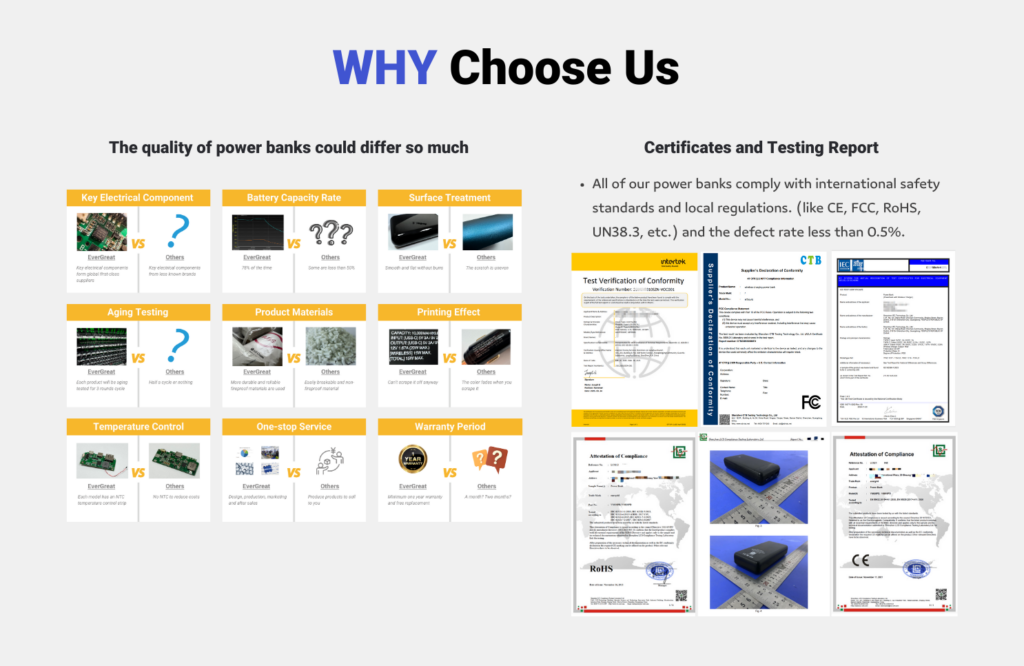
I often hear buyers say, "My supplier has the CE certificate, so we’re good." But it is not always that simple. I have seen products with valid-looking certificates where the actual product shipped did not match the tested sample. This is a huge risk. For example, CE is a self-declaration in many cases, meaning the manufacturer confirms compliance. But without proper testing and oversight, this can be empty. I remember one situation where a client received power banks with a CE mark, but during our pre-shipment inspection, we found a critical safety component had been swapped for a cheaper, uncertified one after the initial sample passed testing. This made the CE mark invalid for the actual product. This happens more often than people think. The buyer must verify the manufacturer’s quality control process, not just their certificates. Beyond CE, RoHS, and UN38.3, other market-specific certifications are increasingly crucial. For instance, Amazon US and Canada explicitly mandate UL2743 certification for portable power supplies, alongside UN38.3, for products sold on their platforms, highlighting the need for robust third-party validation. RoHS, for example, limits dangerous chemicals. But if the production line changes a component without re-testing, the product might suddenly contain lead or mercury again. UN38.3 is about safe transport, which is crucial for air and sea freight. A power bank needs to pass tests like vibration, shock, and external short circuit. If the battery cells or protection circuit board (PCB) are changed, the original UN38.3 test becomes irrelevant. We always advise clients to ask for the UN38.3 test report. They should check if the battery model and capacity match what they are buying. This step helps avoid shipping delays and legal problems.
Understanding Key Power Bank Certifications
- CE (Conformité Européenne):
- What it is: A declaration that the product meets EU safety, health, and environmental protection standards. It is often self-declared by the manufacturer but needs underlying test reports.
- Reality: It covers directives like EMC (Electromagnetic Compatibility) and LVD (Low Voltage Directive), plus the Radio Equipment Directive for wireless charging power banks. The challenge is ensuring the mass-produced product matches the certified sample. It is not merely a self-declaration; batteries without a valid CE mark cannot be sold in Europe from August 2024, emphasizing the need for a comprehensive conformity assessment and underlying technical documentation.
- RoHS (Restriction of Hazardous Substances):
- What it is: Limits the use of specific hazardous materials in electrical and electronic products. It targets substances like lead, mercury, and cadmium.
- Reality: This requires material declarations from component suppliers and regular batch testing. Suppliers might swap components to cut costs, accidentally introducing non-compliant materials. The EU Battery Regulation further tightens substance restrictions; for example, lead in portable batteries is capped at 0.01% (to be fully phased in by 2028), and any "substance of very high concern" (SVHC) above 0.1% must be labeled starting in August 2026.
- UN38.3:
- What it is: A standard ensuring the safety of lithium metal and lithium-ion batteries during transport. It includes tests for altitude, thermal cycling, vibration, shock, external short circuit, impact, overcharge, and forced discharge.
- Reality: Essential for shipping power banks globally by air or sea. The UN38.3 report must clearly list the specific battery cells used. Changes to battery type or design mean re-testing is needed. Crucially, from January 1, 2026, all lithium batteries shipped by air, whether alone or packed with devices (UN3481), must be charged to a maximum of 30% capacity, adding a new layer of complexity for air freight. Without valid UN38.3, shipments can be stopped or returned.
Why Compliance Costs Are Rising: Hidden Expenses Behind Certified Power Banks?
Are you wondering why compliant power banks seem to cost more? Many businesses only see the direct testing fees. They do not understand the deeper costs involved. This can make them underestimate the true price of reliable products.
Compliance costs are rising because they now involve more than just final testing. They include higher expenses for premium, certified components, stricter in-house quality control, regular factory audits, and ongoing investment in R&D to meet evolving standards. These hidden expenses ensure consistent, verifiable compliance at every stage of production.
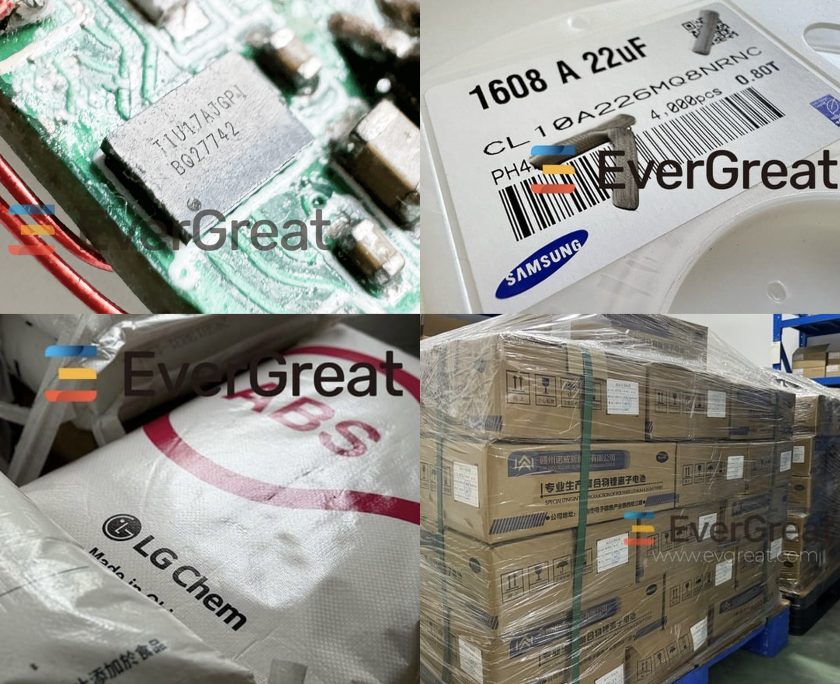
I often explain to clients that the price difference between two seemingly identical power banks comes down to these hidden costs. We once had a client who chose a cheaper supplier only to find their products were failing basic safety checks. The supplier had skipped component quality checks and used substandard materials. This led to a huge recall and damaged the client’s brand. A truly compliant product starts with better parts. It means paying more for high-grade battery cells that come with their own certifications. It means using protection circuit boards (PCBs) from reliable manufacturers. These PCBs are designed to prevent overcharge, over-discharge, and short circuits. These parts cost more than generic ones. My company, EverGreat Technology, always uses top-tier global components. This ensures durability and reliability from the start. We know that cheap parts lead to expensive problems later. Beyond parts, a compliant factory invests heavily in quality control. This is not just a final inspection. It means checks at every stage: incoming materials, during assembly, and before packaging. This includes expensive equipment and trained staff. We perform internal audits and continuous improvement. We also welcome third-party evaluations. This level of oversight costs money but prevents issues. Compliance also means constant research and development. Standards change all the time. Our R&D team must stay updated and adapt product designs to meet new rules. This investment ensures our products remain compliant in a changing market. These are the costs that ensure consistency. They make sure that every power bank shipped is just as safe and reliable as the first one.
Unpacking the Hidden Costs of Power Bank Compliance
- Premium Component Sourcing:
- What it is: Choosing higher-grade, pre-certified components (battery cells, PCBs, charging chips) from trusted suppliers.
- Impact: These components often cost more than uncertified alternatives. But they reduce the risk of failure and ensure initial compliance. We select top-tier global components to ensure our products meet high technical demands.
- Rigorous Quality Control (QC) & Testing:
- What it is: Implementing strict, continuous QC processes at every stage of production, not just final inspection. This includes advanced testing equipment and skilled personnel.
- Impact: This involves significant operational costs for labor, equipment calibration, and testing materials. Our strict quality control includes internal audits and continuous improvement. This helps catch issues early.
- Factory Audits & Certifications:
- What it is: Undergoing regular audits by third-party bodies to ensure the factory’s production processes, environmental management, and social responsibility meet international standards.
- Impact: Audit fees and the investment required to maintain high operational standards contribute to product cost. These audits confirm that the manufacturer can deliver consistent compliance at scale.
- Research & Development (R&D) for Evolving Standards:
- What it is: Continuous investment in R&D to track new regulations, adapt product designs, and ensure future compliance.
- Impact: This ensures products remain compliant as rules change, but it is a significant ongoing expense. It allows us to offer cutting-edge solutions that meet the latest standards.
- Producer Responsibility and End-of-Life Management:
- What it is: Adhering to updated producer responsibility rules under the EU Battery Regulation, including setting concrete collection targets for waste portable batteries and providing free return systems for end-users.
- Impact: This involves establishing and funding collection and recycling infrastructure, with targets like 63% by the end of 2027 and 73% by the end of 2030 for waste portable batteries. Companies must provide systems for end-users to return batteries free of charge by August 2025, adding to operational and compliance costs.
Conclusion
Compliance is now a core part of power bank development, not an afterthought. It demands consistent quality, from components to production. Partnering with experts who ensure verifiable compliance is key to your brand’s success.