Wireless power banks are easy to sell, but hard to position well. A wrong roadmap can leave buyers with slow-moving stock and weak margins.
Importers should consider Qi2 wireless power banks if their customers value magnetic alignment, iPhone-friendly charging accessories, premium retail positioning, and clearer certification signals. But Qi2 should be added with careful supplier checks, realistic price planning, and a clear channel strategy.
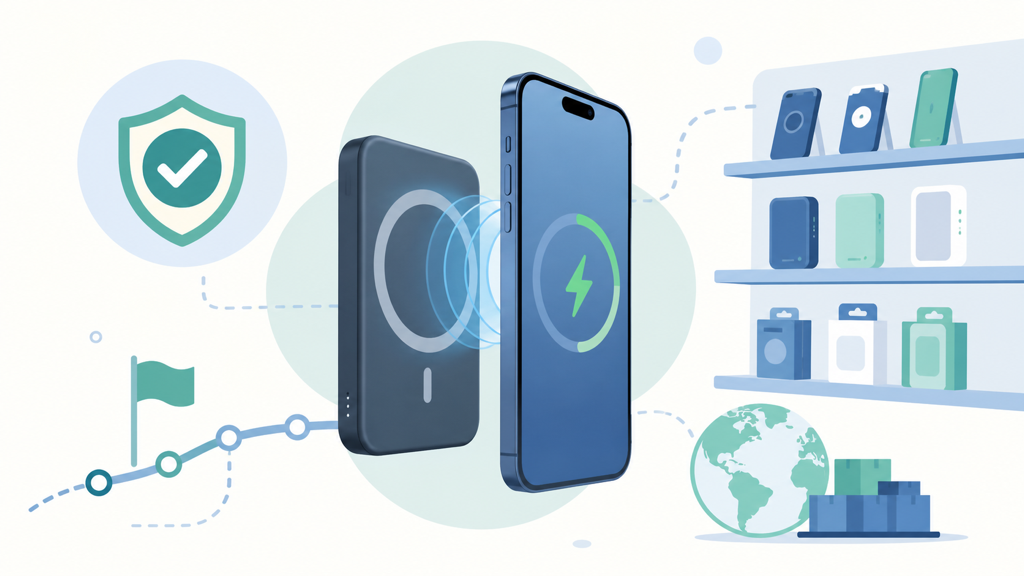
Qi2 is not only a technical upgrade. In my experience, it changes how buyers should think about product tiers, packaging claims, accessory compatibility, and supplier qualification.
Why Does Qi2 Matter For Importers And Brand Owners?
Many buyers see Qi2 as another wireless charging label. That is risky because the label can influence price, trust, and channel acceptance.
Qi2 matters because it gives wireless charging products a stronger compatibility story, especially around magnetic alignment and certified charging expectations.
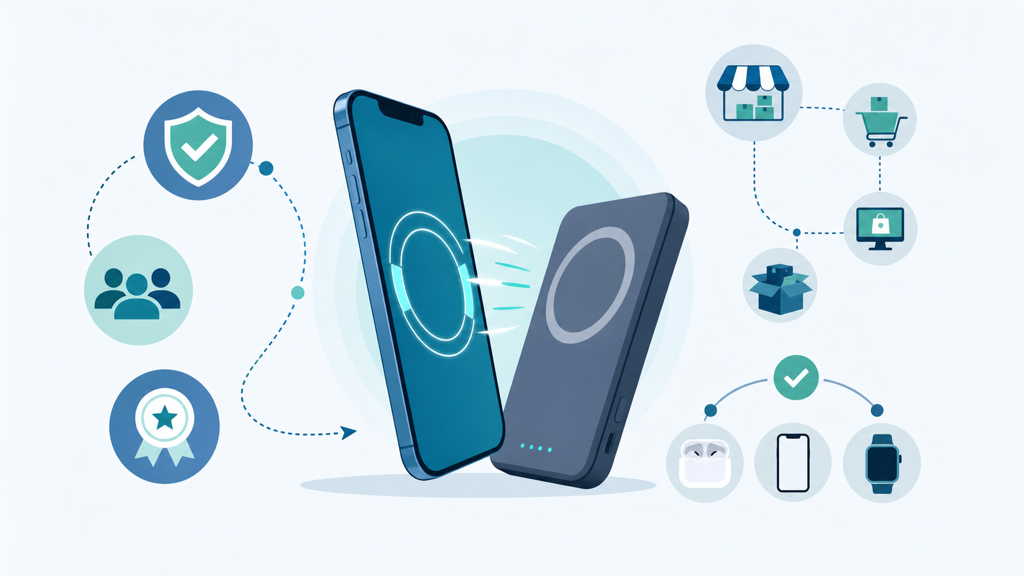
I have seen many wireless power bank projects fail for a simple reason: the product looked attractive, but the user experience was inconsistent. The phone did not align well. The charging speed felt unclear. The packaging promised more than the product could reliably deliver. Qi2 helps solve part of that problem because the standard is built around a clearer wireless charging ecosystem. The Wireless Power Consortium describes Qi2 wireless charging1 as the next generation of Qi, with magnetic alignment as a key part of the user experience.
For importers, this matters because the product is no longer judged only by capacity or price. Retailers, distributors, and end users increasingly ask whether a wireless power bank works predictably with modern phones. If the charging coil is misaligned, the product may still charge, but the user may blame the brand for slow charging or heat. A magnetic alignment story makes the product easier to explain. It also gives sales teams a more concrete reason to separate a premium SKU from a basic wireless power bank.
The buyer still needs to be careful. Qi2 is not a magic word that turns a weak product into a strong one. The supplier must understand coil design, thermal control, magnet strength, certification documents, packaging claims, and batch consistency. I often tell customers to treat Qi2 as a product system, not a logo. The power bank, cable, adapter recommendation, packaging, and after-sales script should all tell the same story.
| Buyer Question | Why It Matters | What To Check |
|---|---|---|
| Is the product truly certified? | Reduces claim risk | Certificate and model match |
| Does the magnetic alignment feel stable? | Affects daily use | Sample testing with real phones |
| Is heat controlled during charging? | Affects trust | Temperature and protection design |
| Can the supplier explain the design? | Shows competence | Coil, magnet, PCB, and housing details |
The biggest mistake is adding Qi2 only because competitors are doing it. A better reason is that your channel needs a premium wireless power bank with clearer user value. If your customers mainly buy low-cost promotional products, Qi2 may be too expensive for the first round. If your customers sell through retail, mobile accessory stores, telecom bundles, or premium online listings, Qi2 may help create a stronger product ladder.
What Tradeoffs Should Buyers Expect Before Adding Qi2?
Qi2 can improve product positioning, but it also raises the pressure on cost, documentation, supplier skill, and launch timing.
Buyers should expect higher unit cost, stricter supplier selection, more careful packaging claims, and more detailed sample testing before mass production.
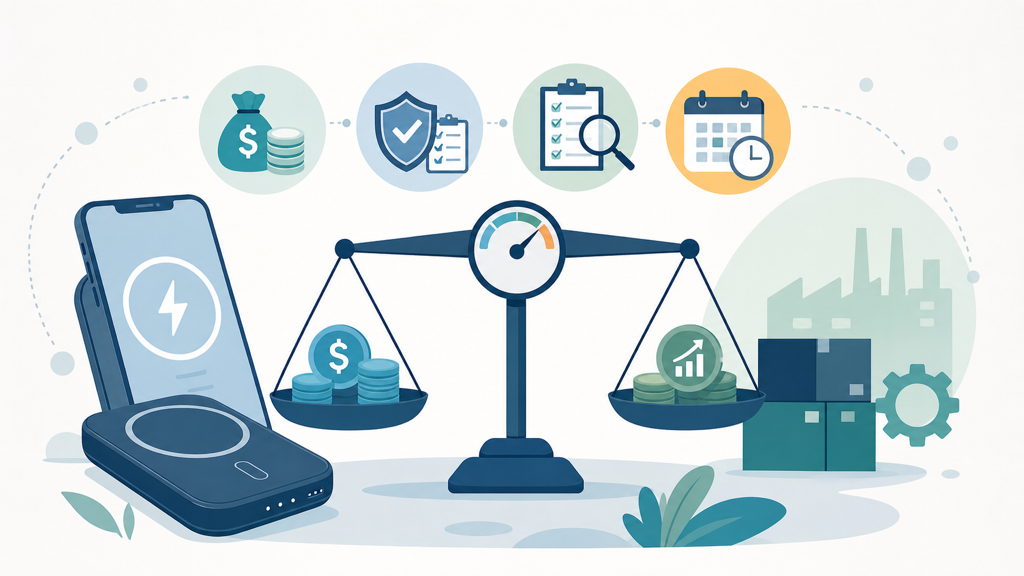
The first tradeoff is cost. A basic wireless power bank can compete on capacity, color, and shape. A Qi2 model needs better magnetic structure, charging design, thermal planning, and certification support. These details increase cost before the product even reaches packaging. Some buyers try to force Qi2 pricing down to the level of basic magnetic wireless power banks. That usually creates a hidden risk. The supplier may reduce magnet quality, use weaker thermal design, simplify testing, or avoid proper certification.
The second tradeoff is user expectation. When a product carries a premium wireless charging message, users expect the experience to feel smoother. They expect stable attachment, reasonable heat, and clear charging behavior. The general Qi wireless charging standard2 already shaped consumer expectations for cable-free charging, but magnetic alignment changes the feeling of the product. The user does not only ask whether it charges. The user asks whether it snaps into place, stays aligned, and feels reliable in daily use.
The third tradeoff is launch timing. Qi2 product development should not be rushed like a simple private-label color change. Buyers need time for sample comparison, packaging review, claim review, and supplier document checks. If the buyer wants a custom housing, custom stand, built-in cable, or multi-device charging function, the schedule becomes even more sensitive. A small mechanical change can affect magnet placement, heat behavior, or charging stability.
I often suggest buyers separate the project into three checkpoints. The first checkpoint is market fit. Does the channel really need Qi2, or does it only need magnetic wireless charging at a lower price? The second checkpoint is supplier fit. Can the supplier explain the design and documentation clearly? The third checkpoint is commercial fit. Can the final price still leave enough margin after certification, packaging, logistics, warranty, and promotion?
| Tradeoff | Benefit | Risk If Ignored |
|---|---|---|
| Higher cost | Better positioning | Weak margin or forced shortcuts |
| Stronger claims | Easier sales story | Compliance or trust problems |
| More testing | Better user experience | Longer development schedule |
| Better supplier control | Lower after-sales risk | Fewer qualified suppliers |
Buyers should also think about the adapter and cable story. Many end users mix old adapters, poor cables, and wireless power banks together. If the product page promises fast wireless charging but the user uses a weak adapter, the user may still blame the power bank. For brands selling both wired and wireless products, it helps to align the wireless power bank with a clear wired charging recommendation. The USB Implementers Forum explains USB Power Delivery3 as a framework for higher-power charging through USB connections, and that kind of official explanation can help buyers avoid vague charging claims.
The practical answer is not to avoid Qi2. The practical answer is to choose the right role for it. Use Qi2 where the product deserves a premium position. Keep basic wireless power banks where price sensitivity is the main buying reason. This keeps the product roadmap cleaner and makes sales training easier.
How Should Buyers Qualify A Qi2 Power Bank Supplier?
A good Qi2 supplier should explain the product clearly, not only quote a price and show a nice sample.
Buyers should qualify suppliers by checking certification evidence, magnetic structure, thermal design, battery quality, production control, and after-sales response.
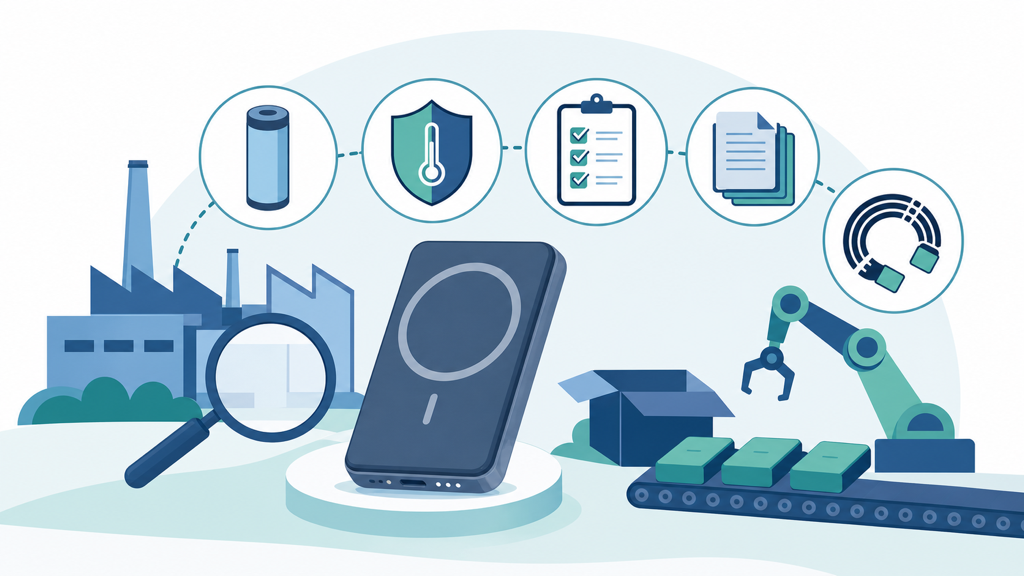
Supplier qualification should start before the buyer talks about colors and packaging. I would first ask the supplier to explain the product architecture in simple language. Where is the coil? What magnet structure is used? How is heat managed? What battery cell is selected? What protection design is included? What test documents are available? If the supplier cannot explain these points clearly, the buyer may face problems later when a retailer asks harder questions.
The next step is sample testing. Buyers should test more than one phone, more than one adapter, and more than one usage situation. A product may work well on a desk but perform differently in a warm room, inside a case, or when the user moves around. Heat deserves special attention. Lithium-ion battery products are affected by charging behavior and temperature. Battery University explains that high voltage and heat can accelerate lithium-ion battery stress4. This does not mean every warm product is unsafe, but it does mean buyers should take temperature behavior seriously.
Buyers should also check whether the supplier has a stable bill of materials. A Qi2 power bank is not only a shell with a battery inside. The coil, magnet, PCB, battery cell, firmware, housing material, and adhesive choices all affect performance. If the supplier changes components after sample approval, the mass production unit may not behave like the approved sample. This is where many importers lose control. They approve a sample, negotiate the price hard, and later receive a batch that looks the same but performs differently.
| Qualification Area | Good Supplier Signal | Warning Sign |
|---|---|---|
| Certification | Clear model-specific documents | Generic certificate only |
| Magnetic design | Stable alignment in real tests | Weak hold or inconsistent snap |
| Thermal control | Explains heat protection | Avoids temperature discussion |
| BOM control | Confirms key components | Changes parts without notice |
| After-sales | Gives troubleshooting process | Only says problems will not happen |
In my experience, the best suppliers do not overpromise. They explain limits. They may say that a certain housing is too thin, a magnet layout needs adjustment, or a target price is unrealistic. This kind of honesty is useful. It helps buyers avoid launching a product that looks good in photos but creates complaints after shipment.
EverGreat can support this kind of project by helping buyers connect product planning, OEM manufacturing, packaging customization, certification support, and supply chain management. The goal is not to push every customer into Qi2. The goal is to help the buyer choose the right wireless power bank for the channel, budget, and brand position. For some customers, the right answer is a certified Qi2 premium model. For others, the better first step is a reliable magnetic wireless power bank with honest claims and a lower price.
Conclusion
Qi2 is worth adding when your channel needs premium positioning, but only with the right supplier checks, cost planning, and claim control.
-
This official Wireless Power Consortium page helps explain why Qi2 is a meaningful standard rather than only a marketing phrase. ↩
-
This encyclopedia overview gives useful background on the broader Qi wireless charging standard and consumer expectations. ↩
-
This USB-IF resource helps buyers understand why power input and charging claims should be handled carefully. ↩
-
This educational battery resource supports the point that heat and charging conditions matter for lithium-ion product planning. ↩