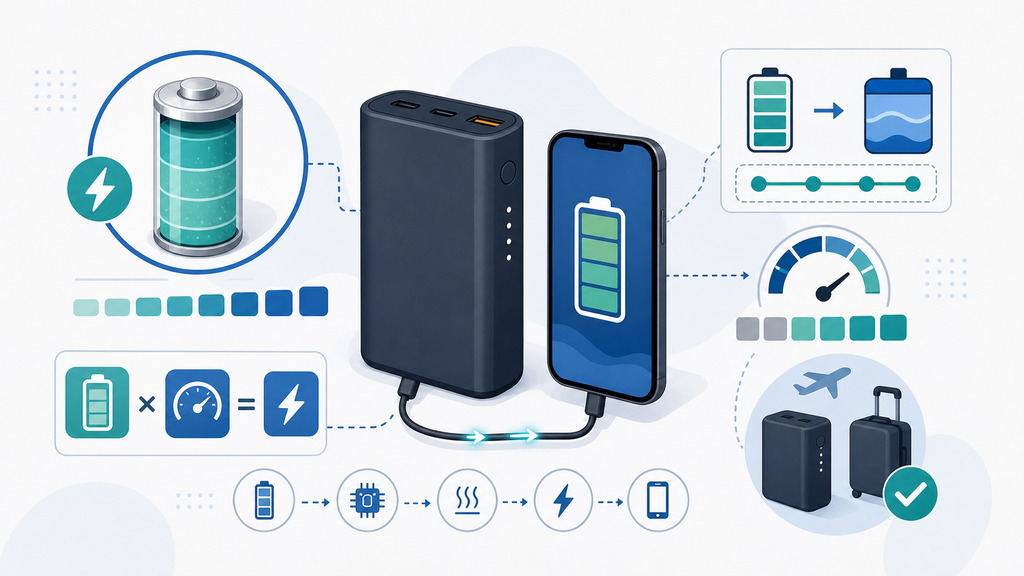
Many users plug a power bank into whatever charger is nearby. It may work, but the wrong charger can make charging slow, hot, or unreliable.
You can charge many power banks with different chargers if the connector fits and the charger output is compatible. For best results, use the input rating printed on the power bank, a quality USB-C PD charger when supported, and a suitable cable. Avoid damaged, very hot, fake, or unstable chargers.
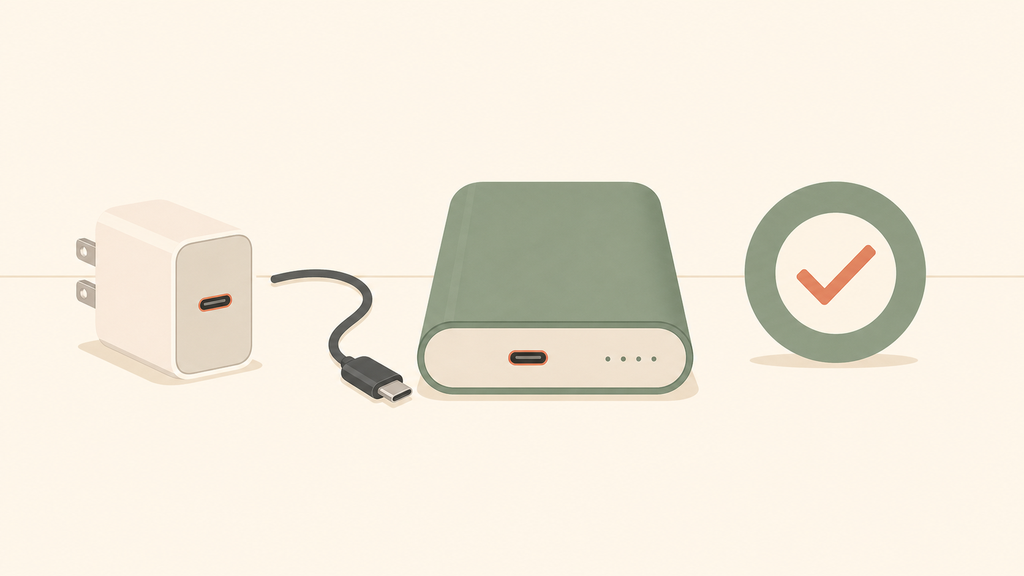
This question matters because a power bank is not only a battery. It is a charging system with input limits, protection circuits, cable requirements, and heat behavior. Small mistakes can become big customer complaints.
What Charger Should You Use For A Power Bank?
Users often focus on cable shape first. USB-C may fit, but that does not automatically mean the charger is the best match.
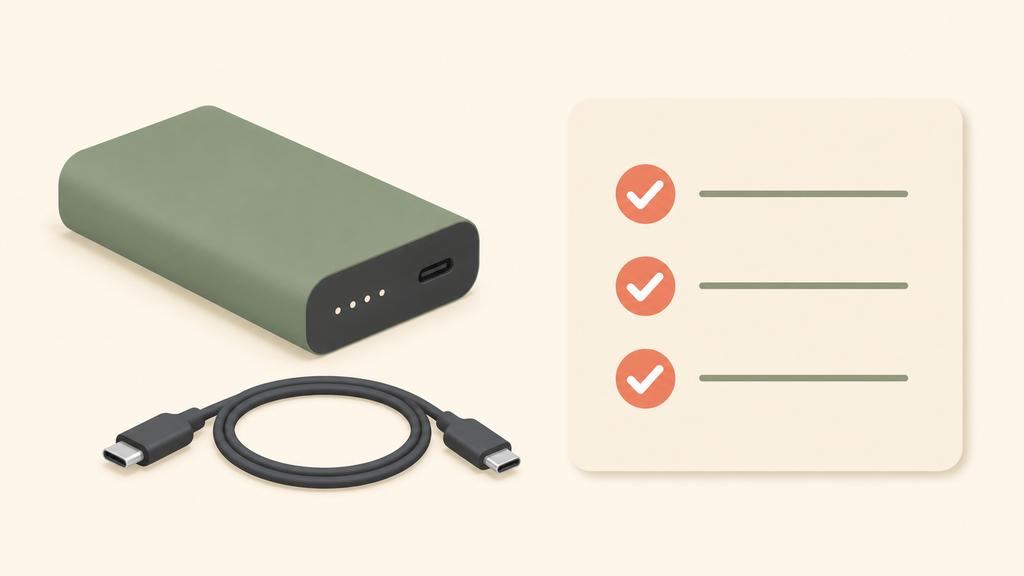
Use a charger that matches the power bank input rating. A USB-C PD power bank should usually be charged with a quality USB-C PD charger and a rated USB-C cable. A lower-power charger may work, but it will charge more slowly.
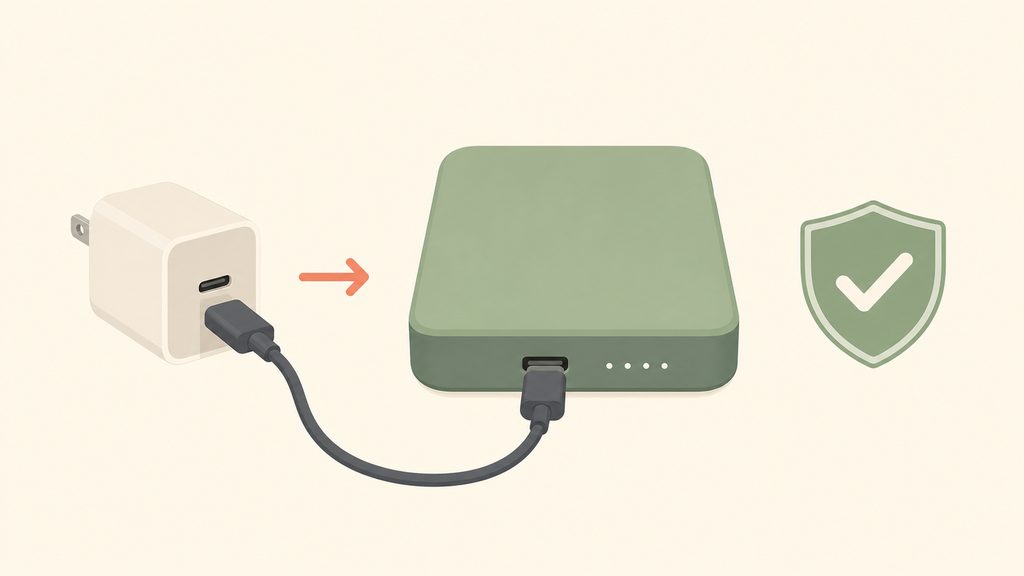
The safest starting point is the input specification printed on the power bank or written in the manual. It may say something like USB-C input, 5V, 9V, 12V, or a wattage such as 18W, 30W, 45W, or higher. That rating tells you what the power bank is designed to accept, not what every charger can deliver.
USB Power Delivery is designed around power negotiation, so compatible USB-C devices request the power they need instead of accepting uncontrolled wattage.1 This is why a higher-watt USB-C PD charger can often charge a smaller device safely. The power bank should draw only what it supports. But this assumes the power bank, charger, cable, and firmware are all designed correctly.
Older USB-A chargers may also charge a power bank, especially if the power bank has a USB-A or Micro-USB input. The tradeoff is speed. A 5W or 10W charger may take many hours to refill a large 20,000mAh power bank. Users then think the power bank is defective, when the real problem is input power.
| Charger Type | Usually Works? | Main Limitation |
|---|---|---|
| Low-power USB-A charger | Often yes | Very slow charging |
| USB-C PD charger | Best for PD power banks | Needs a rated cable |
| Laptop USB-C charger | Often yes if PD compatible | Power bank still limits input |
| Car charger | Depends on quality | Heat and unstable input risk |
| Unknown cheap charger | Risky | Poor safety and heat control |
| Damaged charger | No | Stop using it |
In manufacturing, I often see confusion between maximum charger power and actual charging power. A 65W wall charger does not mean a 20W-input power bank will charge at 65W. The power bank input circuit sets the limit. The charger rating is capacity, not a command.
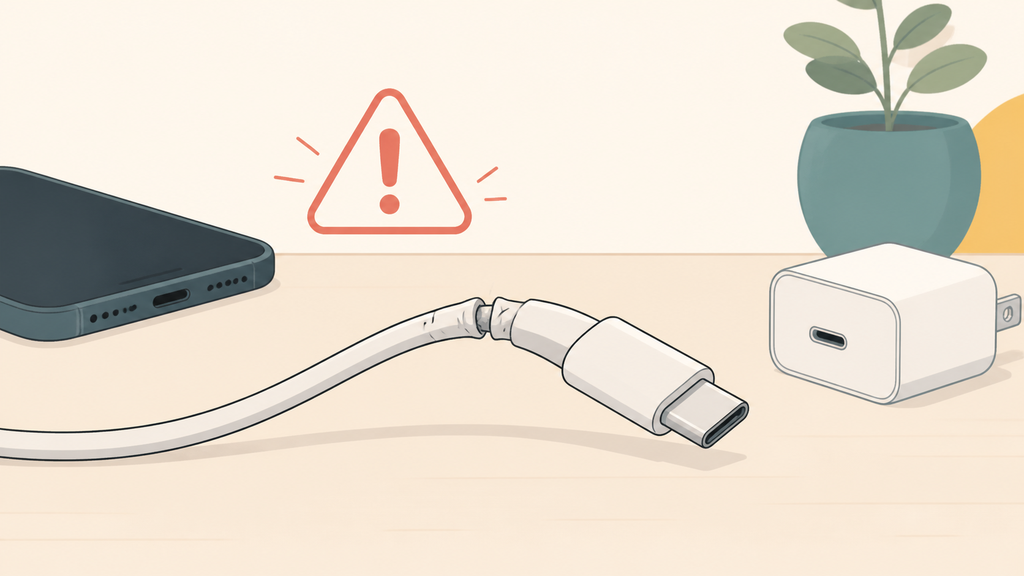
Cable quality matters more than many users expect. A weak or damaged cable can cause voltage drop, connector heat, slow charging, or repeated disconnects. For USB-C PD power banks, the cable should support the current and power level required by the device.
For brands, the product page should not simply say “fast charging supported.” It should specify input power, supported protocols, recommended charger type, and expected charging time under a realistic charger. Clear information reduces returns and support questions.
Can The Wrong Charger Damage A Power Bank?
Most modern power banks include protection circuits, but that does not make every charger a good idea. Poor accessories can still create heat and instability.
The wrong charger can damage a power bank if it is fake, unstable, damaged, overheats, uses poor components, or delivers power outside normal behavior. A lower-power charger usually causes slow charging, not damage, but poor-quality chargers are the real risk.
UL Research Institutes warns that counterfeit or poor-quality electrical products can create shock and fire risks when they lack proper safety construction and testing.2 For power banks, the same practical concern applies to the whole charging chain: charger, cable, connector, battery cells, and power management board.
Apple explains that lithium-ion batteries work best within recommended temperature ranges and that heat can affect battery performance and long-term capacity.3 A power bank is not an iPhone, but most modern power banks also use lithium-ion or lithium-polymer cells. Heat remains one of the most important battery-aging factors.
| Problem | What Users Notice | What It May Mean |
|---|---|---|
| Very slow charging | Power bank takes all day | Charger output is too low |
| Charger gets hot | Adapter is uncomfortable | Poor charger or overload |
| Cable connector heats | Warm USB-C tip | Weak cable or poor contact |
| Charging starts and stops | Indicator blinks repeatedly | Protocol or cable issue |
| Power bank shell gets hot | Battery area warms | Stop and let it cool |
| Burn smell or swelling | Serious warning | Stop using immediately |
In my experience, a low-power but decent charger is usually just inconvenient. A poor-quality charger is different. It may run hot, provide unstable voltage, lack proper protection, or fail under long use. That is why the cheapest charger in a drawer is not always harmless.
Car chargers deserve extra care. Users often charge power banks in hot cars, where the cabin temperature can rise quickly. A power bank already contains a battery. Adding a warm car, a cheap car adapter, and a long charging session increases stress. For travel users, I prefer charging the power bank indoors with a known charger before the trip.
The same applies to multi-port chargers. If several devices share one charger, total output may be divided. The power bank may charge slower when a phone, tablet, and earbuds are connected at the same time. This is normal if the charger reallocates power, but users need to understand it.
For customer support, the first questions should be simple: What charger are you using? What cable? Does the power bank support USB-C PD input? Does it get hot? Does another cable work? These questions usually find the real issue faster than replacing the product immediately.
The safest rule is this: if the charger is reliable, compatible, and cool enough, it is probably fine. If it is damaged, fake-looking, unusually hot, or unstable, do not use it to charge a battery product.
What Should Brands Specify For Power Bank Charging?
A good power bank spec should prevent confusion before the product ships. Buyers should not leave charger compatibility to guesswork.
Brands should specify input power, supported charging protocols, recommended charger wattage, cable requirements, charging time, thermal limits, transport documents, and customer warnings. These details help users charge correctly and help support teams solve problems faster.
Transport and labeling also matter because power banks are lithium battery products. The FAA says spare lithium batteries and power banks must be carried in carry-on baggage, not checked baggage, and lithium-ion batteries are generally limited by watt-hour ratings.4 If a power bank targets travel buyers, capacity labeling and compliance documents are part of the customer experience.
For private-label buyers, I suggest treating charger compatibility as a product feature, not an afterthought. The product should be tested with common chargers in the target market: low-power USB-A chargers, 20W USB-C PD chargers, 30W chargers, laptop chargers, car chargers, and multi-port chargers. The goal is not to promise perfect speed with every accessory. The goal is to know what happens.
| Spec Area | What To Define | Why It Matters |
|---|---|---|
| Input port | USB-C, Micro-USB, Lightning, or multiple | Avoids connector confusion |
| Input wattage | Maximum supported input power | Sets charging speed expectations |
| Protocol support | PD, QC, or standard 5V input | Helps users choose chargers |
| Cable requirement | Current rating and connector type | Prevents slow or hot charging |
| Charging time | Tested with a known charger | Reduces unrealistic complaints |
| Thermal behavior | Shell temperature under input load | Protects user confidence |
| Safety documents | Test reports and transport docs | Supports import and logistics |
I have seen projects where the power bank was technically good, but the manual was vague. Users tried random chargers, got different charging times, and assumed quality was inconsistent. A clearer manual would have prevented many complaints.
For higher-capacity power banks, charging time becomes especially important. A 10,000mAh model and a 30,000mAh model should not be described with the same generic charging claim. Buyers should test and publish realistic estimates based on recommended adapters.
EverGreat often helps customers define these specifications before mass production. We look at the target user, the included cable, the expected charger, the packaging claims, and the support questions likely to appear after launch. That planning is less exciting than a beautiful product photo, but it protects the brand.
The best answer for users is simple: follow the power bank input rating and use a good charger. The best answer for brands is stricter: test the full charging chain and explain it clearly.
Conclusion
You can charge many power banks with different chargers, but the best choice matches the input rating, cable requirement, protocol, and safety expectations.
-
USB Implementers Forum, USB Charger (USB Power Delivery). ↩
-
UL Research Institutes, Counterfeit Electrical Products. ↩
-
Apple, Batteries – Maximizing Performance. ↩
-
Federal Aviation Administration, PackSafe – Lithium Batteries. ↩