My phone’s battery always dies, but my old power bank was a huge brick. I hated carrying it, always wishing for something smaller that actually worked.
A truly slim power bank in 2026 means having meaningful power (5,000-10,000 mAh) in a profile under 10-15mm, with efficient magnetic wireless charging and strong safety features, making it easy to carry without compromise.
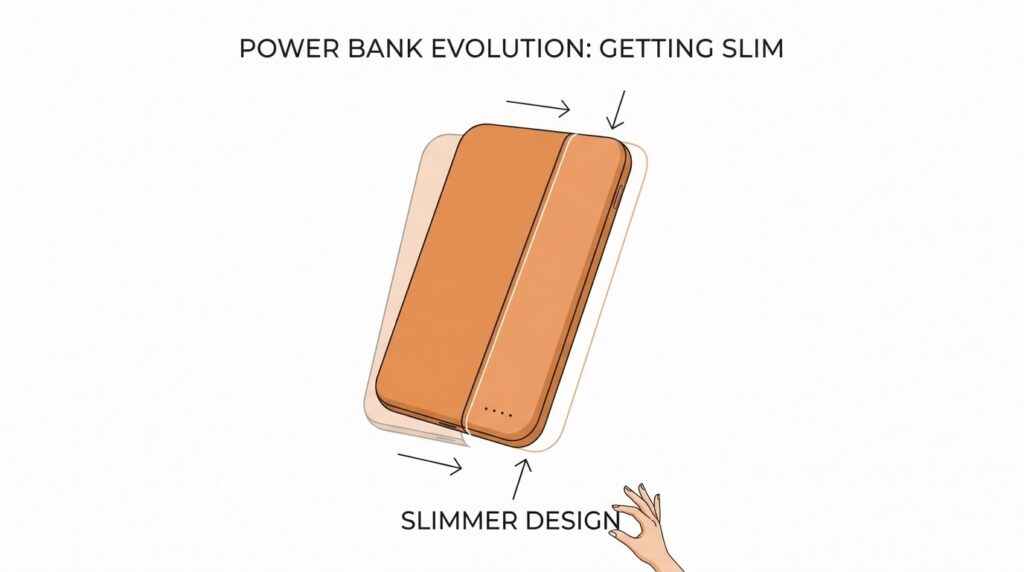
I remember days when my backpack felt heavy just because of my charging gear. It made me wonder, could a power bank ever be truly slim and still useful? It turns out, 2026 has brought some amazing answers to that question. I have seen huge changes in what we call "slim" and what that means for our daily lives. Several power banks now meet the description of truly slim, offering substantial power in a compact form.
What makes a power bank truly slim without compromising capacity?
Are you tired of power banks that claim to be small but offer almost no charge? That used to bother me a lot. I felt like I always had to choose between a tiny charger and actual power.
A power bank is truly slim and capable in 2026 because of high-energy-density battery cells, especially semi-solid-state tech, which allows for 5,000-10,000 mAh in incredibly thin designs (under 10-15mm) without bulk.
I used to carry a power bank that was thick and heavy, even for just 5,000 mAh. It felt like a small brick in my pocket. Now, things are different. The main reason we can have slim power banks with good capacity is because of energy density. Imagine fitting more power into a smaller space. This has been a huge leap forward. My friend showed me his new power bank, and I couldn’t believe it was 5,000 mAh and felt so light and thin.
The Power of New Battery Tech
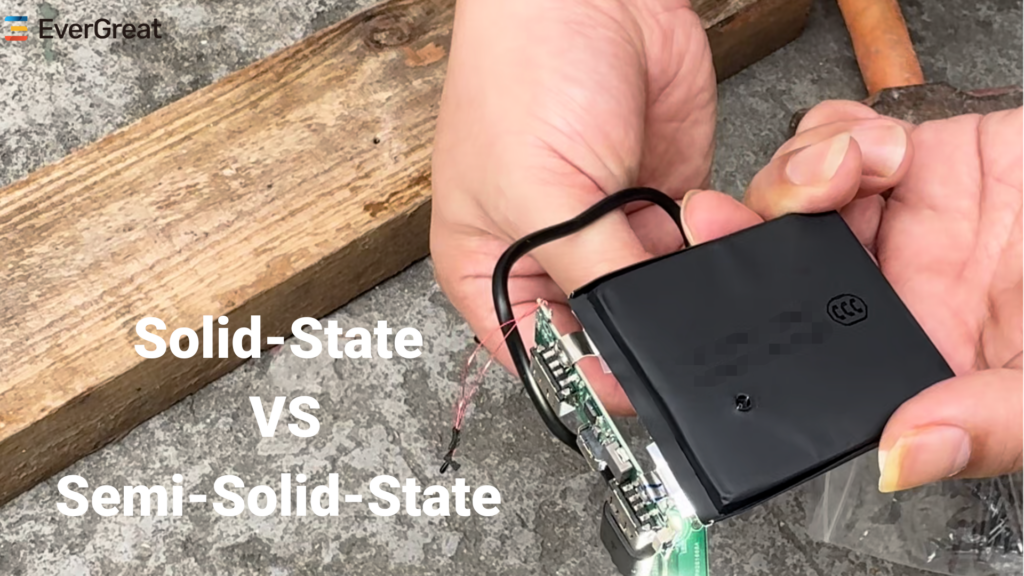
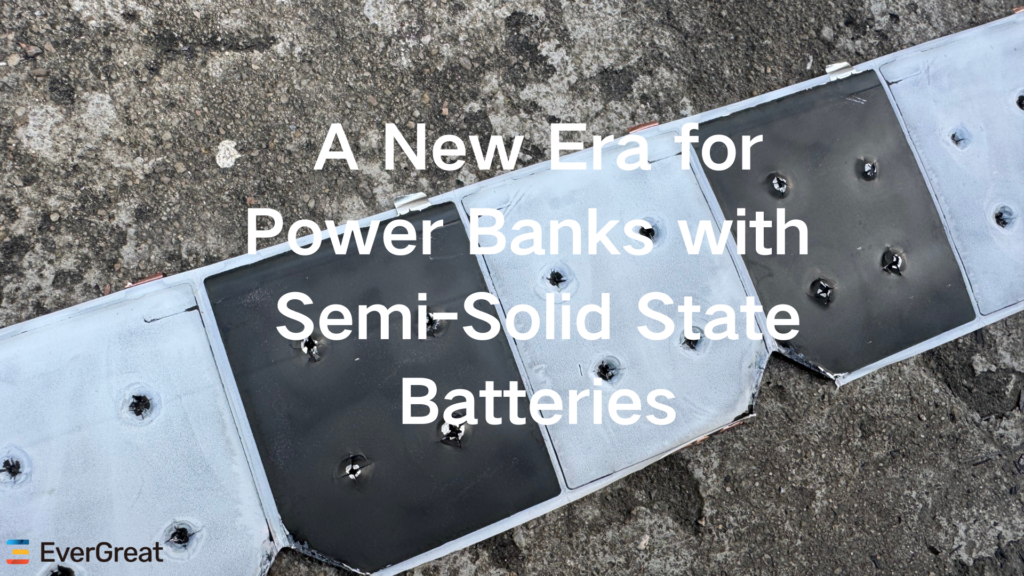
This change comes from better battery cells. Specifically, semi-solid-state cells are a game-changer. These cells use a stable gel or slurry instead of a lot of liquid inside. This makes them much safer, less likely to swell, and they last longer. The reduced liquid electrolyte improves stability, making them more resistant to punctures, heat, and electrical failure. Semi-solid-state batteries are estimated to last four times longer than equivalent lithium-ion batteries. For me, this means I can trust my thin power bank more. It means I can get 5,000 mAh in a power bank that is only about 6.8 mm thick. I have seen examples like the BMX SolidSafe Air 5K. This power bank is considered one of the thinnest semi-solid-state power banks available. It also uses a titanium enclosure for added rigidity. This technology has truly made ultra-thin designs a normal thing. It allows brands to make very thin products that still give us the charges we need. I think this balance of thinness and power is what everyone was waiting for.
How do slim power banks in 2026 differ from traditional designs?
Do you remember older wireless chargers that felt hot and slow? It made me wonder if wireless charging would ever be truly useful.
Slim power banks in 2026 differ greatly through advanced Qi2/Qi2.2 25W magnetic wireless charging, superior thermal management, and robust semi-solid-state cells, offering sustained fast speeds with much less heat and a truly integrated user experience.
I used to have a power bank with wireless charging, but it was slow and got really warm. I often just used a cable instead. Today’s slim power banks are very different. They are built around magnetic wireless charging, especially with Qi2 and the newer Qi2.2 standards. These new standards make charging faster and much more efficient. I have noticed my phone stays cool even when charging quickly.
Smarter Wireless and Better Heat Control
The biggest difference is how they charge wirelessly. Qi2 and Qi2.2 charging has gotten much better. It means my phone aligns perfectly every time. This precise alignment helps the charging work better, improving efficiency and reducing heat. It also means less energy is wasted as heat. I used to worry about leaving my phone on a wireless charger because of how hot it got. Now, thanks to better thermal management, surface temperatures stay much lower. My phone can charge comfortably. This makes the power bank feel like a natural part of my phone, not a separate gadget. The technology also works well with semi-solid-state cells. This creates a safer, faster, and cooler charging experience. Qi2 supports up to 15W of wireless charging, while Qi2.2 pushes that to 25W, provided that the device being charged is compatible. For me, this means truly convenient power on the go. Superior thermal management techniques include real-time temperature monitoring and adaptive power scaling, preventing overheating and maintaining battery health.
What should brands consider when designing or sourcing a slim power bank?
Are you a brand looking to create the next great power bank but feeling lost in all the tech details? I know it can be hard to know what really matters.
Brands should consider a balance of a thin profile (under 10mm for 5K mAh), strong magnetic attachment, efficient Qi2 wireless charging, and reliable semi-solid-state safety when designing or sourcing a slim power bank to meet 2026 consumer expectations.
When I think about what makes a great power bank, I think about what people actually use every day. It’s not just about making something thin. Brands need to look at many things together. I’ve learned that a truly good product comes from balancing all the important parts. For example, a power bank might be super thin, but if it doesn’t stay attached to your phone or charges slowly, it’s not truly good.
Balancing Innovation and Real-World Use
"True slimness" in 2026 means more than just a small size. It is about how well the product works in real life. Brands must balance size, capacity, and actual performance. This means making sure a power bank is thin (under 10 mm for 5K mAh or under 15 mm for 10K mAh) while still offering strong magnetic hold. It also needs efficient wireless charging. Importantly, it must have reliable safety features. My goal, if I were designing one, would be to make sure users do not have to give up daily ease of use or how many times they can charge their devices. This means choosing the right semi-solid-state cells for safety and long life. It also means making sure the Qi2 wireless charging is top-notch. Additional design considerations include rounded corners and textured surfaces to improve comfort and heat dissipation. Keep in mind that ultra-slim designs might come with capacity limitations, and large capacity (20,000mAh) power banks may not be "truly thin" without compromising safety or cycle life. Brands need to think about all these points to make a product that stands out and truly helps customers.
Conclusion
Truly slim power banks in 2026 offer a perfect blend of high capacity, advanced wireless charging, and superior safety, thanks to new battery technologies. Besides BMX, brands like Anker, Belkin, Baseus, ESR, and Xiaomi are also producing slim power banks with advanced features. By masterfully integrating the key insights from the okay, I will analyze the article and provide a bulleted list of points for verification and potential enhancement.