Frustrated when your magnetic power bank constantly slips? Weak magnetic hold can disrupt your charge and your day. Let’s fix this annoying problem together!
Magnetic power banks often fall due to weak magnetic force or poor surface contact. Gaps from misalignment, dirt, or uneven surfaces greatly reduce grip. Even strong magnets need perfect contact to stay secure during movement.
I remember a time when my power bank dropped during a crucial call, leaving me scrambling. It made me wonder: what truly causes this annoying issue? Understanding the reasons behind a weak magnetic hold is the first step to a reliable charging experience. Let’s dig deeper into why your power bank might be letting you down and how you can prevent it.
Why is my magnetic power bank not sticking properly?
Is your magnetic power bank constantly losing its grip? A weak connection leaves you frustrated and uncharged. Discover why it’s not sticking as it should!
Your magnetic power bank may not stick due to insufficient magnetic force or imperfect surface contact. Even tiny gaps, misalignment, or debris can drastically weaken the connection, causing it to slip off easily during use.
I used to think all magnets were the same. But I quickly learned this isn’t true for power banks. The core reason your magnetic power bank struggles to stay put often comes down to the quality of the magnet itself and how well it touches your phone. It’s not just about having a magnet; it’s about having the right magnet and a perfect connection.
The Power of Premium Magnets
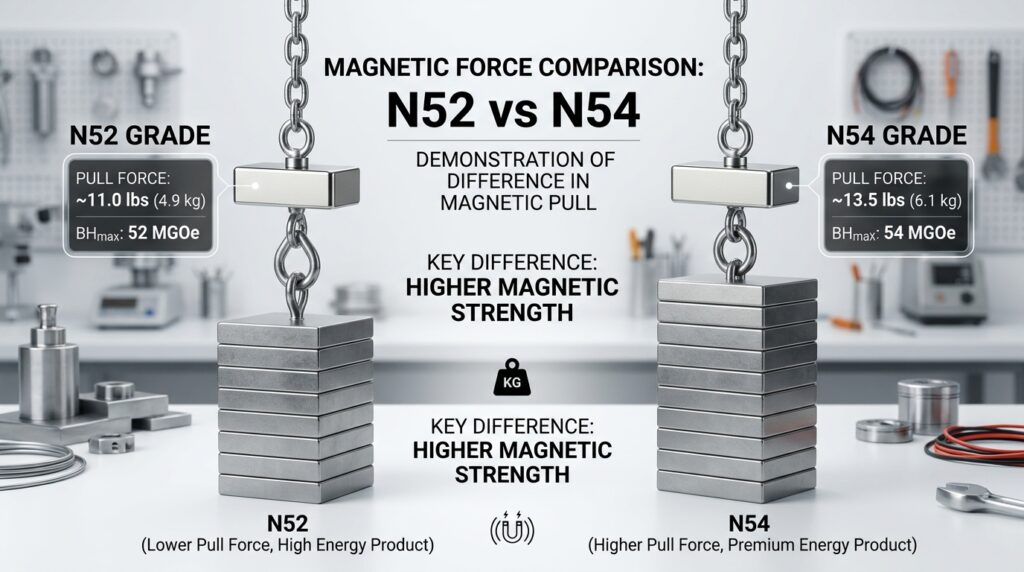
Not all magnets are made equal. Just like car engines, some are much stronger than others. In magnetic power banks, we often see different grades of neodymium magnets. Lower grades like N52 are common, but they may not offer enough grip for daily movement. I’ve personally seen how much difference an upgrade makes. For example, using high-grade N54 neodymium magnets is very important for a secure grip. These N54 magnets give a much stronger pull than the common N52 types. The number in the magnet grade (e.g., N52, N54) is directly related to the maximum energy product of the magnet, which is a measure of its strength. Higher numbers indicate stronger magnets. This allows for a reliable hold, even in slim designs. From a manufacturing view, choosing N54 is key. Brands like EverGreat are already doing this. They aim to give you a noticeably firmer MagSafe or Qi2 hold. This means your power bank stays put when you need it most.
The Importance of Flat Contact Surfaces
Imagine trying to stick two pieces of tape together if one is bumpy. It just won’t work well. The same is true for magnets. The surface where the power bank meets your phone is super important. If there’s any gap, even a tiny one, the magnetic force drops very fast. The force decreases rapidly with distance, so ensuring a zero-gap connection is crucial. A perfectly smooth and precisely made contact surface helps achieve a zero-gap (0 mm) attachment. This maximizes how well the magnet works. It also stops any wobbling or falling off. During production, we pay close attention to making sure these surfaces are perfectly flat. This ensures the best possible connection. When I tested earlier models with slight imperfections, the difference in grip was huge.
Here’s a simple breakdown of factors affecting magnetic grip:
| Factor | Impact on Magnetic Grip | Solution |
|---|---|---|
| Magnet Grade | Lower grades (e.g., N52) offer weaker pull. | Use high-grade N54 neodymium magnets. |
| Surface Flatness | Uneven surfaces create gaps, reducing force. | Ensure perfectly smooth, engineered contact points. |
| Misalignment | Magnets not perfectly lined up weaken the connection. | Use guides or cases with precise magnet placement. |
| Dirt/Debris | Small particles create gaps between surfaces. | Keep contact surfaces clean. |
| Thickness/Distance | Any increase in distance between magnets significantly weakens hold. | Minimize distance; avoid thick barriers. |
Do phone cases affect magnetic power bank strength?
Worried your phone case is sabotaging your magnetic charger? It’s a common issue that causes constant drops. Let’s uncover the truth about phone cases and magnetic strength.
Yes, phone cases significantly impact magnetic power bank strength. Non-MagSafe cases often lack embedded magnets or are too thick, increasing the distance and weakening the magnetic field, causing the power bank to detach easily.
I’ve learned this the hard way myself. Many times, I blamed the power bank when my phone case was the real culprit. It’s natural to want to protect our phones with a sturdy case, but not all cases are built with magnetic charging in mind. This small detail can make all the difference between a secure attachment and a frustrating slip.
The Problem with Non-MagSafe Cases
Many phone cases look great and protect your phone, but they don’t help with magnetic charging. Non-MagSafe cases often do not have magnets built into them. This means the power bank has to rely only on its own magnets to reach through the case material. Also, these cases are often too thick. This extra thickness increases the distance between the power bank’s magnets and the phone’s internal magnets (or metal plate). Magnetic force drops very quickly over distance. So, even a small increase in thickness can greatly weaken the hold. This makes the power bank very likely to fall off, even with small movements. It’s like trying to pull something with a rope that’s too long. The pull just isn’t strong enough.
Why MagSafe and Qi2 Cases Make a Difference
For a strong and secure magnetic attachment, you must choose official MagSafe-compatible or Qi2-certified cases. I always recommend these now. These cases have special embedded magnets that line up perfectly with your phone’s charging coil and the power bank. Instead of blocking the magnetic field, they actually make it stronger. They create a full-strength connection. This means your power bank will stick much better. You should avoid thick or metal cases. Metal cases can interfere with the magnetic field itself. Both thick and metal cases reduce the holding power. Investing in the right case is just as important as having a good power bank. It ensures you get the full benefit of magnetic charging.
Here’s how different case types affect magnetic hold:
| Case Type | Magnetic Features | Impact on Power Bank Grip | Recommendation |
|---|---|---|---|
| Non-MagSafe / Standard Case | None | Significantly weakens grip due to thickness and lack of magnets. | Avoid for magnetic charging. |
| MagSafe-Compatible Case | Embedded magnets | Enhances magnetic connection, aligns perfectly. | Highly Recommended |
| Qi2-Certified Case | Embedded magnets for Qi2 | Optimizes connection for Qi2 devices, strong hold. | Highly Recommended |
| Very Thick Case | No matter magnet features | Increases distance, weakening hold even if MagSafe. | Avoid if possible. |
| Metal or Metallic-Backed Case | Interferes with magnetism | Can block or redirect magnetic fields, causing weakness. | Definitely Avoid |
How can you make a magnetic power bank stay attached securely?
Tired of your magnetic power bank slipping off? You want a secure charge, not a dropped device. Learn how to achieve a rock-solid attachment every time!
To ensure a magnetic power bank stays securely attached, use a high-grade magnet (like N54), ensure a perfectly flat contact surface, and always opt for official MagSafe-compatible or Qi2-certified phone cases to maximize magnetic efficiency.
After all my experiences, I now know what it takes to get that perfect, unwavering magnetic hold. It’s not just one thing; it’s a combination of smart choices and good design. I used to think a power bank should just work, but now I understand the science behind a truly secure connection. Getting this right means you can trust your device won’t let you down.
The Triple Threat for Secure Attachment
Achieving truly secure magnetic performance means getting three things right. First, you need a premium magnet grade. Using magnets like N54, which I mentioned earlier, gives a much stronger pull. This is key for a reliable hold. Second, the contact surface must be perfectly flat and smooth. Any unevenness creates a gap, and even a tiny gap makes the magnetic force drop sharply. A zero-gap connection maximizes the magnet’s power. Finally, proper case compatibility is vital. Using MagSafe-compatible or Qi2-certified cases means the magnets in the case work with the power bank, not against it. These cases ensure the magnets line up correctly and enhance the magnetic field. When all these factors work together, your power bank stays firmly attached. You can use your phone hands-free, take selfies, or walk around without constantly adjusting it or worrying it will drop.
What to Look for in a Reliable Setup
When I advise friends on their magnetic charging setup, I always tell them to consider these points. First, check the power bank’s specifications. Look for brands that clearly state they use high-grade magnets, like N54. This shows they prioritize strong attachment. Second, physically inspect the power bank’s magnetic surface. It should feel smooth and perfectly flat. Any bumps or edges could prevent a solid connection. Third, choose your phone case wisely. If you have an iPhone, invest in an official MagSafe case. For Android devices supporting Qi2, look for Qi2-certified cases. MagSafe is an Apple proprietary wireless charging and accessory system. Qi2 is a new wireless charging standard developed by the Wireless Power Consortium (WPC) that incorporates the Magnetic Power Profile from MagSafe and is expected to work with both iOS and Android devices. I always stress avoiding generic or thick cases if magnetic attachment is important to you. Sometimes, even a thin sleeve can cause problems. A small investment in the right accessories can save you a lot of frustration. This combination ensures your magnetic power bank becomes a seamless and reliable part of your daily tech.
Here’s a checklist for achieving maximum magnetic security:
| Component | Action to Ensure Security | Benefit |
|---|---|---|
| Power Bank | Choose models with N54 (or equivalent) high-grade magnets. | Provides maximum magnetic pull strength. |
| Contact Surface | Ensure the power bank’s magnetic surface is perfectly flat and smooth. | Eliminates gaps, ensuring full magnetic efficiency and stability. |
| Phone Case | Use official MagSafe-compatible or Qi2-certified cases. | Enhances magnetic alignment and field strength. |
| Phone/Device | Ensure your phone is compatible with MagSafe or Qi2 technology. | Allows magnets in power bank and case to function optimally. |
| Maintenance | Keep contact surfaces clean from dust and debris. | Prevents physical barriers that weaken magnetic connection. |
Conclusion
Achieving a secure magnetic power bank relies on premium magnets, flawless surface contact, and compatible cases. Prioritizing these ensures reliable, hands-free power without worry.