Wireless charging used to feel slow and picky. Qi2 25W changes that, but only if your phone, charger, cable, and power adapter match.
Qi2 25W wireless charging is worth it if you want faster magnetic charging, better alignment, and wider certified compatibility. It is less useful if your phone only supports older Qi, basic Qi2 15W, or proprietary wireless charging that already works well for you.
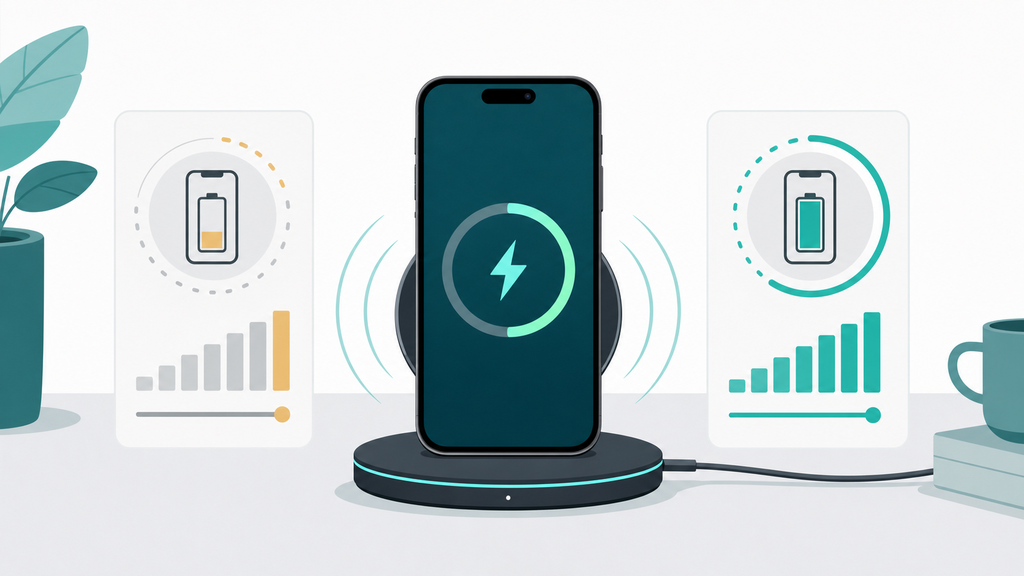
Many customers ask me whether Qi2 25W is just another label on the box. I understand the doubt. In charging products, the logo can matter more than the headline wattage because the real user experience depends on certification, heat control, phone support, and accessory design.
What Is Qi2 25W Wireless Charging?
Many shoppers see Qi, MagSafe, Qi2, and Qi2 25W on similar-looking products. That confusion can lead to slow charging and returned accessories.
Qi2 25W is the faster version of the Qi2 wireless charging standard. It is based on Qi v2.2.1 and raises certified Qi2 wireless charging power from 15W to up to 25W, with magnetic alignment as a key part of the user experience.1
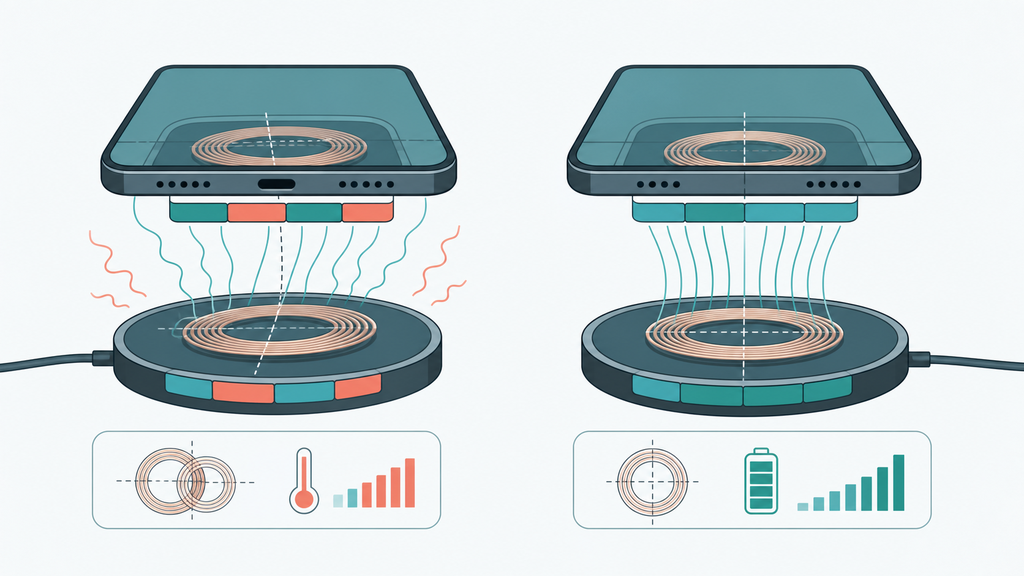
The simple way to understand Qi2 25W is this: Qi2 solved alignment first, then Qi2 25W improved speed. Earlier Qi chargers could work well, but users often placed the phone slightly off center. That small mistake created heat, slower charging, or a phone that looked like it was charging but barely gained battery.
Qi2 introduced magnetic attachment to keep the charging coil and phone coil aligned. The Wireless Power Consortium says Qi2 brought 15W charging to certified mobile devices, while Qi2 25W builds on that design with nearly 70% more charging power and faster charging potential.2 That does not mean every phone will always receive 25W. It means the certified standard allows that level when the phone, transmitter, receiver, firmware, thermal design, and power supply all support it.
In my experience with charging product development, this difference matters most in three product types:
| Product Type | Why Qi2 25W Matters | Common Buyer Mistake |
|---|---|---|
| Magnetic wireless power bank | Better on-the-go alignment and faster top-ups | Assuming every magnetic power bank is Qi2 25W |
| Desk charging stand | More convenient overnight and workday charging | Ignoring heat control and adapter requirements |
| 3-in-1 charger | Cleaner accessory ecosystem for phone, earbuds, and watch | Mixing certified and non-certified claims |
The official certification angle is important. WPC says Qi Certified products are tested for safety and interoperability in independent authorized labs, and only certified products can use the Qi or Qi2 logo.3 For consumers, that means the logo is not supposed to be decorative. For brands, it means certification planning should start early, before tooling, packaging, and marketing copy are locked.
I have seen projects where a buyer chose a low-cost magnetic charger because it looked like a premium Qi2 accessory. The sample charged, but the performance changed with different phone cases and adapters. That kind of uncertainty becomes expensive after shipment. Qi2 25W does not remove every risk, but it gives buyers a clearer technical baseline.
Which Devices Actually Benefit From Qi2 25W?
The biggest disappointment comes from buying a fast charger for a phone that cannot use the speed. The charger may be good, but the result feels ordinary.
You benefit from Qi2 25W only when both sides support it. Your phone must support the required Qi2 25W charging mode, and the charger must be certified for it. Older Qi phones, basic Qi2 15W phones, and many magnetic-compatible phones may charge at lower speeds.
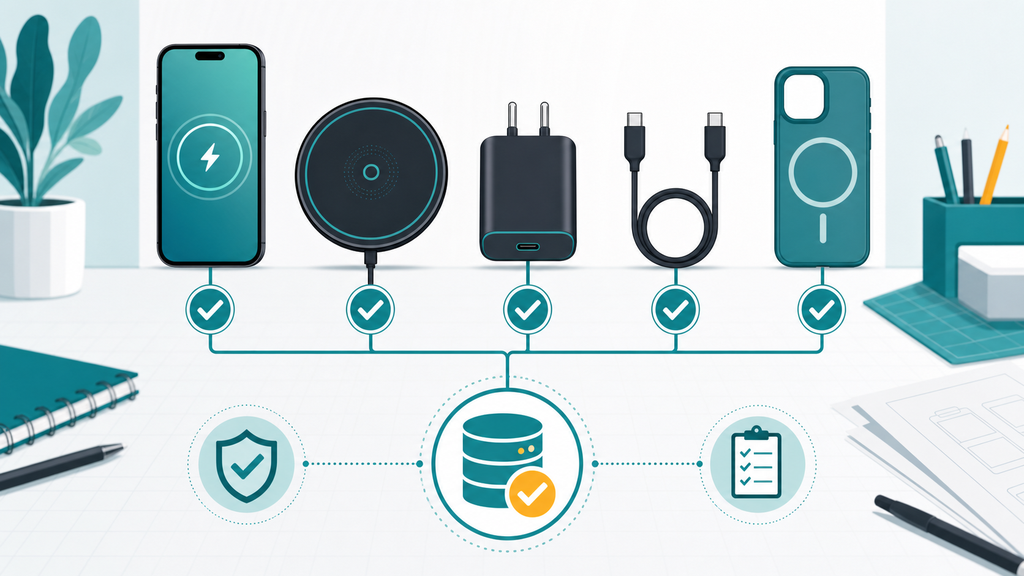
This is where marketing language becomes tricky. A product can be magnetic without being Qi2 25W. A product can be Qi2 without being Qi2 25W. A phone can attach to a magnetic charger but still charge slowly because the phone does not support the higher profile. A case can also help alignment or hurt it, depending on magnet strength, coil position, thickness, and metal parts.
WPC announced Qi2 25W in July 2025 and said the first certified 25W devices included transmitters, receivers, and devices. It also said full-scale certification testing had opened for several hundred devices waiting in the queue.1 That tells me the ecosystem is moving, but buyers still need to check exact compatibility instead of assuming every new charger has the same behavior.
Apple’s own support page is a useful reminder that wireless charging performance depends on the charger, adapter, cable, temperature, and device model. Apple also notes that iPhone may limit charging above certain temperatures to protect the battery.4 That thermal behavior is normal. It is one reason a 25W wireless charger may not hold peak power from 0% to 100%.
For everyday users, I would check compatibility in this order:
- Does your phone officially support Qi2 25W, or only Qi/Qi2 at a lower wattage?
- Is the charger listed as Qi2 25W certified, not only "MagSafe compatible" or "magnetic compatible"?
- Does the charger require a 30W or higher USB-C adapter to reach its best performance?
- Does your phone case support proper magnetic alignment without extra heat?
- Do you need fast wireless charging, or would a USB-C cable still serve you better?
For brands and retailers, I would go deeper. Ask the supplier for the WPC ID, certification status, test lab path, thermal test data, adapter requirements, coil structure, magnet stack, firmware logic, and packaging wording. The WPC product database exists so buyers can verify certification instead of relying only on a sales deck.3
In a private label project, the most dangerous phrase is "support up to." It may be technically true under narrow conditions, but the customer reads it as a promise. If a charger reaches 25W only with one phone model, one adapter, no case, and a cool room, your product page should not imply that every user will see 25W every day.
Should You Choose Qi2 25W Or Wired Fast Charging?
Wireless feels cleaner, but wired charging still wins in many speed and efficiency situations. The right choice depends on how users actually charge.
Choose Qi2 25W for convenience, magnetic alignment, desk use, travel top-ups, and fewer worn charging ports. Choose wired USB-C charging when you need maximum speed, lower heat, laptop charging, or the most predictable power delivery.
I often explain the choice as habit versus urgency. Wireless charging is excellent when the phone rests on a desk, nightstand, car mount, or magnetic power bank during normal movement. The user wants fewer cables and less aiming. Qi2 25W improves that experience because alignment is more consistent and the certified speed ceiling is higher.
Wired charging is still the practical answer when the user has only 20 minutes before leaving home, needs to charge a tablet or laptop, or wants the lowest heat for a given energy transfer. USB Power Delivery is designed for negotiated wired charging across many device classes, from phones to higher-power devices.5 Wireless charging and USB-C PD solve different problems, even when the wattage numbers look similar.
Here is how I would choose:
| User Situation | Better Choice | Why |
|---|---|---|
| Office desk charging | Qi2 25W stand | Easy drop-and-go charging during the day |
| Travel power bank for phone | Qi2 25W magnetic power bank plus USB-C | Wireless convenience with wired backup |
| Fastest possible phone charge | Wired USB-C | More predictable speed and less wireless loss |
| Nightstand charging | Qi2 or Qi2 25W | Speed matters less, alignment matters more |
| Retail product line planning | Both | Different users buy for different habits |
From a manufacturing point of view, Qi2 25W is not just a coil upgrade. The whole product needs to manage heat, magnets, firmware, adapter input, housing material, and certification. A slim magnetic power bank may look attractive, but the thermal room is limited. A desk stand has more space but may need a better weight balance. A car charger must handle sunlight and cabin heat. A 3-in-1 charger has more interference risk because several coils and modules sit close together.
This is why I do not recommend chasing the highest printed wattage without testing the real use case. A good Qi2 25W accessory should answer boring but important questions. Does it stay stable after 20 minutes? Does it reduce power safely when hot? Does it work with popular cases? Does the magnet feel secure without being hard to remove? Does the surface avoid scratching the phone? Does the packaging explain adapter requirements clearly?
For EverGreat customers, the best commercial path is usually not "make the fastest charger." It is "make the charger that gives the promised experience consistently." That means selecting the right chipset, confirming certification early, testing common phone models, and writing packaging claims that match the verified product.
Conclusion
Qi2 25W is worth it when compatibility, certification, and heat design are real. Buy the ecosystem, not only the wattage printed on the box.
-
Wireless Power Consortium, WPC Ushers in Next Generation of Faster Wireless Charging, July 23, 2025. ↩ ↩
-
Wireless Power Consortium, Qi Wireless Charging. ↩
-
Wireless Power Consortium, Certified Products. ↩ ↩
-
Apple Support, How to use MagSafe charging with your iPhone. ↩
-
USB Implementers Forum, USB Charger (USB Power Delivery). ↩