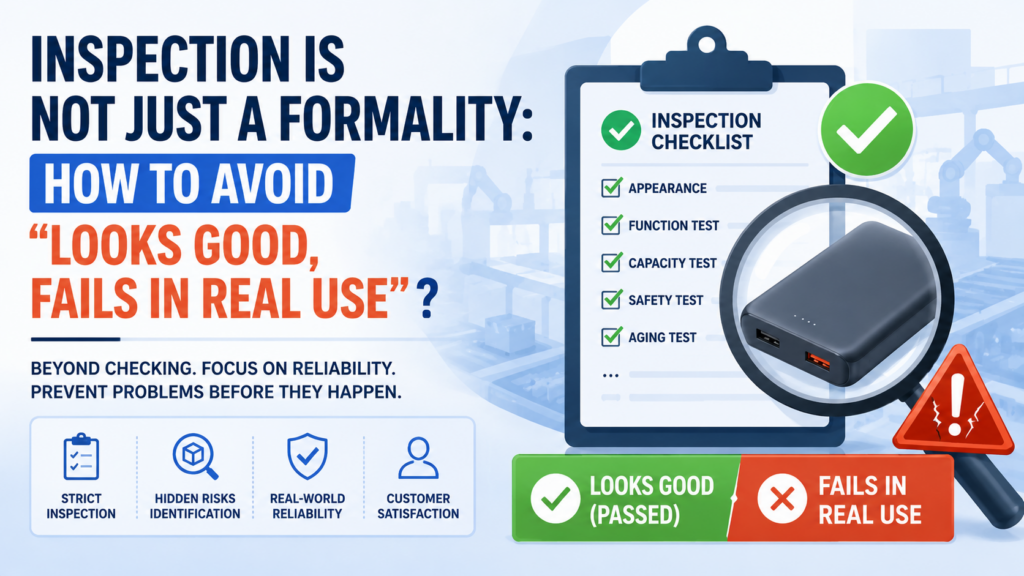
Your product just passed inspection, but what if it still fails with customers? This common problem costs you money and reputation, with U.S. e-commerce returns alone exceeding $240 billion annually and processing a single return potentially costing retailers $15 to $30 or more. Learn how to prevent these hidden issues.
snippet paragraph:
Products often fail after passing inspection because standard checks are snapshots. They miss critical issues like material fatigue, environmental stress, or user misuse. These problems only appear during real-world, extended operation or under varied conditions, leading to unexpected customer dissatisfaction, and contributing to the massive financial burden of product returns, where 10-25% of returned items cannot even be resold at full price.
Transition Paragraph:
It feels good when your products pass quality control. You might think the hard part is over. But many of us, myself included, have seen products that look perfect on paper but fall apart in customers’ hands. This gap between inspection and real-world performance is a big challenge for brands. It shows why we need to look beyond basic checks to truly guarantee product quality.
Why Do Products Pass QC But Still Fail After Delivery?
leading paragraph:
Your product passed all checks, but then customers complain it broke. This happens more than you think. Let’s find out why this happens.
snippet paragraph:
Products often fail after delivery because QC inspections are snapshots. They miss issues like material fatigue, environmental stress, and user misuse that only emerge during real-world, extended operation or varied conditions, leading to unexpected customer returns and brand damage. These returns contribute significantly to the over $640 billion in global e-commerce returns each year, with processing costs ranging from 20% to 65% of an item’s original price.
Dive deeper Paragraph:
I remember one time, we had a power bank client whose product passed every single factory QC check with flying colors. Yet, a few months after launch, they saw a spike in customer complaints about charging ports becoming loose or batteries draining too fast. The issue was not obvious during the quick functional tests at the factory. Standard inspection only tests for basic function, not for long-term wear or stress under diverse user habits. This experience taught me that many common quality problems only show up after a product is used day in and day out. QC checks are often limited in scope, as visual inspection alone is typically only about 85% effective, and even "200% inspection" can still result in defects reaching the field. They focus on immediate defects. They do not fully test the product’s lifespan or its ability to handle different environments. Products might look good on the surface. But inside, materials could have small flaws. Material fatigue, the initiation and propagation of cracks due to cyclic loading, is cited as the most common failure mode in materials science, and these flaws only grow bigger over time with daily use. Also, inspectors often test products in ideal conditions. Real users do not keep products in ideal conditions. Products often fail because they are tested in ideal conditions, which do not reflect real-world environmental stresses like temperature fluctuations, humidity, and physical shocks. They drop them, expose them to heat or cold, or use them many times a day. These real-world stresses are not always part of the inspection process. User misuse can also lead to failure, ranging from unconventional uses of household items to unintended uses.
1. Limited Testing Scope
Inspection often covers basic functions only. Standard quality control inspections are typically limited in scope, focusing on basic functions and immediate defects, often using ineffective sampling plans or improper testing procedures. It does not check for every possible problem. This means deeper issues can stay hidden.
2. Short Inspection Duration
Most inspections are short. They do not run the product for days or weeks. This makes it hard to find problems that develop over time, like battery degradation.
3. Lack of Real-World Simulation
Products are tested in clean, controlled factory settings. They are not tested in the dusty, hot, or humid places where people actually use them. The interaction of a product with its environment in the usage phase is often not sufficiently considered. This difference can cause failures.
4. Overlooking Hidden Defects
Some defects are internal. They are not visible from the outside. Hidden defects, also known as latent defects, are flaws or imperfections not immediately apparent even after a reasonable inspection; they may develop over time or only reveal themselves under specific usage conditions. These might be small cracks in a circuit board or weak solder joints. These hidden problems can lead to product failure later on. Examples include faulty automobile parts (e.g., brakes, airbags), dangerous electrical appliances (e.g., wiring problems), and construction materials (e.g., faulty foundations). Design flaws, manufacturing errors, and inadequate warnings are also considered types of hidden defects.
| Failure Type | Description | Inspection Miss |
|---|---|---|
| Battery Degradation | Power bank loses charge capacity quickly. | Short-term capacity check, not long-term cycle. |
| Cable Breakage | Charging cable frays or breaks at connectors. | Visual check, not stress or bend testing. |
| Overheating Issues | Device gets too hot during extended use. | Short run-time test, not prolonged heavy load. |
| Software Glitches | Firmware bugs appear after certain user actions. | Basic functional test, not comprehensive UX. |
What Does a Truly Reliable Product Inspection Process Actually Include?
leading paragraph:
Standard inspections do not catch everything. You need more than just basic checks. Discover what a robust inspection really covers.
snippet paragraph:
A reliable inspection process goes beyond basic visual checks; it includes comprehensive functional testing, environmental stress tests, long-term durability simulations, and detailed post-production audits, aiming to mimic actual user conditions and identify potential weaknesses before mass deployment.
Dive deeper Paragraph:
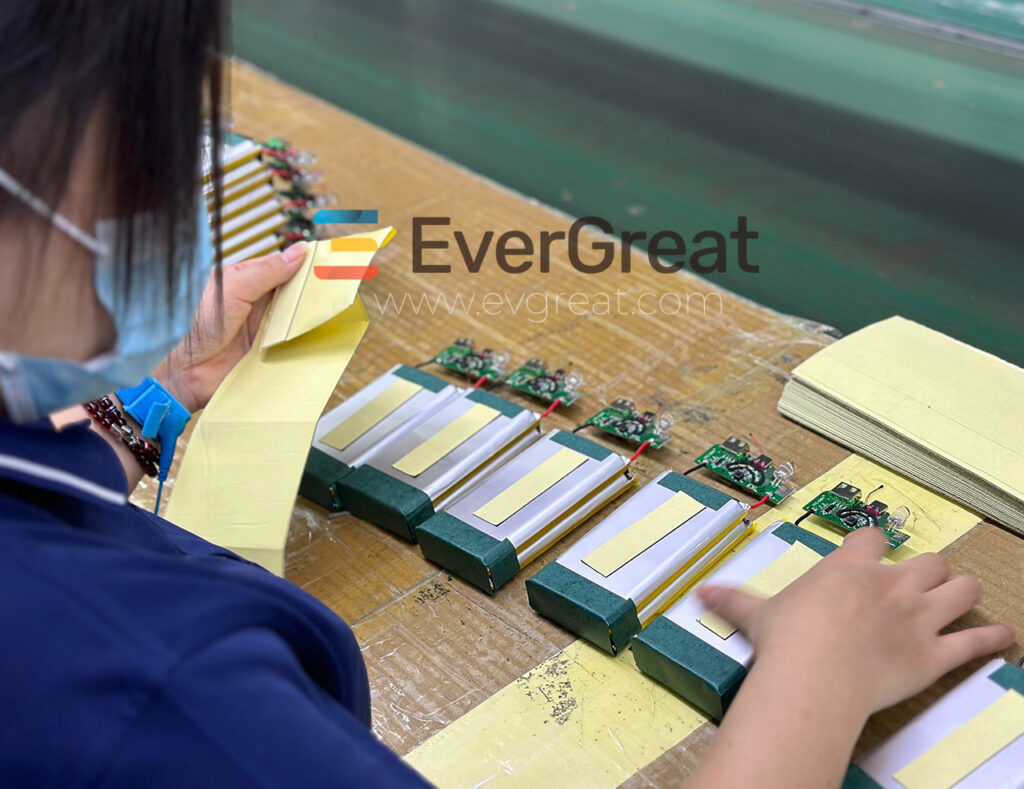
In my experience working with brands, a truly reliable inspection process starts long before the product is even built. It is a full cycle, not just a final check. We begin by looking at the design itself. We review material choices and production methods. This helps us catch potential problems early. During actual production, we have checks at every stage. This means we do not wait until the end to find problems. We look for issues as parts are made and assembled. This helps us fix things quickly if something goes wrong. For example, when making power banks, we inspect incoming battery cells, circuit boards, and casing materials. Then, we check them again after assembly. This multi-stage approach helps us maintain high standards. It is about building quality in, not just testing for it at the end. After the product is finished, we do more than just a quick look. We put products through tough tests. Reliability testing assesses how product quality changes over time and how long a product holds up under various conditions. These tests copy how people actually use the product. This includes things like drop tests and temperature changes. It helps us see how strong the product is under stress. This also means checking product samples from different production batches.
1. Pre-Production Quality Planning
This involves reviewing designs with Design for Manufacturability (DFM) and Design for Assembly (DFA) principles and choosing materials. We audit suppliers. We set clear quality standards before anything is made.
2. In-Process Quality Control (IPQC)
Quality checks happen during manufacturing. Workers check parts as they are assembled. This helps find and fix problems early, preventing many defects.
3. Pre-Shipment Inspection (PSI)
This is a final check before products leave the factory. It involves looking at a sample of products. We check functions, appearance, safety, and packaging.
4. Specialized Testing
This goes beyond basic checks. It includes tests like drop tests, vibration tests, life testing, stress testing (to assess robustness beyond normal operational capacities), environmental testing, and aging tests. These specialized tests, which can include techniques like Highly Accelerated Life Test (HALT) and Highly Accelerated Stress Screen (HASS), show how products hold up over time and under stress. They are vital for identifying potential failures before products reach the market, preserving brand reputation, and building consumer trust.
5. Post-Market Feedback Loop
We learn from customer feedback. We analyze returns and complaints. This includes analyzing warranty data, customer reviews, and performing field failure analysis. This helps us improve future products and fix current issues.
| Stage | Focus | Key Activities |
|---|---|---|
| Pre-Production | Design & Component Quality | Supplier audits, material incoming inspection, pilot run review. |
| During Production | Process & Assembly Quality | In-line checks, first article inspection, defect monitoring. |
| Pre-Shipment | Final Product Quality | AQL sampling, function tests, safety checks, packaging review. |
| Post-Delivery | Real-World Performance & Feedback | Warranty data analysis, customer reviews, field failure analysis. |
How Can You Identify Hidden Quality Risks Before Mass Production?
leading paragraph:
Hidden flaws can ruin your product launch. These issues stay hidden until it is too late. Learn to spot them early.
snippet paragraph:
To identify hidden quality risks before mass production, focus on robust design validation, extensive prototype testing under simulated extreme conditions, supplier quality management, and thorough material incoming inspections, ensuring all potential failure points are addressed early in the development cycle.
Dive deeper Paragraph:
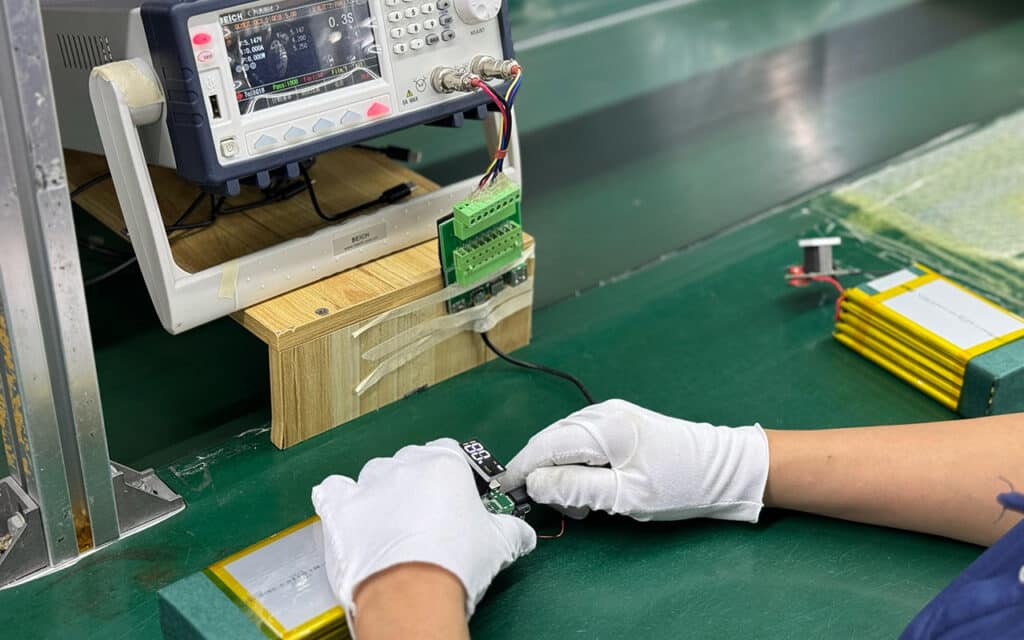
When we work with a new client, especially those with their own designs, finding hidden risks before mass production is key. I have seen how a small oversight in the design phase can lead to huge costs later. Our approach starts with a deep dive into the design itself. We review everything. We look at material choices and how parts fit together. This is called Design for Manufacturability (DFM). Such DFM and Design for Assembly (DFA) reviews help simplify manufacturing and reduce errors. We ensure the product is easy and reliable to make. After design, we make prototypes. These are not just for looks. We test these prototypes harshly. This includes putting them in extreme heat or cold. We also shake them and drop them. This helps us find weak spots that might not appear in normal use. We call these stress tests. They show us how the product will perform under real-world pressure. We also work closely with our suppliers. Supplier qualification and audits, alongside incoming quality control (IQC) for materials and components, ensure quality from the start of the production process. This ensures that what goes into the product is top quality from the start. This proactive method saves time and money in the long run. It makes sure that when mass production starts, we are confident in the product’s quality.
1. Design for Manufacturability (DFM) Reviews
We check the product design. Applying Design for Manufacturability (DFM) and Design for Assembly (DFA) reviews makes sure it can be made easily and without errors. Good design prevents many problems.
2. Prototyping and Iteration
We make samples and test them hard. We repeat this process. This helps us find and fix flaws in the design before mass production starts.
3. Supplier Qualification & Audits
We carefully choose our suppliers. We check their factories and materials. Supplier audits and incoming quality control (IQC) for components makes sure we get high-quality components for our products.
4. Reliability Testing
We use special tests like HALT (Highly Accelerated Life Test) or HASS (Highly Accelerated Stress Screen). These are specialized tests that push products to their limits to quickly reveal design or component weaknesses and screen for failures introduced during manufacturing. HALT, for instance, is a test to the point of failure, aiming to accelerate fatigue. These tests push products to their limits. They reveal weaknesses quickly.
5. Early User Feedback
We give early versions of the product to real users. Their feedback helps us find issues that factory tests might miss.
| Phase | Proactive Measure | Benefit |
|---|---|---|
| Design | DFM/DFA Reviews | Simplifies manufacturing, reduces errors. |
| Development | Extensive Prototype Testing | Identifies design flaws before tooling. |
| Sourcing | Supplier Audits & Component IQC | Ensures raw material and part quality. |
| Pre-Production | Pilot Runs & Reliability Tests (HALT/HASS) | Reveals hidden weaknesses under stress. |
Conclusion
Product inspection is vital, but not enough. Focus on comprehensive, proactive quality control from design to delivery. This helps avoid failures and builds trusted brands.