Have you ever worried about your power bank overcharging and damaging its battery? It is a common fear. I often hear people ask if their device will keep drawing power once it is full.
Most modern, high-quality power banks are designed to automatically stop charging when they reach 100% capacity. This is thanks to smart, built-in protection circuits. These circuits prevent overcharging, protect the battery, and keep your devices safe.
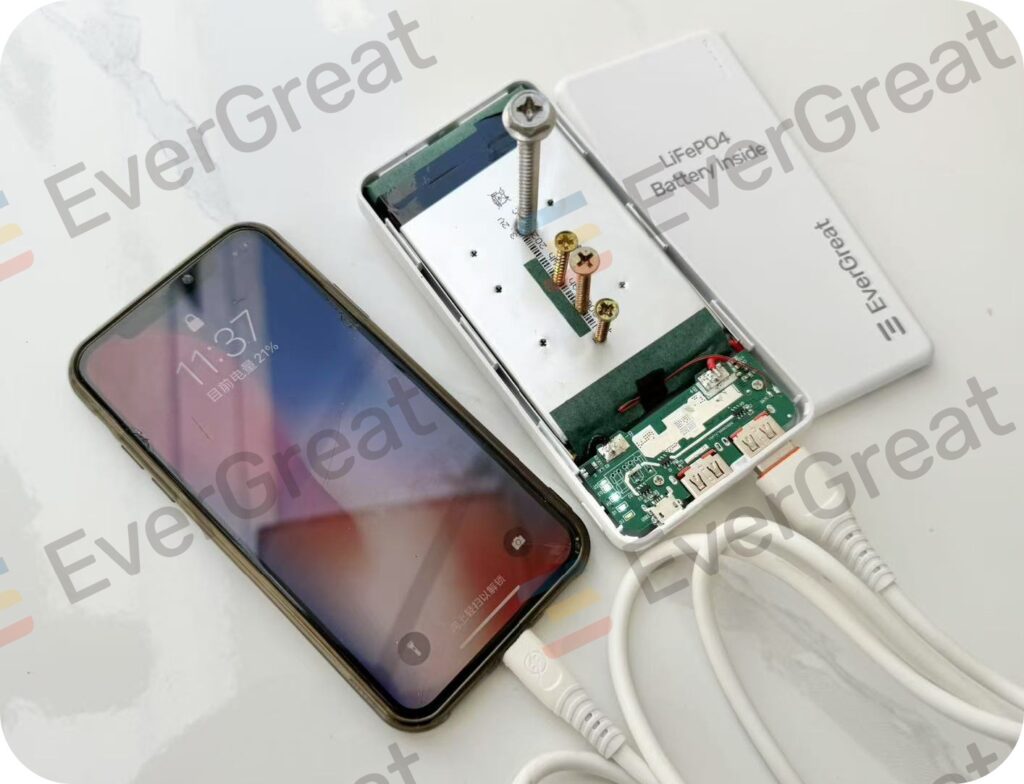
Understanding how your power bank manages its charge is important for its lifespan and your safety. Let me explain what happens when you plug in a power bank and it gets to full power.
What happens inside a power bank when it reaches 100%?
You have plugged in your power bank, and the indicator shows 100%. What happens next? Many people wonder if the power continues to flow through the cells.
When a quality power bank hits 100%, its internal Battery Management System (BMS) steps in. The BMS detects the full charge and signals the charging circuit to cut off the power supply. This prevents any further current from entering the battery cells.

I have seen many power banks, and they all have complex systems inside. A power bank is not just a battery in a box. It has smart parts that manage its power. The most important part is the Battery Management System, or BMS. This system acts like a brain for the power bank. It watches over the battery cells constantly. When your power bank is charging, the BMS monitors several things. It checks the voltage of each cell. It also measures the current flowing into the battery.
Key Functions of a Power Bank’s BMS at 100% Charge:
- Voltage Detection: The BMS knows the maximum safe voltage for the battery cells. When the cells reach this voltage, the BMS understands they are full.
- Current Cut-off: Once the maximum voltage is hit, the BMS immediately stops the flow of charging current. This is like turning off a faucet when a cup is full.
- Temperature Monitoring: The BMS also watches the battery temperature. Overcharging can cause heat, but the BMS prevents this by stopping the charge.
- Balancing Cells: For power banks with multiple cells, the BMS works to balance their charge. This makes sure all cells charge evenly and reach full capacity together.
This process is very important. It keeps the battery from overcharging. Overcharging can cause the battery to get hot. It can also reduce the battery’s lifespan. I always make sure our power banks have very good BMS systems. This keeps them safe and working well for a long time.
Let me show a simple table of what the BMS controls:
| BMS Control Feature | Purpose |
|---|---|
| Overcharge Protection | Stops current when battery is full, prevents damage. |
| Over-discharge Protection | Prevents battery from draining too low, avoids deep discharge damage. |
| Overcurrent Protection | Limits current flow to prevent damage from too much power. |
| Short Circuit Protection | Instantly cuts power if a short circuit occurs, protecting the device and user. |
| Temperature Protection | Monitors temperature and stops charging/discharging if it gets too hot or cold. |
These features work together. They make sure the power bank charges safely and efficiently. I have seen how effective a good BMS is. It is the heart of a reliable power bank.
Do all power banks have overcharge protection?
You might think all power banks are created equal. Do they all offer the same level of safety? Many people ask if overcharge protection is a standard feature across the board.
No, not all power banks have reliable overcharge protection. While most reputable brands include robust Battery Management Systems (BMS) with overcharge safeguards, cheaper, lower-quality power banks may have inadequate or faulty protection circuits. This can pose safety risks over time.

From my experience, there is a big difference in quality. Many power banks you see on the market look similar. But what is inside them can be very different. The term "overcharge protection" means different things to different makers. High-quality power banks, like the ones I work on, have very advanced protection. They use specialized chips and precise programming. These systems are tested many times to make sure they work perfectly.
Why Protection Varies:
- Cost Cutting: Some manufacturers try to save money. They use very cheap components for the BMS. Sometimes, they even leave out key protection features completely.
- Design Flaws: Even with some protection, the design might not be good enough. It might not react fast enough. Or it might not handle different charging conditions well.
- Quality Control: Reputable companies have strict quality checks. They test every batch of products. Cheaper brands often skip these important steps. This means faulty units can reach customers.
I have seen firsthand the issues that come from poor protection. An unprotected battery can swell. It can even catch fire in rare cases. This is why I always stress the importance of product quality. We choose only top-tier global components. Our inspection system is very strict. We check everything internally. We also get third-party groups to evaluate our products. This ensures that our power banks meet important standards like CE, FCC, and RoHS. For me, safety is not an option; it is a must. Always check the brand’s reputation and look for certifications. These details show a product has been built with care.
Can cheap power banks keep charging even when full?
You want a good deal, but is a cheap power bank truly a bargain? Many wonder if these low-cost options carry hidden risks. Can they keep charging endlessly?
Yes, some very cheap or poorly made power banks can continue to draw a trickle charge even after reaching 100%. Their weak or absent overcharge protection means the battery cells might still receive current. This can lead to overheating, reduced lifespan, or even safety issues over time.
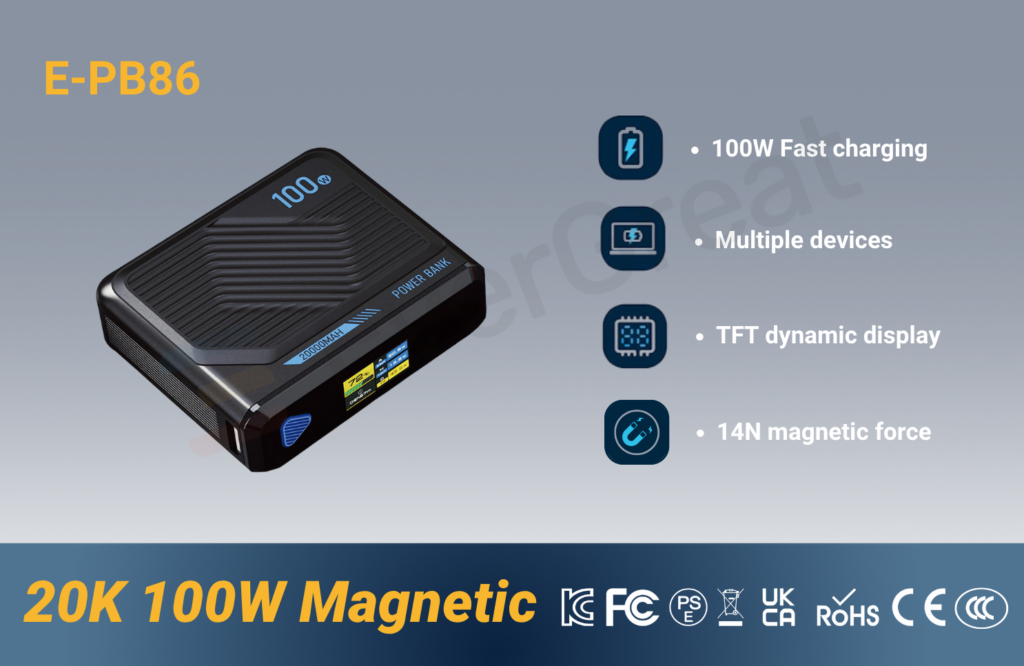
This is where the real danger of false economies lies. I have encountered many situations where the allure of a low price overshadows critical safety features. When a power bank lacks a proper BMS or uses substandard components, its ability to manage charging effectively is compromised. The core issue is often a failure in the over-charge and over-discharge protection. These are not just fancy terms; they are essential safeguards.
Why Cheap Power Banks Fail:
- Inferior Components: The small chips and resistors that make up the protection circuit are cheap for a reason. They might not be sensitive enough or durable enough.
- No Real BMS: Some really low-end power banks might only have a very basic circuit. It might not be a true Battery Management System. It cannot handle all the protection needs.
- Lack of Testing: These products often skip vital testing. They are not checked for how they handle real-world stress or prolonged charging.
- False Claims: Some sellers might claim their products have protection. But in reality, the protection is weak or nonexistent.
I have seen what happens when these protections fail. Batteries can swell. This is a clear sign of internal damage due to overcharging. In some extreme cases, the battery can leak. It might even lead to a fire. These risks are not worth the small savings you get from a cheap power bank. That is why I always advise clients to focus on quality. A good power bank needs a robust design and reliable components. Our focus is always on high-performance power banks. We build them with careful attention to safety and lasting power. This is much better than taking risks with unknown products.
Consider this comparison:
| Feature | High-Quality Power Bank | Cheap/Low-Quality Power Bank |
|---|---|---|
| Overcharge Protection | Robust, precise BMS, automatically cuts off at 100%. | Weak, unreliable, or absent; may continue trickle charging. |
| Battery Lifespan | Optimized for long cycle life, maintains capacity over time. | Degrades quickly due to stress from poor charging management. |
| Safety Risks | Minimal, multiple layers of protection against common faults. | Higher risk of overheating, swelling, leakage, or fire. |
| Component Quality | Top-tier, certified components for reliability and durability. | Substandard, unverified components to reduce manufacturing cost. |
| Certifications | Meets international standards (CE, FCC, RoHS, UL). | Often lacks proper certifications or uses fake ones. |
I strongly believe in the value of investing in a well-made power bank. It is not just about charging your phone. It is about your peace of mind and safety.
Conclusion
Most quality power banks stop charging when full due to smart protection. However, poor-quality ones can fail, posing safety risks. Always choose reliable brands for peace of mind.