Safety anxiety is rising, and brands that chase new battery words without proof can create a bigger trust problem.
Semi-solid-state power banks may be worth exploring in 2026, but brands should treat them as a product-development option, not a guaranteed safety solution. Buyers should verify cell chemistry, test data, certification path, airline rules, supply stability, and honest marketing claims before launch.

I often see new battery terms move faster than buyer understanding. The opportunity is real, but the risk is also real if the product story runs ahead of engineering evidence.
Why Are Semi-Solid-State Power Banks Getting Attention Now?
Battery safety has become a public concern, so buyers are searching for products that feel safer and more future-ready.
Semi-solid-state power banks are getting attention because brands want a stronger safety story after recalls, airline restrictions, and consumer worry about lithium-ion products. The technology may improve some risk factors, but buyers still need proof from real testing.
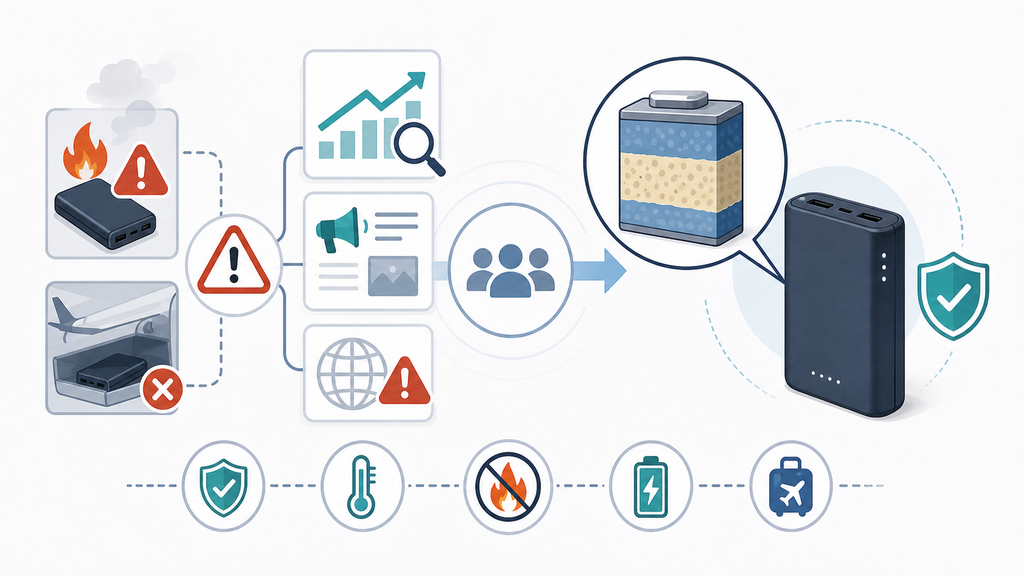
The market signal is easy to understand. Consumers use power banks on planes, in offices, in cars, and beside beds. When a power bank overheats or catches fire, the story spreads fast. That makes "safer battery" a high-interest phrase for both consumers and buyers. Recent industry coverage has also pushed the topic forward. The Verge described how true solid-state batteries remain difficult, while gel or semi-solid approaches are showing up first in products such as power banks and e-bikes, in its report on semi-solid batteries entering everyday devices1.
For a brand, this does not mean semi-solid-state is automatically better for every product. It means the search intent has changed. Buyers are not only asking for more capacity and faster charging. They are asking whether the battery design can reduce fire risk, improve durability, and support a more credible travel story. That is a very different product discussion from simply choosing 10,000mAh or 20,000mAh.
The pressure also comes from recalls. The U.S. Consumer Product Safety Commission announced a recall of certain Anker power banks because the lithium-ion battery could overheat, creating fire and burn hazards, under its power bank recall notice2. A recall does not mean all power banks are unsafe. It does remind buyers that battery selection, supplier control, and after-sales traceability are not back-office details. They directly affect brand reputation.
| Market Signal | What Buyers Hear | Better Buyer Question |
|---|---|---|
| Recall news | Power banks can be risky | How is cell safety controlled by batch? |
| Airline checks | Travel use is sensitive | Does the product meet carry-on rules clearly? |
| New battery terms | Semi-solid sounds safer | What test data supports the claim? |
| Consumer search interest | Safer charging is a selling point | Can the brand explain safety without hype? |
In my experience, brands win when they translate hot technology into buyer confidence. A semi-solid-state power bank should not be launched only because the term is popular. It should be launched when the supplier can explain the chemistry, provide test records, control production, and help the brand write honest packaging claims.
What Risks Still Remain For Brands?
New battery language can reduce fear, but weak sourcing or careless claims can still lead to complaints.
The main risks are unclear battery chemistry, immature supply chains, exaggerated safety claims, certification uncertainty, airline misunderstanding, and higher cost. A semi-solid-state product still needs normal power bank safety design, documentation, and quality control.
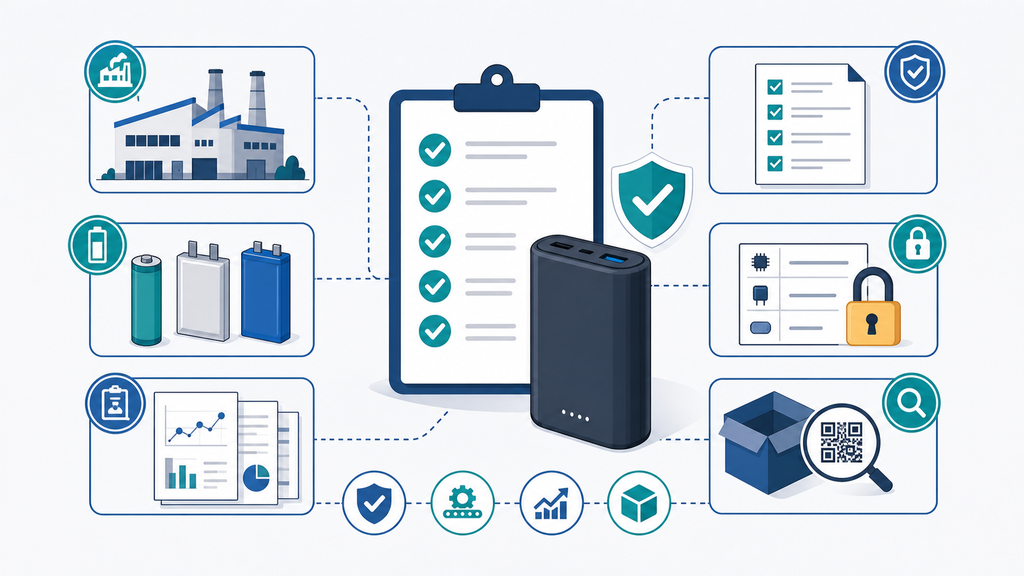
I often warn customers not to use "solid-state" too loosely. Many products promoted as solid-state are not fully solid-state in the strict technical sense. Some may use gel electrolytes, semi-solid materials, or hybrid structures. That difference matters because a buyer’s packaging, website, and sales team must not promise something the product cannot prove. If the supplier cannot explain the cell structure in simple terms, the buyer should slow down.
Another risk is that the rest of the power bank is still a power bank. The battery is important, but it is not the whole product. The protection circuit, charging protocol, thermal path, housing, welding process, aging test, capacity marking, and firmware behavior all affect safety. A better cell cannot compensate for poor assembly or weak quality control. I have seen buyers focus on one impressive component and ignore the system around it. That creates hidden risk.
Airline rules also still matter. The FAA says spare lithium batteries, including power banks and cellphone battery charging cases, must be carried in carry-on baggage only, and lithium-ion batteries are limited to 100Wh unless airline approval applies for certain larger spare batteries under its PackSafe lithium battery guidance3. A semi-solid-state marketing claim does not remove the need for clear watt-hour labeling and travel instructions.
China has also made the travel signal more visible. The Civil Aviation Administration of China announced that, from June 28, 2025, passengers on China domestic flights cannot carry power banks without a 3C mark, with an unclear 3C mark, or in recalled models or batches under the CAAC notice4. For brands selling into travel use cases, this means safety claims, certification marks, and product traceability must work together.
| Risk | Why It Matters | Buyer Control |
|---|---|---|
| Unclear chemistry | Claims may become misleading | Ask for cell structure and test data |
| Immature supply | Lead time and consistency may vary | Audit capacity and batch control |
| Higher cost | Retail price may be hard to support | Match product to premium channels |
| Airline confusion | Customers may expect special treatment | Keep Wh labels and carry-on guidance clear |
| Overclaiming safety | Returns and trust loss become worse | Use careful, evidence-based wording |
The biggest commercial risk is overpositioning. If a brand says "fireproof," "airline approved," or "100% safe," it creates a promise that real products cannot safely carry. A better message is more modest: improved battery design, stronger safety testing, clear documentation, and responsible travel guidance.
How Should Buyers Evaluate A Semi-Solid Power Bank Supplier?
A hot product idea needs a colder checklist, or the buyer may pay for a story instead of a reliable product.
Buyers should evaluate the supplier by checking cell origin, safety test reports, certification plan, BOM control, thermal performance, batch traceability, warranty process, and claim wording. The supplier should explain both the benefits and the limits of the technology.
My first supplier question would be simple: what exactly is semi-solid in this product? The answer should not be only a slogan. The supplier should explain the cell design, the rated capacity, energy in watt-hours, cycle-life expectations, operating temperature range, and safety tests. If the buyer is not technical, the supplier should still be able to explain it in plain English. A good supplier makes risk easier to understand, not harder.
The second question is whether the product has a realistic certification path. For many markets, a power bank needs battery transport documents, safety test reports, labeling, and retail-channel evidence. If the product uses a newer cell structure, buyers should ask whether the certification body or test lab has already handled similar products. This prevents surprises after packaging and tooling are already finished.
The third question is production consistency. A sample can look excellent, but mass production decides customer experience. Buyers should ask how cells are purchased, how incoming cells are checked, whether the BOM is locked, how aging tests are run, and how the factory traces a batch if a problem appears. For premium technology products, this is not extra work. It is the foundation of the selling point.
| Evaluation Area | Buyer Question | Red Flag |
|---|---|---|
| Cell technology | What is the actual cell structure? | Supplier only repeats marketing words |
| Test evidence | Which safety tests were performed? | Reports do not match the exact model |
| Certification | Which markets are planned first? | One document is used for every country |
| Production | Is the BOM locked by batch? | Cell supplier can change without notice |
| Claim wording | What can we safely say on packaging? | "No fire risk" or "airline approved" claims |
I would also ask for a pilot order before a large launch. A smaller first batch lets the buyer test real customer response, charging behavior, heat, packaging clarity, and after-sales questions. If the product performs well, the brand can scale with better confidence. If issues appear, the buyer can adjust without turning a hot product into an expensive mistake.
EverGreat can support this kind of project by helping customers compare technology claims with manufacturing reality. That includes OEM planning, supplier coordination, certification support, packaging review, and quality control. The goal is not to reject new battery technology. The goal is to launch it responsibly, so the product builds trust instead of borrowing attention from a trending word.
Conclusion
Semi-solid-state power banks are worth exploring, but only when test evidence, compliance, production control, and honest claims support the story.
-
This industry report supports the current market attention around semi-solid battery approaches in consumer devices. ↩
-
This CPSC recall notice supports the buyer concern around lithium-ion battery overheating, fire, and burn hazards. ↩
-
This FAA page supports the airline carry-on and watt-hour guidance for spare lithium batteries and power banks. ↩
-
This CAAC notice supports the China domestic-flight rule around missing, unclear, or recalled power-bank 3C marks. ↩