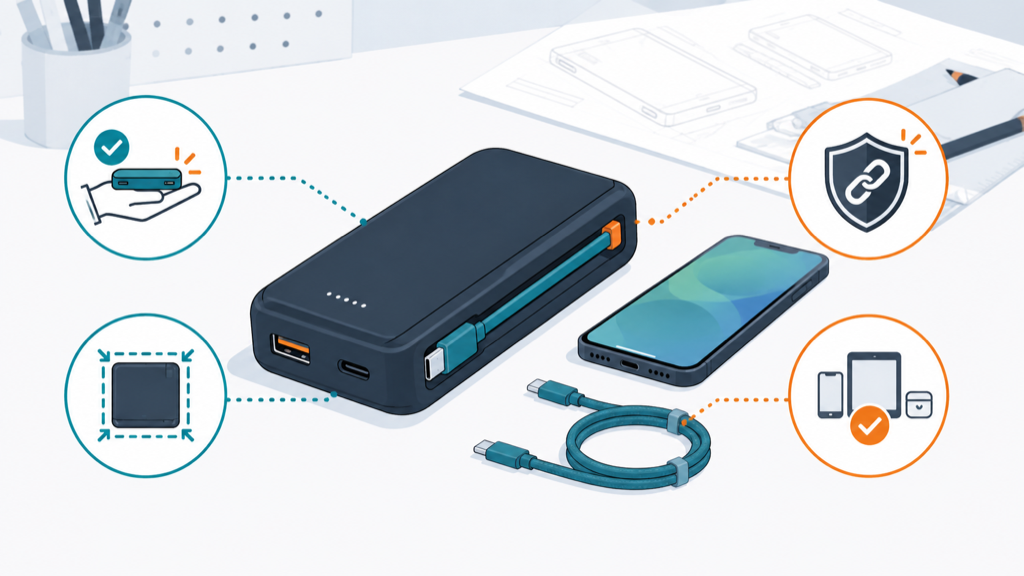
A higher-capacity power bank sounds stronger, but it can also become heavier, slower to launch, harder to ship, and less comfortable to use.
No. Higher capacity is better only when it matches the customer’s devices, use case, target price, weight limit, charging speed, and transport requirements. A well-positioned 5,000mAh or 10,000mAh model can outperform a larger model.
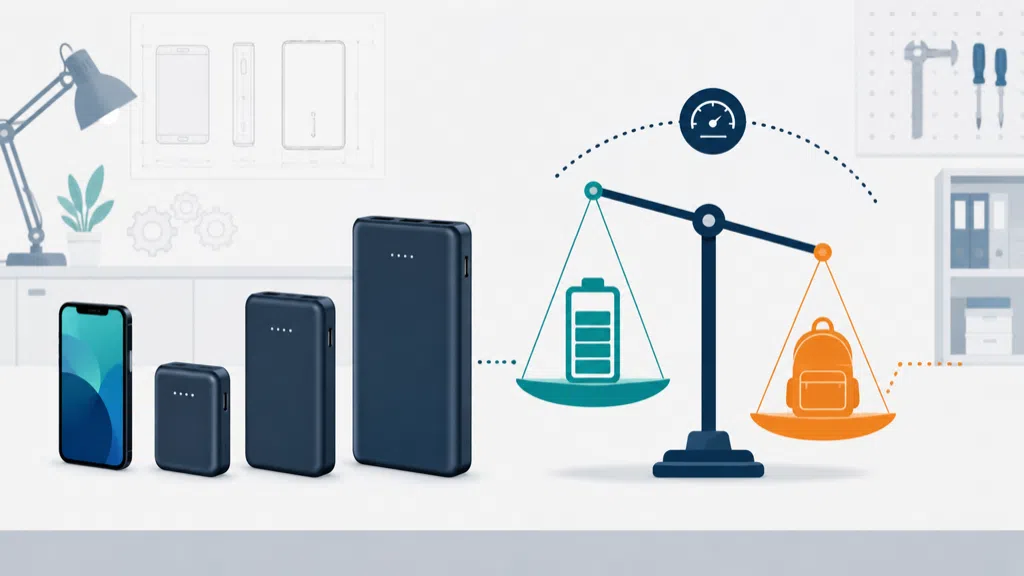
I have seen brands add capacity because a bigger number looks attractive on a product page. The problem appears later when the product feels heavy, misses a travel requirement, or costs too much for its channel.
What Does Power Bank Capacity Mean In Real Product Use?
Power bank capacity describes stored electrical energy, but the printed mAh number does not equal the energy a user receives at the phone.
A power bank’s usable output depends on its cell voltage, conversion efficiency, charging protocol, cable, temperature, and the phone’s charging behavior. Buyers should compare watt-hours and tested output, not mAh alone.
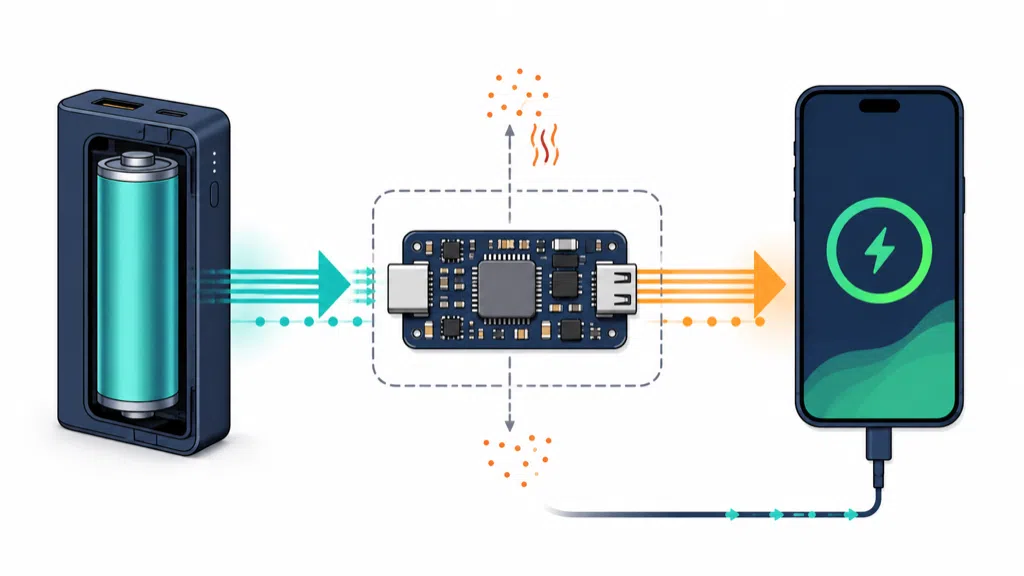
The first mistake is treating mAh as a universal measurement. A cell is commonly rated at its nominal voltage, while the phone receives power after the power bank converts that energy to a USB output voltage. Every conversion step has losses.
For a simple comparison, watt-hours can be estimated with this formula:
Wh = V × Ah
A 10,000mAh pack at a nominal 3.7V stores about 37Wh before conversion losses. That does not mean it will deliver 37Wh to a phone. The final result depends on the power-management circuit, output voltage, current, cable, and test method.
This difference matters when a brand compares suppliers. One factory may quote cell capacity. Another may quote rated output capacity at 5V. A third may quote a typical result from a particular phone. If the measurement basis is not written into the specification, the numbers are not directly comparable.
| Capacity claim | What it usually tells you | Buyer question |
|---|---|---|
| Cell mAh | Energy stored by the battery cells | At what voltage and test condition? |
| Rated capacity | Expected output after conversion under a defined test | What output voltage, current, and cutoff were used? |
| Wh | A voltage-neutral energy comparison | Is the value based on nominal or tested conditions? |
| Phone charges | A real-world result with one device | Which phone, cable, temperature, and starting level? |
The customer’s device also changes the result. A phone may reduce its charging rate as the battery fills. It may stop or slow charging when the product becomes warm. A power bank can therefore have enough stored energy but still deliver a different experience from one phone model to another.
I recommend that brands define capacity in three layers: the cell specification, the rated output specification, and a practical use example. The product page can still use a familiar mAh number, but the technical file should state the test conditions clearly.
Charging power is another separate issue. Capacity answers “how much energy is stored?” Output power answers “how quickly can the product provide it?” A 20,000mAh power bank with weak output may take longer to charge a modern phone than a smaller product with a better USB Power Delivery design. USB-IF explains that USB Power Delivery allows devices to negotiate the power they require, including higher-power applications over suitable USB Type-C systems.1
For a brand, this means capacity should not be selected before the charging architecture. If the target user needs a laptop backup, the product may need a suitable PD profile, cable, thermal design, and connector. If the target user needs emergency phone charging, a slimmer product with reliable 20W or 30W output may create a better experience.
When Does Higher Capacity Create New Product Tradeoffs?
Higher capacity usually adds cells, volume, weight, charging time, material cost, and transport complexity. These tradeoffs can reduce value when the target customer does not need the extra energy.
Higher capacity becomes a disadvantage when extra runtime is less important than pocket comfort, airline portability, retail price, fast recharge time, or compact packaging. The correct capacity is a product-positioning decision, not a race toward the largest number.
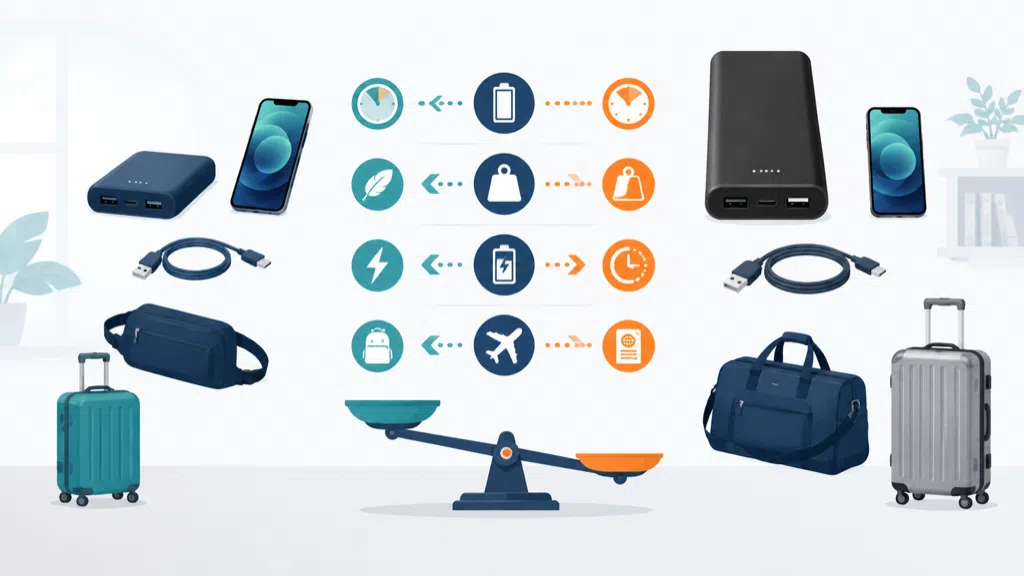
The physical tradeoff is easy to underestimate. A larger cell pack needs more internal space, stronger structural support, and more attention to heat paths. The enclosure may become thicker or longer. The product may no longer fit the intended phone, travel pouch, promotional gift box, or retail shelf packaging.
Weight changes the way users handle the product. A 5,000mAh magnetic power bank may stay attached to a phone during short emergency use. A heavier 10,000mAh or 20,000mAh design may pull away from the phone when the user walks, uses a thick case, or holds the phone vertically. Capacity can improve the specification while damaging the main use case.
Recharge time is another hidden cost. Larger capacity takes longer to refill unless the input design, charger, cable, and thermal system all support a higher charging rate. If the user forgets to recharge the product overnight, the larger battery may still be empty when it is needed. A smaller product that refills quickly can be more useful in daily life.
Transport requirements also affect product planning. The FAA states that spare lithium-ion batteries and power banks are limited to 100 watt-hours per battery for ordinary passenger travel, must be carried in carry-on baggage, and may face stricter airline limits.2 International rules and airline policies can differ, so a travel-focused product should be designed with its target markets and sales claims in mind.
A nominal 3.7V, 20,000mAh pack is about 74Wh before conversion losses. It is below the common 100Wh threshold, but that does not remove the need for correct labeling, test documentation, packaging, and airline review. A much larger pack can create more customer questions and shipping restrictions even when the product is technically valuable.
| Product direction | Main benefit | Main risk |
|---|---|---|
| 5,000mAh compact | Light, easy to carry, often comfortable with phones | Limited backup runtime |
| 10,000mAh balanced | Strong everyday compromise | More weight and enclosure space |
| 20,000mAh travel | More energy for several devices | Longer recharge, higher weight, more logistics work |
| Laptop-capable pack | Supports a wider device range | Requires suitable PD, cable, thermal, and testing work |
Cost does not rise only because of more battery material. A larger pack may need a different mold, stronger protection, more robust assembly, larger packaging, additional quality checks, and revised shipping documents. If the product uses multiple cells, the supplier must also manage cell matching, welding quality, insulation, and protection-circuit behavior.
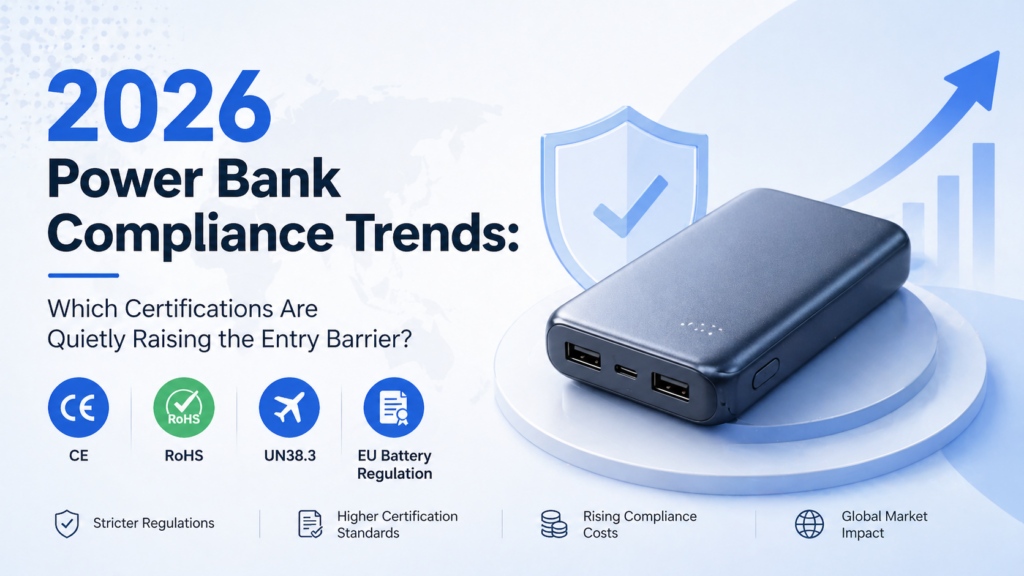
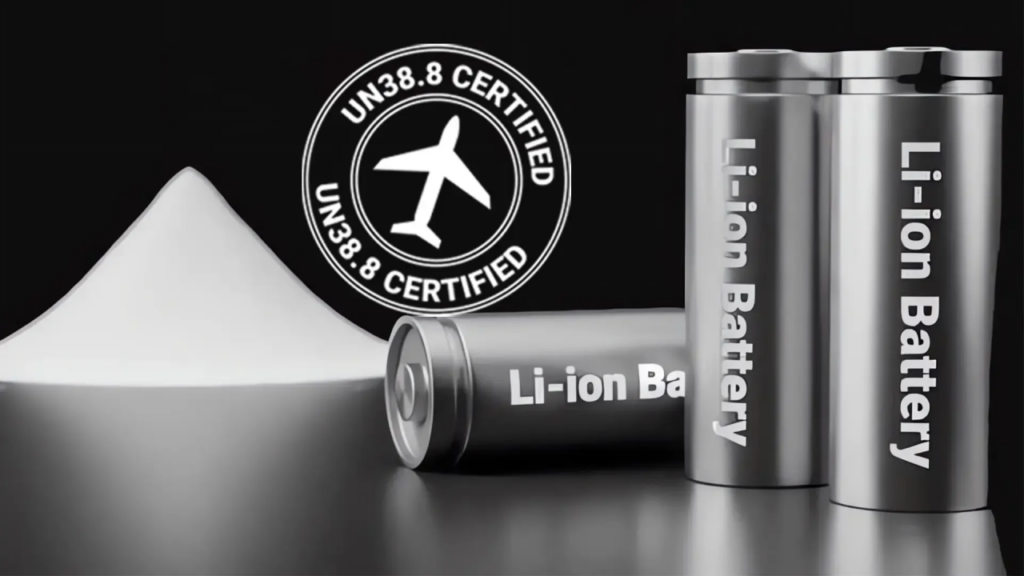
Safety planning becomes more important as stored energy increases. IEC 62133-2 defines safety requirements and tests for portable sealed secondary lithium cells and batteries, including intended use and reasonably foreseeable misuse.3 UN 38.3 transport testing is a separate part of the shipment process. The UNECE Manual of Tests and Criteria includes lithium battery test requirements and test-summary provisions.4
These documents do not replace product testing or market-specific compliance work. They show why a higher-capacity product should be reviewed early. A change in cell type, arrangement, weight, or battery construction can affect the documentation and test scope.
The retail channel matters too. A distributor selling low-cost phone accessories may prefer a simple, compact product with fast turnover. A travel brand may accept more weight if the design solves a clear airport or outdoor problem. A corporate gift company may value surface area for branding more than maximum runtime. The “best” capacity changes with the buyer.
How Should Brands Choose Capacity Before Mass Production?
Brands should choose capacity from the customer use case, target device list, price ceiling, physical dimensions, charging requirements, transport plan, and quality targets.
Before mass production, brands should define the required number of device charges, measure real output, set a maximum weight, confirm input and output power, review shipping documents, and test production-intent samples with representative devices.
I start with the customer journey rather than the battery number. Ask when the product is used, where it is carried, what devices it must support, and what the customer considers a successful charge. A commuter may need one emergency phone charge. A field worker may need a full day of phone, tablet, and accessory use. A promotional buyer may need a compact branded item that feels useful but remains inside a strict budget.
Write these answers into a product requirement document. Include the target capacity, rated output, input power, dimensions, maximum weight, connector type, cable requirement, indicator behavior, operating temperature, warranty expectation, packaging, and destination markets.
| Decision | Example requirement | Why it should be fixed early |
|---|---|---|
| Primary device | Two target phone families | Determines practical runtime testing |
| Use case | Emergency carry, desk use, or travel | Determines weight and shape |
| Output | USB-C PD profile and secondary port | Affects controller and thermal design |
| Maximum weight | A clear gram limit | Prevents late enclosure changes |
| Transport market | Countries and sales channels | Guides documentation and packaging |
| Quality target | Cycle life, temperature, and cosmetic limits | Sets supplier validation work |
The next step is a sample matrix. I would test at least the lowest, middle, and highest battery states; different cables; more than one phone model; room temperature; and a warm but controlled condition. For a multi-port design, test simultaneous output instead of testing each port alone. Measure charging time, delivered energy, surface temperature, restart behavior, and indicator accuracy.
Do not approve a sample only because the capacity label is correct. Check the complete system. Does the product fit the customer’s hand? Does it slide in the intended pouch? Does the USB-C port support the promised input and output? Does the supplied cable support the advertised power? Can the packaging explain what “capacity” means without creating a misleading expectation?
Supplier questions should be specific. Ask for the cell manufacturer and model, nominal voltage, rated capacity test method, protection strategy, battery test reports, UN 38.3 test summary, charging-controller information, and change-control process. Ask what happens if the original cell is unavailable. A substitute cell can change capacity, resistance, heat, weight, and compliance status.
For OEM and ODM projects, I also recommend a production-intent pilot run. The engineering sample proves that the idea works. The pilot run shows whether assembly tolerances, welding, adhesive, labeling, and firmware or indicator behavior remain stable across multiple units. This is where many hidden problems appear.
Capacity should also be reviewed against after-sales data. If customers rarely use more than one phone charge but often complain about weight, the product line may be oversized. If customers carry several devices and report low runtime, a larger model or a second product tier may be justified. A two-model range can be stronger than one oversized product: one compact model for everyday carry and one higher-capacity model for travel or multi-device use.
EverGreat helps customers make this decision by balancing cell selection, product structure, charging performance, certification planning, packaging, and production cost together. The goal is not to make the largest power bank. The goal is to make the capacity feel right in the customer’s real life.
Conclusion
Higher capacity is useful only when it improves the intended experience. Match energy, power, size, safety, transport, and price before approving the product.
-
USB Implementers Forum, USB Charger and USB Power Delivery information. ↩
-
Federal Aviation Administration, PackSafe lithium battery and power bank guidance. ↩
-
International Electrotechnical Commission, IEC 62133-2:2017 safety requirements. ↩
-
United Nations Economic Commission for Europe, UN Manual of Tests and Criteria, Revision 8 and Amendment 1. ↩