You plug in a power bank before bed, then wonder if it is safe by morning. Convenience is useful, but charging habits still matter.
You can leave a good-quality power bank charging overnight occasionally if it has proper protection circuits and uses the correct adapter. It is still better to charge it on a hard surface, avoid heat, and unplug it after full charge when practical.
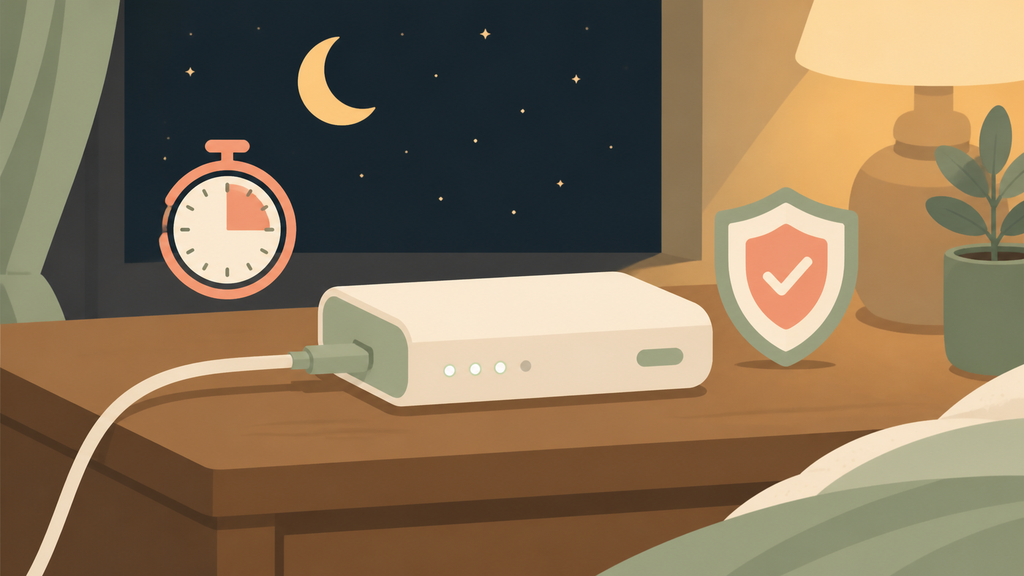
I often hear this question from users and buyers because power banks feel simple. Inside, however, a power bank is a lithium-ion battery product with charging control, protection circuits, cells, ports, and firmware. Overnight charging is not only a user habit. It is also a product design and quality question.
Is Overnight Charging Safe For A Power Bank?
Overnight charging can be safe with a well-designed power bank, but it should not be treated as risk-free for every product.
A reliable power bank should stop or reduce charging when full, but overnight charging is safest when the product is certified, undamaged, used with the recommended adapter, and kept away from heat, bedding, and flammable materials.
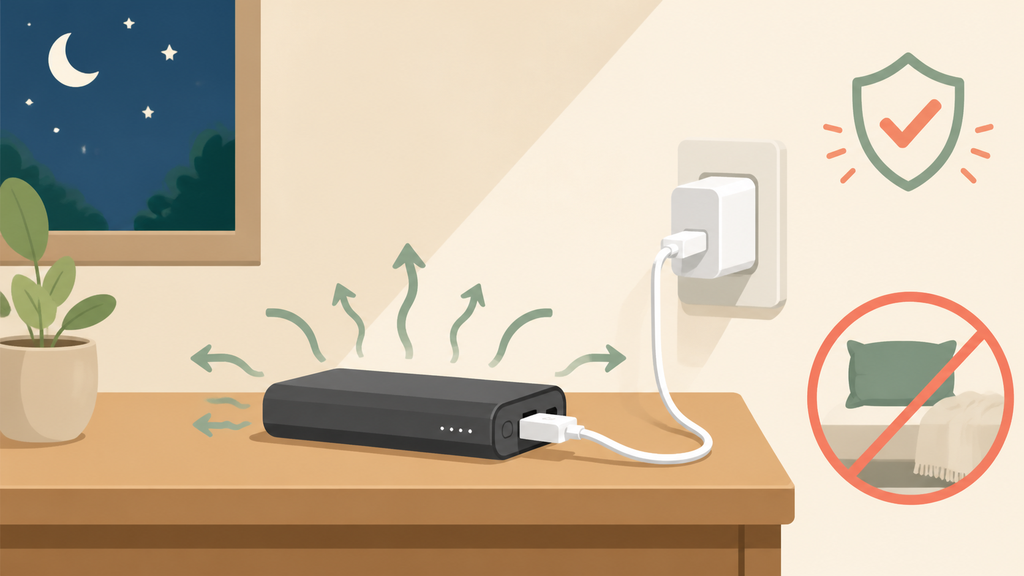
A modern power bank normally includes protection against overcharge, over-discharge, over-current, short circuit, and temperature problems. These protections are why many users charge overnight without incident. But protection quality varies widely. A premium product and an unknown low-cost product may look similar from the outside, yet behave very differently under long charging.
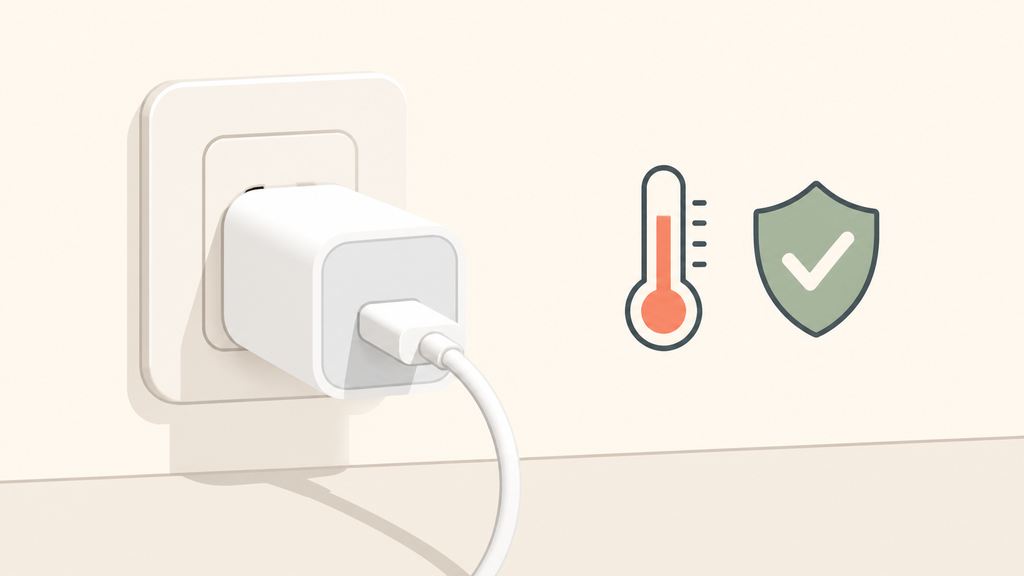
Lithium-ion battery safety guidance from the U.S. Consumer Product Safety Commission recommends using the charger supplied with the device, following manufacturer instructions, and keeping battery products away from high heat or damage.1 That advice is practical for power banks too. The product may be designed to stop charging, but the environment still matters.
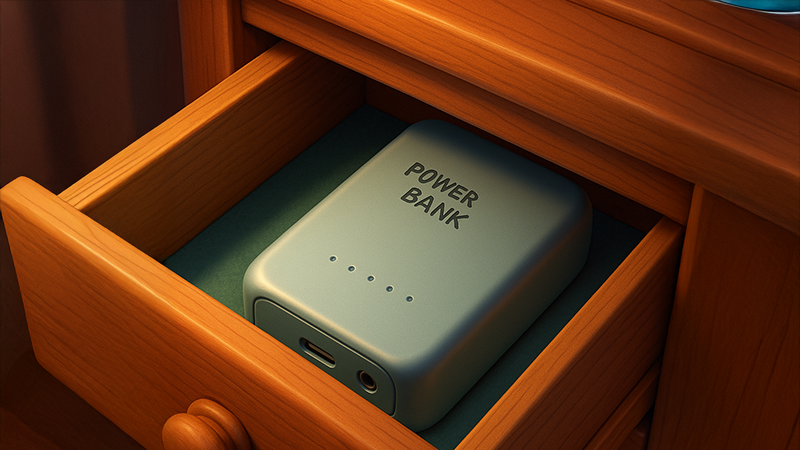
In my experience, the most common unsafe habit is charging on a bed, sofa, pillow, or under clothing. Soft surfaces trap heat. They also hide early warning signs such as swelling, smell, unusual warmth, or cable damage. A hard desk, shelf, or tile surface is much safer.
| Overnight condition | Risk level | Better habit |
|---|---|---|
| Good power bank on hard desk | Lower | Still unplug when practical |
| Covered by blanket or pillow | Higher | Move to open surface |
| Cheap adapter or damaged cable | Higher | Use known-good accessories |
| Swollen or hot power bank | Unsafe | Stop using immediately |
| Charging near direct sun | Higher | Move to cooler area |
For B2B buyers, overnight behavior matters because users will do it even if the manual says not to. A product should be designed for real habits, not ideal habits only. That means cell quality, PCB protection, thermal design, shell material, adapter recommendation, and quality control must all be considered.
I do not tell customers that overnight charging is always dangerous. That would be too simple. I tell them that a power bank should be safe under normal expected use, but a brand should not encourage careless charging. The best message is balanced: use the correct charger, keep the product uncovered, avoid heat, and inspect the product if anything feels unusual.
What Can Go Wrong During Overnight Charging?
Most problems come from heat, poor cells, weak protection, damaged cables, or using the wrong adapter for long unattended charging.
Overnight charging can go wrong when a power bank overheats, uses poor battery cells, has weak protection circuits, charges with a damaged cable, or sits on a soft surface that traps heat for hours.
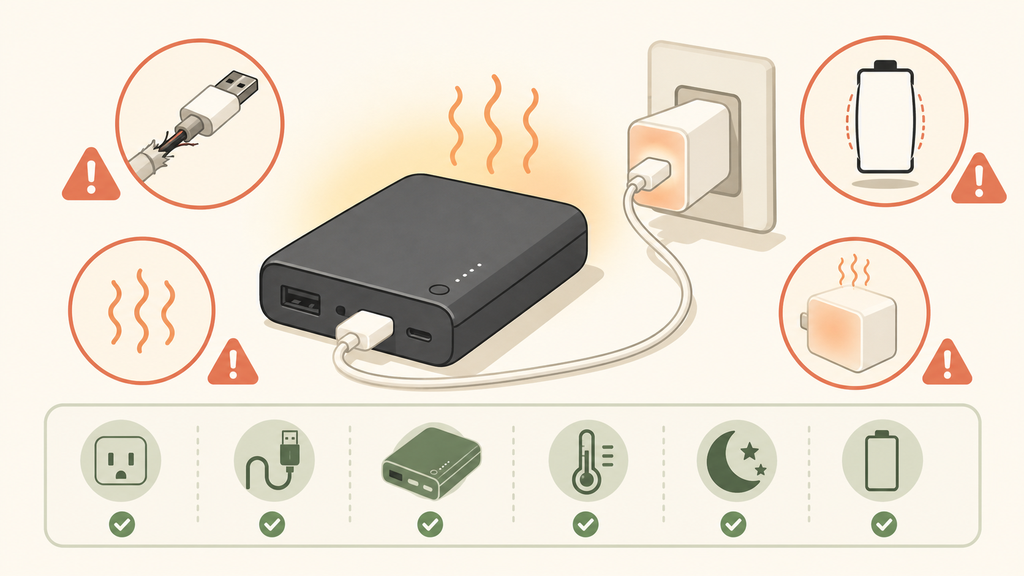
A power bank does not need to fail dramatically to create a bad user experience. It may charge slowly, become hot, swell over time, stop holding capacity, or create anxiety because the shell feels too warm. These issues often come from small design decisions.
Heat is the first concern. All charging creates some heat, but a well-designed product controls it. A poor layout, weak components, low-quality cells, or an overloaded adapter can make the temperature rise. If the power bank is on a bed or inside a bag, heat escapes slowly. That is why charging location matters.
Cable and adapter choice also matter. A power bank may support 18W, 22.5W, 30W, or higher input, but the adapter and cable must match. A damaged cable can create resistance and heat. A weak adapter may run at its limit for hours. USB-IF compliance resources exist because USB products need to work together under defined electrical expectations.2
Another problem is product aging. A new power bank may behave well. After hundreds of cycles, drops, heat exposure, and travel, the risk changes. If the shell swells, the port becomes loose, the product smells strange, or charging becomes unstable, overnight charging is no longer a good idea.
| Warning sign | What it may mean | What to do |
|---|---|---|
| Swollen shell | Battery cell damage | Stop using |
| Unusual smell | Heat or material failure | Disconnect safely |
| Hot cable plug | Poor contact or resistance | Replace cable |
| Repeated reset | Protection or port issue | Test before reuse |
| Crack in case | Physical damage | Do not charge unattended |
For importers, this is why supplier evaluation must go beyond capacity claims. A 20,000mAh label is easy to print. Safe overnight behavior depends on cell sourcing, battery management IC, thermal path, assembly quality, and factory testing. Random sampling during production is also important because one good pre-production sample does not prove mass production consistency.
At EverGreat, we usually ask customers how the product will be sold and used. A retail power bank, promotional power bank, magnetic wireless power bank, and travel power bank have different risk profiles. The charger bundle, instruction card, packaging claim, and certification plan should match that use case.
How Should Brands Explain Overnight Charging To Customers?
Brands should give practical safety guidance without creating unnecessary fear or promising impossible zero-risk charging.
A good customer message should say that quality power banks include protection, but users should charge on a hard surface, use the recommended adapter, avoid heat and damage, and unplug after full charge when convenient.
Many brands struggle with wording. If the manual says “never charge overnight,” users may ignore it because the habit is common. If the manual says “safe overnight charging,” the brand may create liability and unrealistic expectations. The better wording is practical and conditional.
A strong instruction can say: “Charge the power bank in an open area on a hard, heat-resistant surface. Use a compatible adapter and cable. Do not cover the product while charging. Disconnect the product if it becomes unusually hot, swollen, damaged, or produces odor.” This is clear, useful, and not dramatic.
Retailers and distributors should also think about support scripts. When a user asks whether overnight charging is safe, support should not answer only “yes” or “no.” They should ask whether the product is hot, damaged, covered, using the original cable, or connected to a suitable adapter. Good support reduces returns and builds trust.
| Brand decision | Good practice |
|---|---|
| Packaging copy | Avoid absolute safety promises |
| Manual | Explain surface, heat, cable, and adapter |
| Product design | Include protection and thermal control |
| QC testing | Test long charging sessions |
| Support | Teach warning signs clearly |
Certification also matters. Depending on the market, battery transport, electrical safety, EMC, and product documentation may be required. Requirements vary by country and channel, but serious buyers should confirm the compliance path before shipment. The UL safety ecosystem and consumer battery safety guidance both point to the same principle: battery products should be designed, tested, and used with care.3
In manufacturing, I prefer conservative claims. A product can be convenient without pretending physics no longer applies. A power bank is a useful tool, but it stores energy. Users deserve simple, honest advice.
I also recommend that brands include a small troubleshooting note for overnight users. If the power bank is full but still feels warm in the morning, ask the user to test another adapter and cable. If the product becomes warm only with one adapter, the accessory may be the cause. If it becomes warm with every adapter, the product should be inspected. This kind of guidance is simple, but it helps support teams avoid guessing.
For private-label projects, the packaging should also avoid exaggerated phrases such as “charge forever safely” or “zero risk battery.” Better wording is more credible: “Built-in charging protection. Charge in an open area. Disconnect if the product becomes hot, swollen, or damaged.” That wording protects the user and the brand.
Conclusion
Overnight charging is usually manageable with a quality power bank, but safe habits, good accessories, and honest product design still matter.
-
The U.S. Consumer Product Safety Commission shares lithium-ion battery safety guidance through its battery safety resources. ↩
-
USB-IF provides official USB compliance resources for USB products and interoperability. ↩
-
UL Solutions discusses battery and electrical product safety through its battery safety resources. ↩