A cheap charger looks harmless until the phone heats up, charges slowly, or stops working. Price is not the real risk. Quality is.
A cheap charger can damage your phone if it uses poor components, unstable voltage, weak protection, fake certification, or a bad cable. A low-price charger from a reliable manufacturer can be safe, but an uncertified or counterfeit charger is risky.

I have seen buyers focus only on price because chargers look simple from the outside. Inside the shell, however, the design decides whether the phone receives stable power or becomes part of a risky experiment.
What Makes A Cheap Charger Risky?
A charger becomes risky when the low price comes from cutting safety, materials, testing, or certification instead of improving production efficiency.
The main risks in cheap chargers are unstable output, poor insulation, weak heat control, missing safety protection, low-quality capacitors, fake certification marks, and cables that cannot safely carry the promised current.
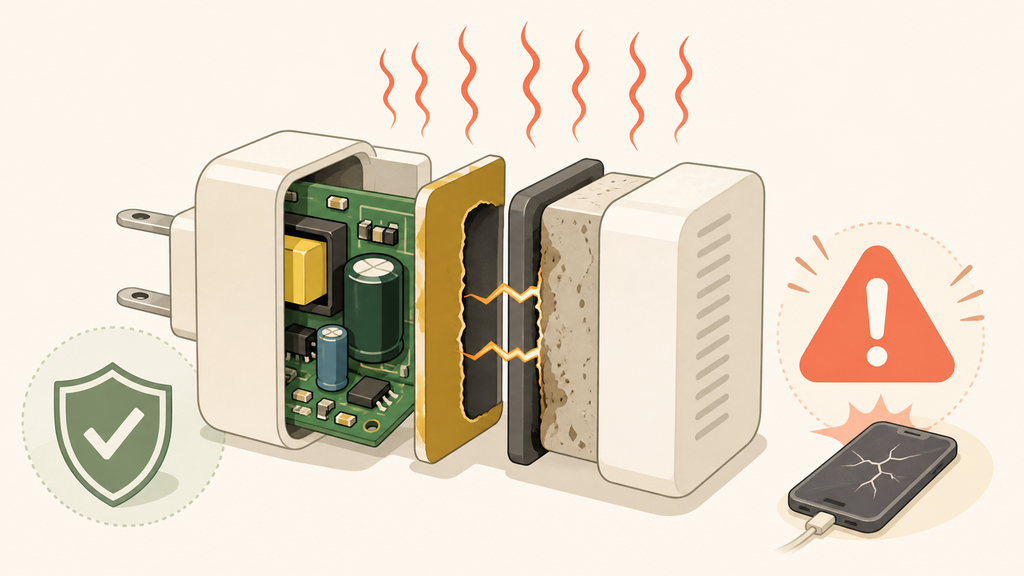
Cheap is not always bad. A factory can reduce cost through efficient purchasing, mature tooling, simple design, and large-volume production. That kind of cost reduction can be reasonable. The danger starts when a supplier reduces cost by removing protection components, using weak insulation, choosing poor capacitors, skipping quality tests, or printing certification marks without real test reports.
Phones are smarter than many people think. Modern phones negotiate power with chargers and cables, especially with USB-C and fast charging. USB-IF, the organization behind USB standards and certification programs, provides compliance and certification resources to help products meet defined requirements.1 When a charger and cable follow the right standards, the phone can request the power it needs and stay within safer limits. When the charger is badly designed, the phone may receive unstable power, charge slowly, heat up, or disconnect repeatedly.
In my experience, the worst chargers often hide behind attractive product pages. The listing says “fast charging,” “safe protection,” or “universal,” but the internal design tells a different story. A real safety design needs input protection, output protection, temperature control, insulation distance, quality soldering, stable firmware, and tested materials. Those details do not fit easily into a short product title, but they decide whether users trust the product.
| Cost-cutting area | Possible result | Buyer concern |
|---|---|---|
| Weak transformer or capacitor | Heat, noise, short life | Returns and safety complaints |
| Poor insulation | Electric shock or failure risk | Compliance and liability |
| Fake certification | Channel rejection | Retail and customs problems |
| Low-grade cable | Slow charging or overheating | User blames the charger |
| No load testing | Inconsistent performance | High defect rate |
Apple warns that counterfeit or uncertified accessories can damage devices, create sync issues, or cause cable and connector problems.2 This matters beyond Apple products. The same logic applies to many phone ecosystems: if the accessory does not meet the device maker’s electrical expectations, the user may see strange behavior.
For importers and private-label brands, the risk is bigger than one broken phone. A charger complaint can become a brand trust problem. If users believe your product damaged their phone, they do not care how low your sourcing cost was. They want fast support, a refund, and a reason to trust your brand again.
Can A Bad Charger Actually Harm The Battery Or Charging Port?
Yes, a bad charger or cable can contribute to heat, unstable charging, connector wear, and battery stress, even if damage is not immediate.
A poor charger can harm a phone indirectly by creating heat, voltage instability, repeated disconnects, or connector stress. Most phones have protection circuits, but those protections are not a license to use unsafe accessories.
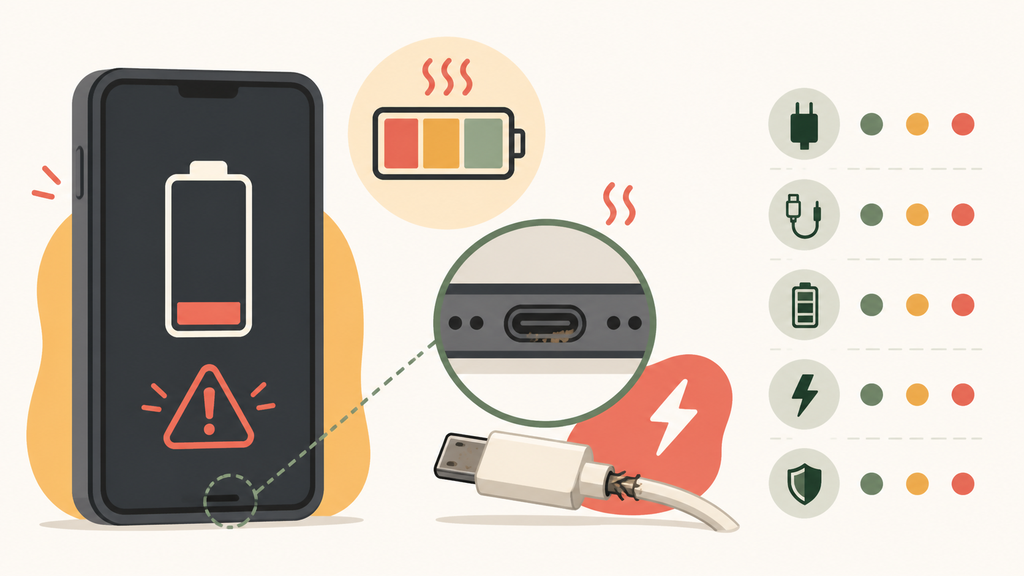
Most phones include protection systems. That is why many bad chargers do not instantly destroy a phone. The phone may slow charging, stop charging, show warnings, or reject the accessory. Those protections are helpful, but they do not make low-quality accessories harmless. If a charger constantly runs hot or provides unstable power, the phone and battery management system work harder to stay safe.
Heat is one of the biggest issues. Batteries age faster when they spend too much time at high temperature. Apple explains that device temperature affects battery performance and recommends avoiding extreme ambient temperatures.3 A charger that creates unnecessary heat may not “kill” a battery in one night, but repeated heat exposure can make the user feel battery life is getting worse.
The charging port is another risk. A poor cable connector can fit loosely, wear the port, or create intermittent contact. I have seen customers replace adapters when the real issue was a cheap cable with a weak connector shell. The phone would charge only at a certain angle, then stop during movement. Users often describe this as “the charger damaged my phone,” even when the cable caused the mechanical problem.
The battery can also be affected by charging behavior. Unstable charging means the phone may start and stop repeatedly. The user may hear alerts, see flickering charging icons, or wake up with less battery than expected. This creates a bad experience even if no permanent damage occurs.
| Symptom | Possible accessory cause | Practical test |
|---|---|---|
| Phone gets unusually hot | Poor adapter, cable, or wireless pad | Try a known-good charger |
| Charging starts and stops | Bad cable or unstable output | Test another cable first |
| Slow charging | Weak adapter or cable current limit | Check rated output and cable |
| Port feels loose | Worn or poor connector | Inspect cable plug and phone port |
| Warning message | Uncertified or incompatible accessory | Use certified accessory |
For B2B buyers, this is why sample testing must include both the charger and cable as a system. A good adapter paired with a weak cable creates a weak product. A good cable paired with a noisy charger also creates risk. The packaging may show one wattage number, but the customer judges the whole kit.
At EverGreat, we often remind customers that charger development is not only about the PCB. It includes cable selection, connector quality, shell material, adapter protocol, thermal design, packaging claims, and after-sales instructions. If one part is weak, the full product suffers.
How Should Buyers Choose A Safe Low-Cost Charger?
Buyers should compare chargers by real design, certification, testing, and supplier transparency, not only by quoted price.
To choose a safe low-cost charger, ask for real certification documents, test samples under load, verify cable quality, check thermal performance, review protection features, and avoid suppliers that cannot explain their design or compliance path.
The best low-cost charger is usually not the cheapest quotation. It is the lowest cost that still meets the target market, user expectation, and compliance requirement. A charger for a promotional giveaway, a retail shelf product, and a premium phone bundle may all need different cost structures. The mistake is forcing every project into the lowest possible price.
Start with documentation. Ask for real test reports, not only logos on a product photo. Certification needs vary by market and product type, but serious suppliers should be able to explain the path clearly. UL Solutions also warns that counterfeit electrical products can create fire and shock hazards, which is why credible safety marks and supply-chain controls matter.4 For U.S. electronic products, FCC requirements may also apply depending on design and function, so importers should confirm compliance before shipment.5
Then test the sample like a user, not only like a purchasing manager. Charge different phone models. Use the included cable. Let the charger run for at least 30-60 minutes. Touch the shell. Check if the cable plug becomes hot. Move the cable gently. Test with low battery and higher battery levels. If the charger supports fast charging, check whether the phone actually enters the expected mode.
| Evaluation step | What to ask |
|---|---|
| Certification | Can you provide matching reports for this model? |
| Protection design | What over-current, over-voltage, and temperature protections are included? |
| Cable match | Is the cable rated for the promised current and protocol? |
| Thermal test | What happens after long charging under load? |
| QC process | What is tested in mass production? |
| Packaging claim | Does the claim match real performance? |
I also recommend checking supplier communication. If a supplier answers every technical question with “no problem,” that is not enough. A reliable supplier can explain tradeoffs. They may say a lower-cost model is fine for standard charging, but not suitable for high-power fast charging. That honesty is valuable.
For brands, safe cost control means choosing where to simplify. You can simplify the shell design, reduce packaging complexity, or choose a mature existing model. You should not simplify insulation, protection, component quality, or testing. Those cuts are invisible at first, then very visible when complaints arrive.
Cheap chargers are not automatically dangerous. But a charger that is cheap because nobody tested it properly is not a bargain. It is deferred risk with your brand name printed on it.
Conclusion
A cheap charger can be safe, but only when low cost comes from smart design, not skipped protection, fake certification, or weak quality control.
-
USB-IF provides official USB compliance and certification resources for products using USB standards. ↩
-
Apple explains risks from counterfeit or uncertified accessories in its identification guidance for Lightning connector accessories. ↩
-
Apple discusses battery temperature and performance in its battery performance guidance. ↩
-
UL Solutions discusses counterfeit electrical product risks through its anti-counterfeiting and brand protection resources. ↩
-
The FCC provides equipment authorization information through its RF device authorization resources. ↩