China’s 3C rules changed fast, and a buyer who treats old documents as enough may face shipment, retail, or travel-market problems.
Power bank buyers should understand China’s old 3C rule as the market-entry requirement that took effect in 2024, while the newer rules add stricter aviation checks and the GB 47372-2026 safety standard. Buyers should verify certificates, labels, test standards, and product design before ordering.
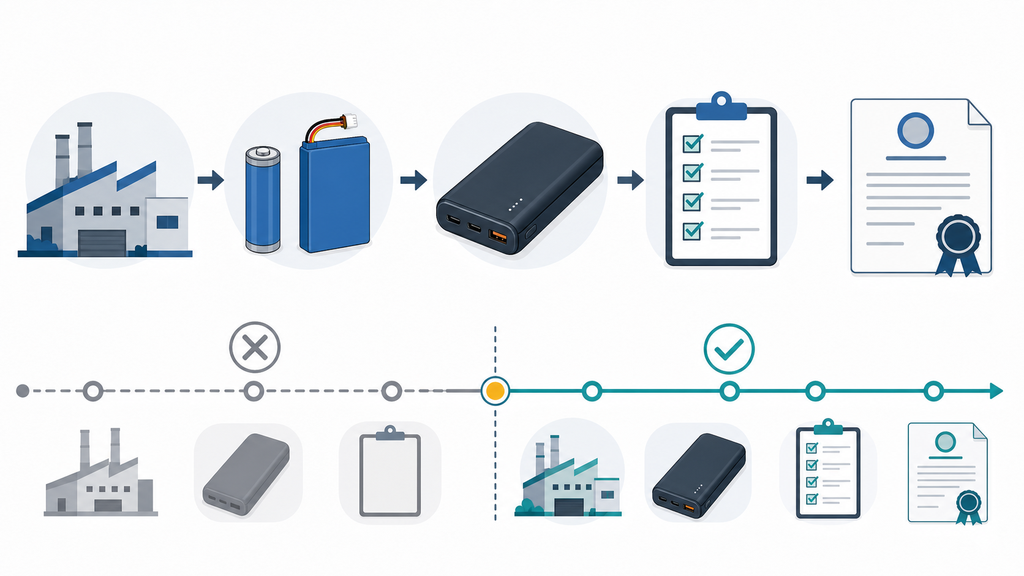
I often find that buyers ask one simple question: "Does it have 3C?" The better question is whether the certificate, label, standard version, and product risk control still match the sales plan.
What Did The Old 3C Rule Change For Power Banks?
Before the rule change, many buyers treated 3C as optional paperwork. That thinking is now risky.
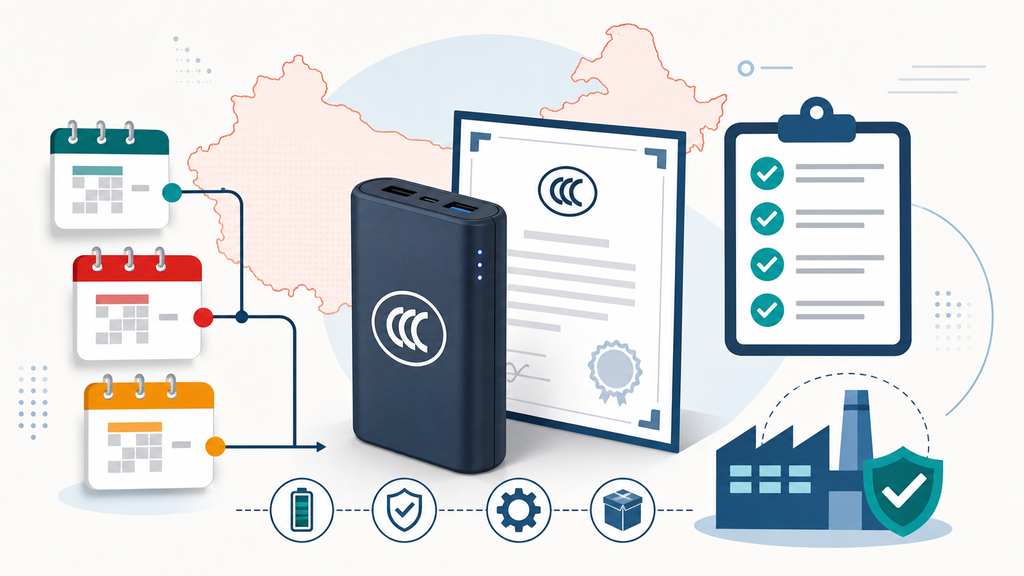
The old 3C change means power banks and their lithium-ion cells became part of China’s compulsory certification management. Since August 1, 2024, uncertified products cannot legally leave the factory, be sold, imported, or used in other business activities in China.
The key starting point was the 2023 announcement. The Shenzhen market regulator reposted the State Administration for Market Regulation announcement that lithium-ion batteries and battery packs used in electronic and electrical products, mobile power supplies, and power adapters/chargers for telecom terminal products were newly brought into compulsory product certification management. It also stated that from August 1, 2024, products without a CCC certificate and certification mark could not be shipped from factory, sold, imported, or used in other business activities under the SAMR 2023 announcement1.
For power bank buyers, this changed the basic supplier conversation. In the past, a supplier might say, "This model passed similar tests," or "This product is mainly for export." That answer is not enough when the buyer plans to sell or distribute inside China. The old rule made the certificate and mark a market-access requirement, not a marketing choice.
The same announcement also explains the scope. A mobile power supply is described as a movable power device that includes lithium-ion cells and/or battery packs, has AC/DC input or output, and weighs no more than 18kg. It lists power banks, portable energy storage power supplies, and camping mobile power supplies as examples. The applicable standards include GB 4943.1 and GB 31241. That matters because buyers should not only ask for a certificate number. They should ask which product category, model, cell, battery pack, and standard version the certificate covers.
| Buyer Check | Why It Matters | Common Mistake |
|---|---|---|
| Certificate holder | Shows who owns the compliance file | Using another factory’s paper |
| Model number | Links the certificate to the real product | Selling a different shell or BOM |
| Cell supplier | Affects battery safety and traceability | Changing cells after certification |
| Rating label | Connects product claims with test evidence | Printing a mismatched label |
| Applicable standards | Shows what was actually evaluated | Treating old test files as current |
In my experience, the most dangerous mistake is separating certification from manufacturing control. A certificate is not a magic shield. If the factory changes the cell, protection IC, PCB layout, housing, or rating label after certification, the buyer may hold a document that no longer reflects the product being shipped.
What Do The New Rules Add After 2025?
The new rules do not cancel old 3C. They add more visible checks and stronger safety expectations.
After 2025, buyers should pay attention to aviation checks for 3C-marked power banks and the GB 47372-2026 mobile power supply safety standard, which is scheduled to take effect on April 1, 2027.
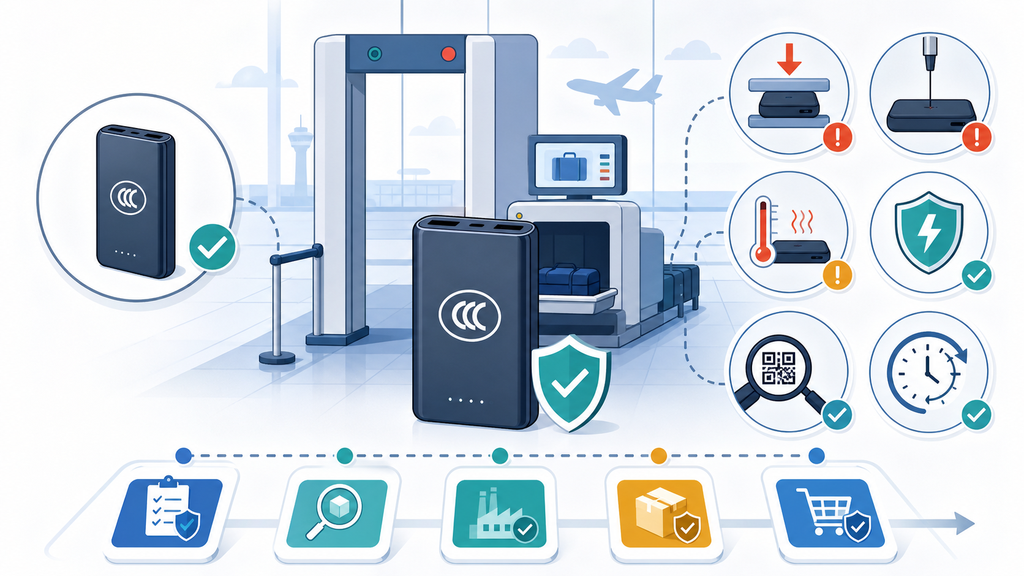
The first major new pressure came from travel safety. The Civil Aviation Administration of China announced that, from June 28, 2025, passengers on China domestic flights are prohibited from carrying power banks without a 3C mark, with an unclear 3C mark, or in recalled models or batches under the CAAC notice2. For brands, this made the 3C mark more than a retail compliance detail. It became visible at airport security.
This does not mean every power bank buyer is an airline customer. It means ordinary consumers now connect 3C with safety and travel use. If a brand sells a power bank for travel but the mark is unclear, the product may create customer frustration even if the product is otherwise well designed. Buyers should make the 3C mark durable, readable, and correctly placed on the product body. Packaging alone is not enough for practical airport checks.
The second major change is the new safety standard. People’s Daily Client reported that the compulsory national standard GB 47372-2026, Mobile Power Supply Safety Technical Specification, was released on April 3, 2026 and will take effect on April 1, 2027. The report says the new standard adds stricter internal short-circuit evaluation, needle penetration testing, lithium plating detection after 300 charge-discharge cycles, stronger overcharge control, overvoltage lockout, undervoltage lockout, abnormal temperature recording, rated energy marking, product coding, and suggested safe service life requirements under the GB 47372-2026 explanation3.
That is a big shift for product planning. The older 3C framework focused on market entry under the listed standards. The new standard pushes buyers to think about long-term battery behavior, production process control, traceability, and misuse conditions. A power bank that passed yesterday’s requirements may need design review before it can be confidently sold under the next standard.
| Area | Old 3C Focus | Newer Pressure |
|---|---|---|
| Market access | Certificate and mark for sale in China | More consumer and travel visibility |
| Battery safety | GB 31241 and GB 4943.1 testing | GB 47372-2026 adds stricter power bank-specific controls |
| Labeling | Product rating and 3C mark | Rated energy, product coding, safe service life expectations |
| Supply chain | Certified product consistency | Stronger cell, material, process, and traceability control |
Many buyers will ask whether old certified stock becomes useless immediately. The answer needs care. The People’s Daily Client report says previously purchased 3C-certified power banks can still be carried by passengers if they comply with current civil aviation rules. For business buyers, the practical issue is different. If you are planning new production for the China market, you should not wait until 2027 to redesign.
How Should Brands Prepare Their Supply Chain?
Compliance problems usually start before testing, when buyers choose cells, claims, labels, and suppliers too quickly.
Brands should prepare by mapping each product model to its certificate, cell supplier, BOM, label artwork, test standard, production control plan, and after-sales traceability. The goal is to make the certificate match the real product throughout production.
I often suggest a simple first step: build a 3C control table before paying for mass production. The table should list the power bank model, battery cell model, battery pack configuration, protection design, input and output ratings, factory, certificate number, product marking method, and package claim. This table helps the buyer catch mismatches before they become expensive.
The National Certification and Accreditation public-service platform is also important for consumer confidence. Xinhua, citing People’s Daily and a SAMR interview, reported that consumers can check whether a power bank’s certification information and CCC certificate are valid through the national certification and accreditation information public-service platform; the same article explains that China brought power banks and key lithium-ion cells into CCC management in 2023, with the August 1, 2024 enforcement date, under its SAMR interview on power bank CCC marks4. Buyers should assume retailers and consumers will become more familiar with checking marks and certificates.
For a brand, preparation is not only about asking the factory for documents. It is about controlling changes. If the cell supplier changes, the buyer should ask whether the certificate still applies. If the housing changes, the buyer should ask whether drop, heat, and label placement are affected. If the output rating changes for a new fast-charge version, the buyer should confirm whether the same certificate can still cover it. These questions are normal manufacturing risk controls.
| Preparation Step | Buyer Question | Practical Result |
|---|---|---|
| Certificate review | Does the certificate match this exact model? | Reduces false-document risk |
| BOM lock | Are cells and protection components controlled? | Keeps production consistent |
| Label review | Is the 3C mark clear and durable? | Supports retail and travel checks |
| Standard gap check | Is the model ready for GB 47372-2026? | Avoids late redesign |
| Traceability plan | Can we trace batches and cell sources? | Improves recall and service response |
EverGreat’s role in this kind of project is to help buyers connect compliance, engineering, sourcing, and production. I do not think a good supplier should only send a certificate PDF. The supplier should explain what the certificate covers, what it does not cover, and what changes need a new review.
The best next step for buyers is to separate current orders from future-development projects. Current China-market orders need a valid 3C certificate, clear 3C mark, and matching production records. Future power bank projects should be reviewed against the coming GB 47372-2026 direction, especially if the product will launch close to 2027 or stay in the market for a long time.
Conclusion
Treat China’s 3C changes as a product-control system: certificate, mark, standard, BOM, label, and traceability must all match.
-
This SAMR announcement reposted by Shenzhen’s market regulator supports the 2023 CCC inclusion scope and the August 1, 2024 enforcement date. ↩
-
This CAAC notice supports the 2025 China domestic-flight rule for power banks without clear 3C marks or in recalled batches. ↩
-
This People’s Daily Client article supports the GB 47372-2026 release, 2027 implementation date, and major new safety requirements. ↩
-
This Xinhua/People’s Daily interview with SAMR officials supports the 3C mark explanation and certification-checking guidance. ↩