The power bank market seems simple. But fierce price wars and new rules create big problems. Are you ready for these major industry changes?
The power bank industry is changing fast. Strict new safety standards and airline rules now push out low-quality products. Brands must prioritize compliance and real certifications. This means consumers get safer, more reliable devices.
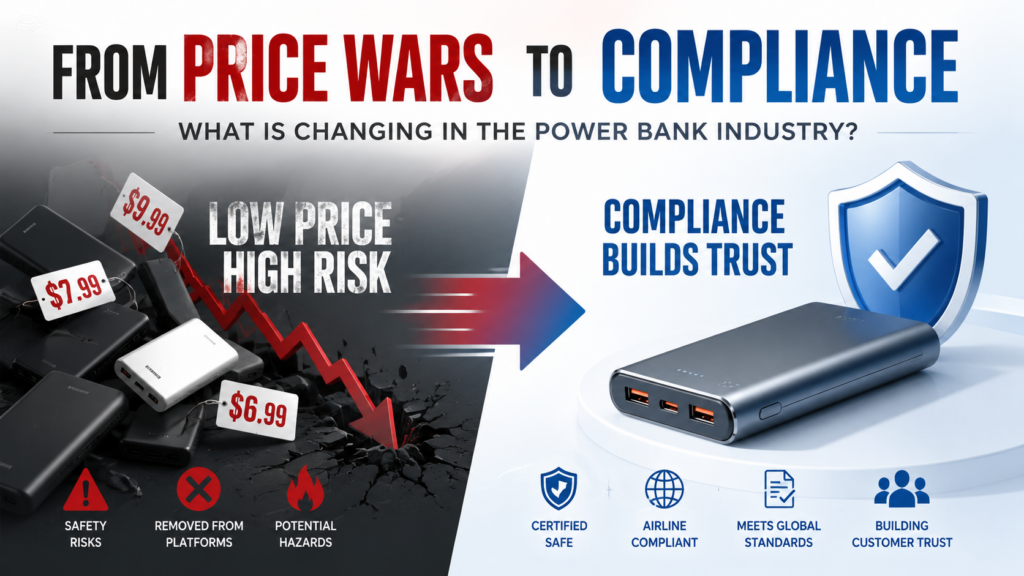
I see many shifts happening in our industry. It is no longer just about who can offer the lowest price. New regulations and safety needs are now critical, driven by increased oversight and a focus on preventing incidents. This affects everyone, from manufacturers to everyday users. Let’s look closer at these big changes. We must understand how they impact product availability and buying choices. The International Civil Aviation Organization (ICAO), for instance, has introduced specifications limiting power banks to two per person and prohibiting in-flight recharging, setting a precedent for global airline policies. The FAA also keeps a running list of power bank incidents involving smoke, fire, or extreme heat on flights, highlighting the real risks.
Why Are More Power Banks Being Removed from Market?
Many power banks suddenly disappear from stores. This causes confusion for buyers and sellers. Why are these products being pulled?
More power banks are removed from the market due to safety risks and non-compliance. Brands often skip vital certifications or use cheap, dangerous parts. Authorities are now enforcing stricter rules. This protects consumers but challenges many existing products.
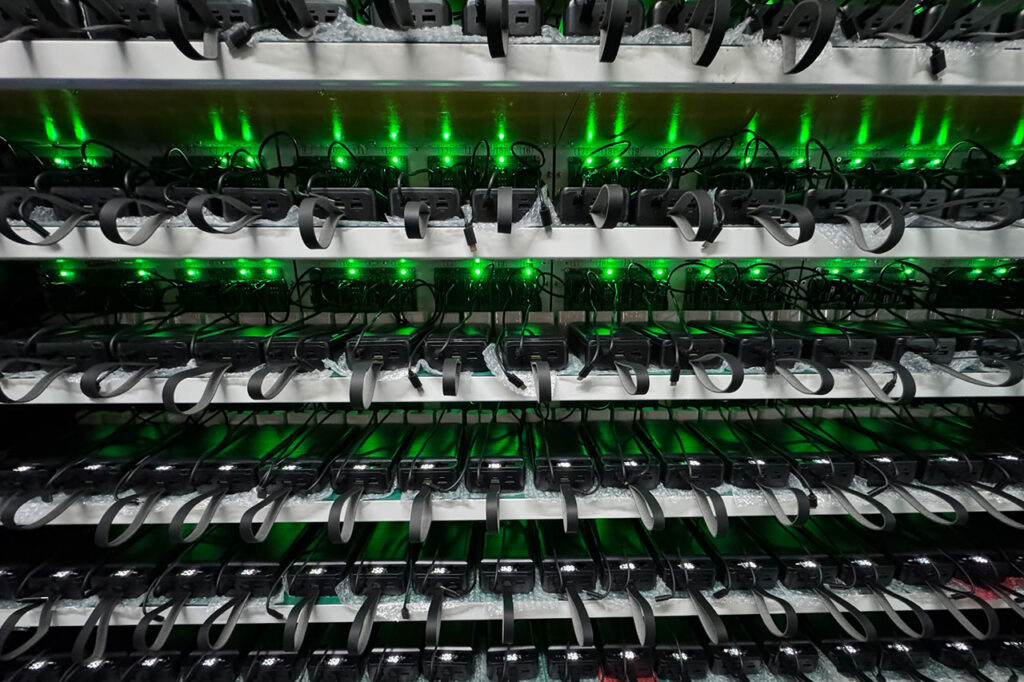
From my perspective, seeing power banks removed happens more often now. I remember when many products would sell without much oversight. Today, things are different. Governments and regulatory bodies are cracking down. They want to ensure consumer safety. This means checking if products meet strict standards.
One main reason for removal is missing or fake certifications. A power bank needs labels like CE, FCC, or RoHS. These show it passed safety tests. If a product does not have these, it cannot legally sell in many regions. Sometimes, a brand might use fake certificates. This always leads to big trouble. For instance, the FCC proposed a $734,872 fine against Eken for providing a false address for its U.S.-based agent on RF equipment certification applications. Similarly, using fake CE markings can lead to significant fines and even imprisonment in Europe. When I worked with a client, we saw their competitor’s product pulled for this. It damaged their reputation badly.
Another reason is poor quality components. Some manufacturers cut costs by using cheap batteries or circuit boards. These parts can overheat, catch fire, or even explode. This is a huge risk, as low-quality cells can lead to thermal runaway. Anker, a reputable brand, even recalled thousands of power banks after at least 33 incidents of overheating and catching fire due to defective lithium-ion battery cells. When a safety incident happens, the product is quickly recalled. We often guide clients on choosing reliable suppliers for internal parts. This avoids future problems.
Also, some products fail performance tests. They might not deliver the promised charge or simply break fast. While not a direct safety risk, it hurts consumer trust. Retailers do not want to stock such items. Amazon, for example, requires a UL 2056 test report for power bank listings and may delist products without it. These actions safeguard buyers. They also push the industry to make better, safer products.
Common Reasons for Market Removal
| Reason | Impact on Brand | Impact on Consumer |
|---|---|---|
| Fake Certifications | Legal fines, bad reputation | Safety hazards, no recourse |
| Substandard Parts | Recalls, lawsuits, brand damage | Fire, explosion, injury risk |
| Performance Failure | Returns, lost sales, low trust | Frustration, wasted money |
| New Regulations | Product redesign, re-certification | Improved safety, better tech |
Why Cheap Power Banks Are Becoming Riskier to Buy?
Bargain power banks seem like a good deal. But these low-cost options often hide dangers. Do you know the real risks of buying cheap?
Cheap power banks are riskier due to hidden quality issues and safety hazards. Manufacturers often use low-grade batteries or fake components. This leads to overheating, fire, or reduced performance. Consumers might save money upfront but face bigger problems later.
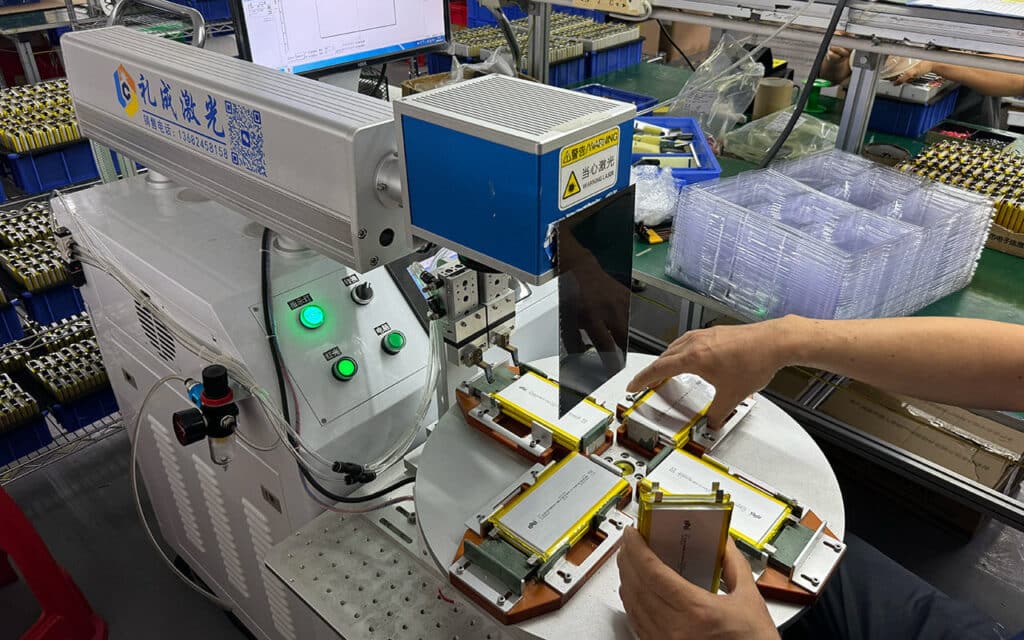
I often tell my clients, "You get what you pay for." This is very true for power banks. When a product is extremely cheap, corners were cut somewhere. This means real risks for anyone who buys it.
The biggest danger comes from the battery cell itself. Reputable brands use high-quality lithium-ion cells. Cheap power banks use recycled or low-grade cells. These cells can be unstable. They might overheat or swell. In worse cases, they can catch fire. Recalls have been issued for power banks that can overheat and pose a risk of severe injury or even death, with reports of a woman dying after a power bank exploded in her lap. I once saw a client’s prototype fail dramatically because they insisted on a super-cheap battery. It taught them a hard lesson.
Another risk is poor circuit protection. A good power bank has circuits that prevent overcharging, over-discharging, and short circuits. Cheap ones often lack these safety features. Without overcharge, over-discharge, or short-circuit protection, power banks can’t effectively respond to anomalies, leaving your devices, and even your home, at risk. If a power bank short circuits, it can damage the connected device. It can also cause a fire. We always make sure our OEM solutions include robust protection circuits.
Also, many cheap power banks falsely claim high capacities. They say they are 20,000mAh. In reality, they might only hold 5,000mAh. This frustrates users. Tzumi Electronics LLC, for example, faced a lawsuit alleging misleading claims about power bank energy capacity. This also makes them trust brands less. Some even use misleading certifications. They might show a logo without actually passing the tests. We always stress genuine certifications. This protects our clients’ reputations. It protects their customers, too.
Dangers of Low-Cost Power Banks
| Feature | Cheap Power Bank | Quality Power Bank |
|---|---|---|
| Battery Cells | Recycled, low-grade, unstable | New, high-grade, stable lithium-ion |
| Safety Circuits | Missing or ineffective overcharge/short-circuit | Comprehensive protection (overcharge, short-circuit, over-discharge) |
| Capacity | Exaggerated or false claims | Accurate, tested capacity |
| Certifications | Fake, absent, or outdated | Genuine, up-to-date (CE, FCC, RoHS, UL, UN38.3) |
| Durability | Poor build, breaks easily | Robust construction, long lifespan |
Certifications, Airlines, and Safety Rules: What Every Power Bank Brand Needs to Know?
Navigating power bank regulations feels complex. But understanding certifications and airline rules is not optional. Do you know what your brand really needs?
Every power bank brand must know key certifications like CE, FCC, RoHS, and UN38.3. These ensure market access and safety. Airlines have strict rules on lithium battery size and carriage. Compliance avoids product seizures and maintains brand trust. Ignoring these rules means big risks.
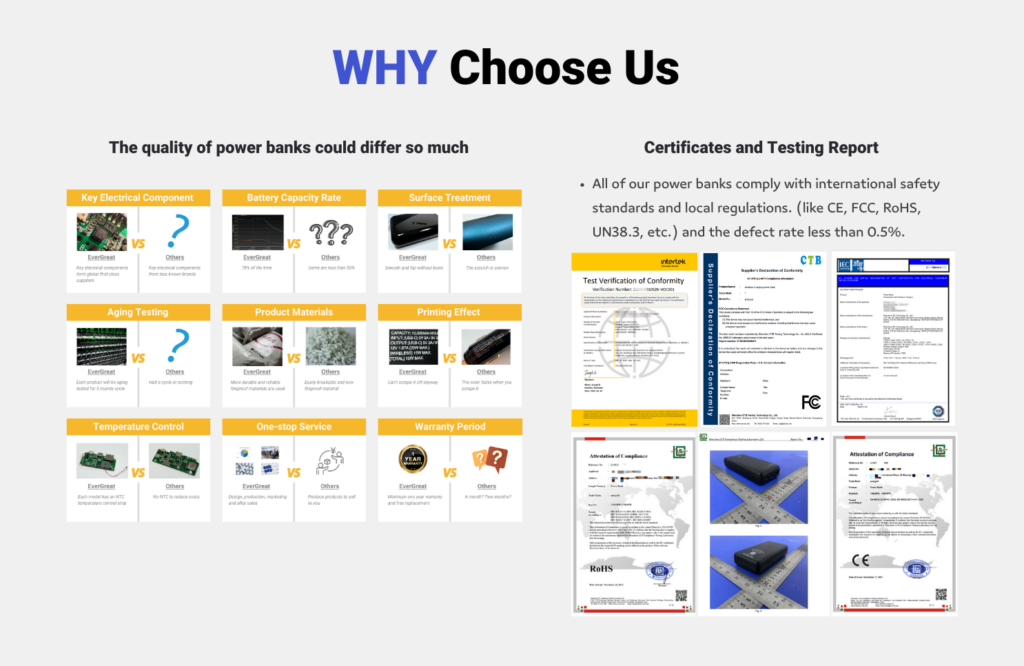
For any brand making or selling power banks, compliance is a must. It is not just about avoiding fines. It is about building trust and ensuring user safety. From my years at EverGreat, I have seen many clients struggle with these rules. We help them navigate this complex landscape.
First, let’s talk about product certifications. These are critical.
- CE (Conformité Européenne): This is for products sold in the European Economic Area. It shows the product meets EU safety, health, and environmental protection requirements.
- FCC (Federal Communications Commission): This is for electronics sold in the United States. It certifies that electromagnetic interference is within limits.
- RoHS (Restriction of Hazardous Substances): This directive restricts the use of specific hazardous materials in electronic products. It is important globally.
- UL (Underwriters Laboratories): This is a safety certification, especially for batteries and chargers in North America. It is a sign of high safety standards.
- UN38.3: This is crucial for transporting lithium batteries by air, sea, or ground. It tests a battery’s ability to withstand pressure, temperature, impact, and short circuits. Without UN38.3, shipping becomes very hard.
Airlines also have strict rules. Power banks must be carried in carry-on baggage and protected from short circuits. Most airlines restrict power banks to carry-on luggage only, and they must be under 100Wh without approval or between 100Wh and 160Wh with airline approval. Devices above 160Wh are generally prohibited. Airlines may also have stricter quantity and Wh limits. Power banks cannot go in checked luggage. This is because of fire risks. The ICAO introduced specifications limiting power banks to two per person and prohibiting in-flight recharging. Some airlines even ban power bank use or require them to be visible; for example, Southwest Airlines requires passengers to keep portable chargers visible during use. Japan has banned power banks on flights altogether, and Singapore Airlines and Scoot prohibit in-flight power bank use or charging. I often remind clients to print Wh capacity clearly on their products. This helps travelers avoid issues.
We also consider MSDS (Material Safety Data Sheet). This document provides detailed information about the chemical properties of the battery. It is needed for shipping and handling. Failing to provide an MSDS for dangerous goods can lead to significant shipment delays and legal issues, as it helps ensure proper safety measures and determines additional shipping costs. Brands that ignore these rules face problems. Their products get stuck in customs. They face legal action. Their reputation suffers. We ensure all our OEM/ODM products come with full certification support. This makes market entry smooth and safe for our partners.
Essential Certifications and Their Importance
| Certification | Region/Purpose | Importance for Brands |
|---|---|---|
| CE | European Economic Area | Mandatory for EU market access |
| FCC | United States | Required for US market, electromagnetic compliance |
| RoHS | Global (various directives) | Restricts hazardous materials, environmental compliance |
| UL | North America | High safety standard, builds consumer trust |
| UN38.3 | Global (transport) | Essential for air, sea, ground shipping of batteries |
| MSDS | Global (transport/handling) | Provides critical chemical safety info |
Conclusion
The power bank industry changes due to new rules. Brands must now prioritize compliance and real safety. This ensures trust, market access, and safer products for everyone.