Dreaming of a new product idea? The journey from a spark in your mind to a mass-produced item can feel like navigating a complex maze. Many think it is just about design, but from my experience, it is much more involved.
The custom product development process involves turning an idea into a market-ready item through structured stages like ideation, research, planning, design, prototyping, testing, and commercialization/launch. It is essentially about risk management, minimizing potential issues at every step to ensure a successful launch and avoid costly mistakes later on. This journey is rarely linear, often involving iterations and revisions, and can be guided by various frameworks like Agile, Stage-Gate, and Lean. Crucially, it demands cross-functional collaboration between teams such as product managers, designers, engineers, and marketing specialists.
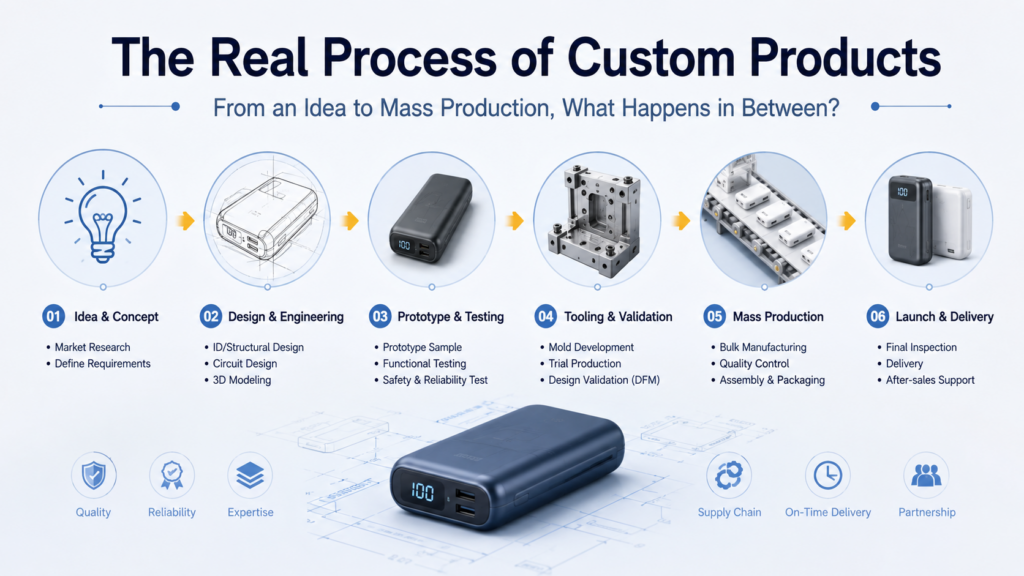
Understanding this journey is crucial for any brand owner. It helps you avoid common pitfalls and sets you up for success. Let me explain how we navigate this path, stage by stage, helping clients manage risks and achieve their goals.
How Much Does It Cost to Develop a Custom Product?
Worried about the cost of bringing your custom product to life? Many people think it is only about materials, but unexpected expenses can quickly derail your budget. I know this fear is real for many entrepreneurs.
The cost of developing a custom product varies widely, influenced by complexity, research and development (R&D), tooling, materials, and testing. It can range from as little as $20,000 for simple items to over $1 million for complex electronics, with a significant portion often dedicated to initial design and prototyping phases. Specific cost components include ideation, industrial design, prototyping, engineering (both electrical and mechanical), testing and certifications, packaging design, and mold tooling. Employing Lean product development practices can also be instrumental in minimizing these costs effectively.
When I talk about custom product development, I see it first as a risk management exercise, and this applies directly to cost. A low upfront investment might seem good, but it often leads to much higher costs later if corners are cut. For instance, skipping detailed R&D can lead to production issues or product failures. This means rework, delays, and lost market opportunities. My team and I focus on breaking down these costs clearly. We provide free full-cycle project support, including cost analysis, to help you understand every expense. This way, you make informed decisions, balancing quality and budget effectively. We aim to balance quality and cost for optimal value, especially for brands with high technical demands.
| Cost Component | Description | Risk Management Role |
|---|---|---|
| Research & Design | Initial conceptualization, detailed engineering drawings, and functional specifications. | Reduces later design flaws and ensures feasibility. |
| Prototyping | Creating physical models to test functionality, aesthetics, and user experience. | Identifies issues early, avoiding expensive modifications during mass production. |
| Tooling & Molds | Developing specialized equipment for manufacturing unique parts (e.g., plastic injection molds). | Ensures consistent quality and efficient mass production. Critical for complex designs. |
| Materials & Parts | Sourcing and purchasing components. Quality impacts overall product performance and longevity. | Using top-tier components prevents defects and enhances product reliability. |
| Testing & Certs | Rigorous internal and external testing to meet safety, performance, and regulatory standards (CE, FCC). | Guarantees product safety and market acceptance, preventing legal issues and recalls. |
| Labor & Assembly | Costs associated with manufacturing, assembly line setup, and quality control personnel. | Skilled labor and robust QC minimize production errors and defective units. |
| Packaging Design | Creating custom packaging that protects the product and aligns with brand identity. | Protects product during shipping and enhances brand perception, reducing damage claims. |
My experience shows that investing in each of these components upfront helps avoid much larger financial risks down the line. We help optimize these costs without sacrificing quality.
Why Do Custom Products Take So Long to Produce?
Frustrated by long development timelines for your custom product? The wait can feel endless, and market windows can close fast. I have seen how impatience can lead to costly mistakes.
Custom products take time to produce due to iterative design cycles, complex engineering, mold development, rigorous testing, supplier coordination, and necessary certifications. Each stage requires meticulous attention to detail to ensure quality, safety, and market readiness before mass production can begin.
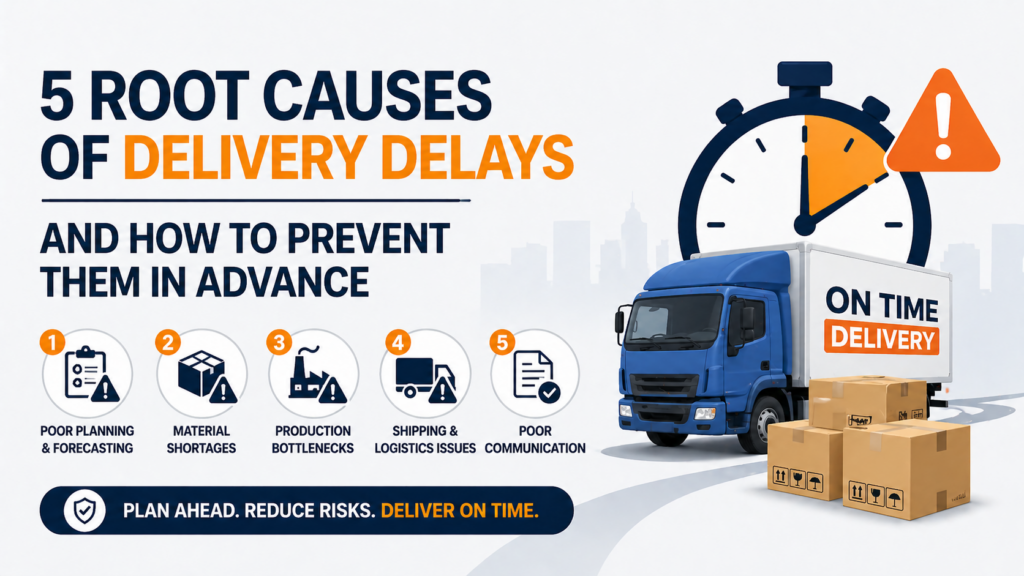
Understanding the "why" behind long timelines is another part of risk management. It is not about slowing things down; it is about getting it right. Every phase in the development process adds necessary time, with timelines varying significantly. For instance, simple products might take a few months, while complex hardware or medical devices can require a year or more. Key factors affecting these timelines include product complexity, the size of the development team, the chosen methodology, and specific testing requirements. For example, our optimized production process goes from design to 3D sampling, then mold development, pilot runs, and finally mass production. Each of these steps is critical. Rushing mold development can lead to poorly formed parts, requiring expensive fixes. Skipping pilot runs can mean thousands of defective units. I always tell clients that patience here is an investment in quality and reliability. We provide rapid technical and after-sales responses, which helps optimize timelines by quickly addressing any issues. We also offer free one-on-one guidance from concept to market, ensuring smooth transitions between stages. Our goal is to streamline the process as much as possible while maintaining our strict quality control.
| Stage of Development | Key Activities | Time Impact & Risk Mitigation |
|---|---|---|
| Concept & Spec | Defining features, market research, and detailed specifications. | Ensures the product meets market needs, reducing the risk of a product no one wants. |
| Design & CAD | Industrial design, mechanical engineering, electrical engineering, and circuit board layout. | Creates a functional, manufacturable design, preventing costly re-designs later. |
| Prototyping | Building multiple versions (functional, aesthetic) for testing and feedback. | Identifies and fixes design flaws early, avoiding expensive production line changes. |
| Tooling & Molds | Manufacturing custom molds and fixtures for mass production. This is often the longest single step. | Guarantees precise, repeatable parts, reducing defect rates in mass production. |
| Testing & Certs | Extensive testing (performance, durability, safety, environmental) and obtaining necessary certifications. | Ensures the product meets quality standards and legal requirements, preventing recalls and liabilities. |
| Pilot Run | Small-scale production to validate the manufacturing process. | Uncovers production bottlenecks and quality issues before full-scale manufacturing, saving resources. |
| Supplier Mgmt. | Coordinating multiple suppliers for various components and ensuring timely delivery of quality parts. | Minimizes delays due to part shortages or quality issues from external vendors. |
My experience teaches me that each of these stages is a vital checkpoint. They are not delays; they are necessary steps to manage the inherent risks of creating something new.
Prototype vs Mass Production: Why Products Change Before Launch?
Ever wondered why your perfect prototype often changes before mass production? It is a common puzzle, and failing to understand this can lead to big surprises. I want to explain why these shifts happen.
Products often change between prototype and mass production due to adjustments needed for manufacturability, cost optimization, material availability, scaling efficiency, or addressing issues found during rigorous testing. These changes are vital to ensure the final product is reliable, affordable, and ready for market at scale.

The gap between a prototype and a mass-produced item is all about risk management in manufacturing. A prototype proves a concept works, showing the idea is feasible. However, it is usually hand-built or made with processes not suitable for millions of units. When we move to mass production, the focus shifts to efficiency, consistency, and cost-effectiveness at scale, driven by economies of scale. For example, a component that works great in one prototype might be too expensive or too slow to assemble in thousands of units. Or, a material might be perfect for a single model but lacks the necessary durability for long-term use by consumers. My team often utilizes an OEM/ODM hybrid model to combine innovation with efficient product development. To clarify, OEM (Original Equipment Manufacturer) means the client provides the design, and the manufacturer builds it, while ODM (Original Design Manufacturer) involves the manufacturer designing and producing the product based on client requirements. A hybrid model, much like JDM (Joint Development Manufacturing) where design responsibilities are shared, allows for customization of existing designs and balances design control with efficient production. We guide clients through these necessary changes, ensuring the final product maintains its core vision while being optimized for the real world, considering factors like IP ownership, time to market, and cost. We make sure that from design to 3D sampling and mold development, every step prepares the product for smooth, high-volume manufacturing.
| Aspect | Prototype Characteristics | Mass Production Characteristics | Reasons for Change (Risk Management) |
|---|---|---|---|
| Purpose | Prove concept, test function, evaluate aesthetics. | Produce high volume efficiently, consistently, and cost-effectively. | Ensures the product is viable for commercial success and avoids production delays. |
| Materials | Often easily available, sometimes not final production-grade. | Optimized for cost, durability, availability, and regulatory compliance. | Prevents supply chain issues, reduces unit cost, and ensures product longevity. |
| Tolerance | Can be loose, small imperfections are acceptable. | Tight, precise tolerances required for consistent assembly and quality. | Reduces assembly failures, improves product reliability, and enhances user experience. |
| Assembly | Manual, time-consuming, skilled labor often needed. | Automated or semi-automated, designed for speed and simplicity. | Lowers labor costs, increases output, and minimizes human error in manufacturing. |
| Cost/Unit | Very high due to low volume and specialized methods. | Significantly lower due to economies of scale and optimized processes. | Makes the product competitive in the market and ensures profitability. |
| Testing | Basic functional tests. | Extensive testing at every stage, including stress, environmental, and life-cycle tests. | Identifies and fixes hidden flaws that could lead to product failure or recalls later. |
| Certifications | Not typically certified. | Must meet all necessary certifications (CE, FCC, RoHS, UL, etc.) before market entry. | Ensures legal compliance, market access, and consumer safety, preventing fines and legal action. |
| Manufacturability | Not primary concern; focuses on function. | Key concern; design refined for efficient, repeatable production. | Avoids bottlenecks, reduces waste, and streamlines the entire production workflow. |
My commitment is to ensure that these necessary changes are communicated clearly and managed expertly, leading to a strong, market-ready product for you.
Conclusion
Custom product development is a journey of managing risks, from idea to market. It is not just about a great design but about carefully navigating costs, timelines, and production changes. We help you succeed by making this complex process clear and efficient.