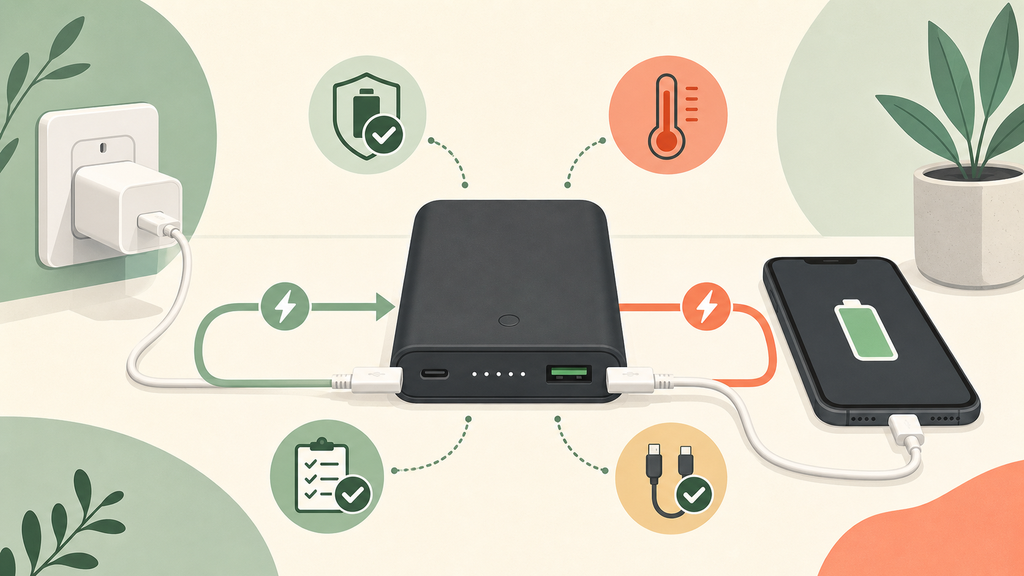
Do you ever wonder why some power banks fail fast? Many assume grading just checks capacity. But skipping this step hides bigger dangers.
Battery capacity grading filters out more than just insufficient capacity; it identifies cells with internal defects, unstable performance, high self-discharge rates, and poor cycle life. This crucial process ensures safety, reliability, and consistent power delivery, which makes it absolutely essential for any quality power bank. Battery grading, also known as battery screening or sorting, involves classifying, sorting, and quality screening batteries through a series of tests and analytical methods. This process evaluates characteristics such as capacity, internal resistance, weight, and thickness. After initial grading, batteries are often stored for a minimum of 15 days and re-tested to ensure any underlying issues become apparent before they are used in production.
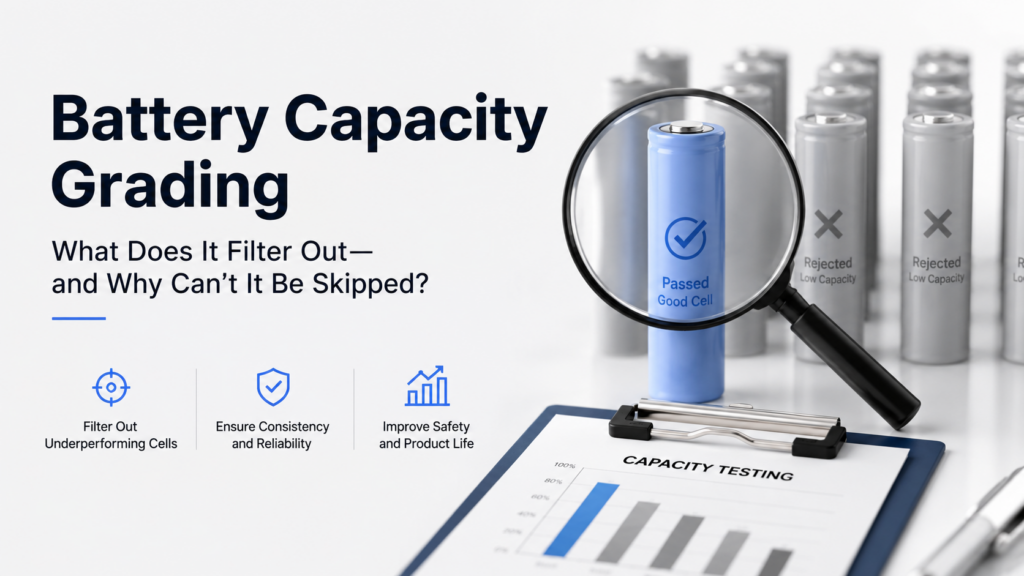
I’ve seen firsthand how cutting corners here leads to real problems. It’s not just about a power bank failing; it’s about damaging your devices, or worse, posing a safety risk. This is why I always emphasize battery consistency as the backbone of reliable charging. I will explain why this step cannot be skipped, especially when building a brand that customers trust.
Why Do Some Power Banks Show 100%… But Die So Quickly?
Frustrated when your "100% charged" power bank dies too fast? It’s a common issue. You bought it for convenience, but it fails to deliver.
The quick drain of a seemingly full power bank often comes from using ungraded battery cells. These cells may display nominal voltage but lack true energy retention, have high internal resistance, or suffer from rapid self-discharge, leading to unreliable performance and a frustrating user experience.
From my experience, this problem almost always points back to a lack of proper battery screening. When a manufacturer skips capacity grading, they might use cells that superficially seem fine. These cells might show a full charge initially, but their internal structure has flaws. For instance, some cells have higher-than-average internal resistance. High internal resistance in batteries reduces efficiency and lifespan by causing voltage drops and generating heat. This increased heat accelerates chemical reactions, contributing to faster aging and potential thermal runaway. Batteries with higher internal resistance deliver less current and exhibit more significant voltage drops under load, even if their resting voltage appears normal. This means they waste more energy as heat during discharge, reducing the effective capacity you can use. A power bank with low internal resistance will operate cooler, handle demanding loads more effectively, and provide consistent power delivery. Internal resistance is also a key indicator of a battery’s performance, closely linked to its State of Charge (SoC) and State of Health (SoH). Other cells might have micro-defects or impurities that cause a faster self-discharge rate. Imagine charging your power bank to 100% overnight, only for it to be at 80% an hour later, even without use. This happens because the cells are not holding their charge properly. Self-discharge is a natural phenomenon in all batteries, causing a slow loss of charge even when not in use. For lithium-ion batteries, typical self-discharge rates are around 1-2% per month, though this rate can increase with higher temperatures and as the battery ages. Elevated self-discharge, beyond the normal rate, can signal internal problems such as contamination, micro-shorts, material degradation, or mechanical damage. In severe cases, an elevated self-discharge rate can be an early indicator of internal short circuits or chemical instability, which are serious safety concerns. High self-discharge rates represent a significant risk, increasing the potential for issues during use and storage, including internal short circuits. We at EverGreat understand that true capacity isn’t just about the number printed on the box; it’s about the usable, stable energy stored. Without proper grading, you’re essentially getting a lottery ticket with your power bank’s performance. It’s why we invest heavily in thorough cell analysis.
Understanding the Culprits Behind Rapid Discharge
| Symptom | Underlying Issue (Ungraded Cell) | Impact on User Experience |
|---|---|---|
| Shows 100%, Drains Fast | High Internal Resistance | Inefficient energy transfer, heat loss, reduced usable power |
| Loses Charge Overnight | High Self-Discharge Rate | Power bank is empty when needed, unreliable |
| Inconsistent Charging | Inconsistent Cell Performance | Devices charge slowly or stop charging unexpectedly |
| Shorter Overall Lifespan | Premature Capacity Degradation | Needs frequent replacement, bad value |
This table illustrates that while a cell might appear "full," its functional capacity is significantly compromised without proper screening, leading to poor user satisfaction.
Why Battery Consistency Matters More Than Just “Big Capacity”?
Do you believe a huge capacity number equals a great power bank? Often, it’s a trap. Unstable power banks disappoint.
Battery consistency ensures all cells in a power bank perform uniformly, preventing premature failure of individual cells and the overall device. This stability, born from rigorous grading, is far more crucial than just a large capacity number, guaranteeing reliable and safe power delivery over time.
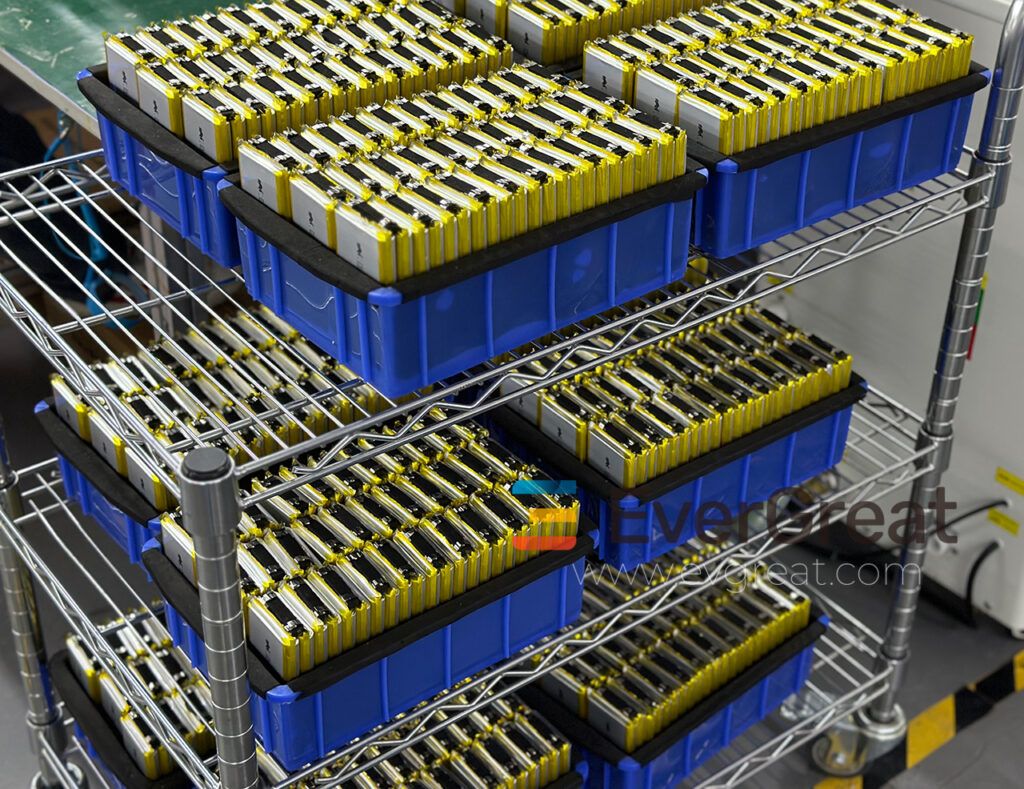
When I work with clients, especially mobile accessories brand owners or e-commerce sellers, they often ask for the biggest numbers on paper. But I always tell them that consistency trumps raw capacity any day. Battery consistency refers to the uniformity of critical performance parameters, such as voltage, capacity, and internal resistance, among individual cells within a battery pack. A power bank isn’t just one battery; it’s often a pack of multiple individual cells working together. If these cells are not consistent in their internal resistance, voltage, or actual usable capacity, the weakest link will dictate the performance of the entire pack. The "bucket effect" principle illustrates that the cell with the lowest capacity or worst performance ultimately limits the usable capacity and lifespan of the entire battery pack. One underperforming cell can drag down the whole system, leading to inefficient charging, overheating, and a drastically shortened lifespan for the entire power bank. Mismatched cells can also cause uneven current sharing and voltage sag, accelerating degradation and potentially triggering thermal runaway under heavy use. It’s like having a team where one member constantly underperforms; the whole team suffers. Inconsistent cells can lead to some cells being overcharged or over-discharged, which accelerates aging and reduces the overall lifespan of the entire battery pack. This inconsistency can also result in localized overheating or overvoltage, escalating safety risks, including thermal runaway. At EverGreat, our focus on a first-class supply chain and strict quality control means we understand the critical nature of matching cells. Manufacturers employ cell sorting by capacity and internal resistance to achieve uniformity before pack assembly. We ensure that each cell going into our products meets stringent performance criteria, not just a surface-level capacity check. This meticulous approach means our power banks perform predictably and last longer, building trust for our partners’ brands.
The Hidden Risks of Inconsistent Battery Cells
| Aspect | Consistent Cells | Inconsistent Cells |
|---|---|---|
| Performance | Stable discharge, reliable output | Uneven discharge, voltage drops, unpredictable power |
| Lifespan | All cells degrade uniformly, longer overall use | Weakest cell fails first, entire pack compromised |
| Safety | Reduced risk of overheating, balanced load | Overheating, potential for cell imbalance issues |
| User Experience | Smooth, efficient charging | Frustrating, unreliable, slower charging |
| Brand Reputation | Positive reviews, customer loyalty | Negative feedback, product returns, damaged trust |
I believe that prioritizing consistency in battery grading is not just a technical detail; it’s a fundamental commitment to product quality and customer satisfaction that directly impacts a brand’s success.
Can a Power Bank Be Safe Without Proper Battery Screening?
Is your power bank truly safe? Many focus on charging speed. But ignoring proper screening puts you at risk.
No, a power bank cannot be truly safe without proper battery screening. This process is vital for identifying dangerous internal defects like short circuits, manufacturing flaws, or unstable chemistry that could lead to overheating, swelling, or even fire, safeguarding both the device and its user.
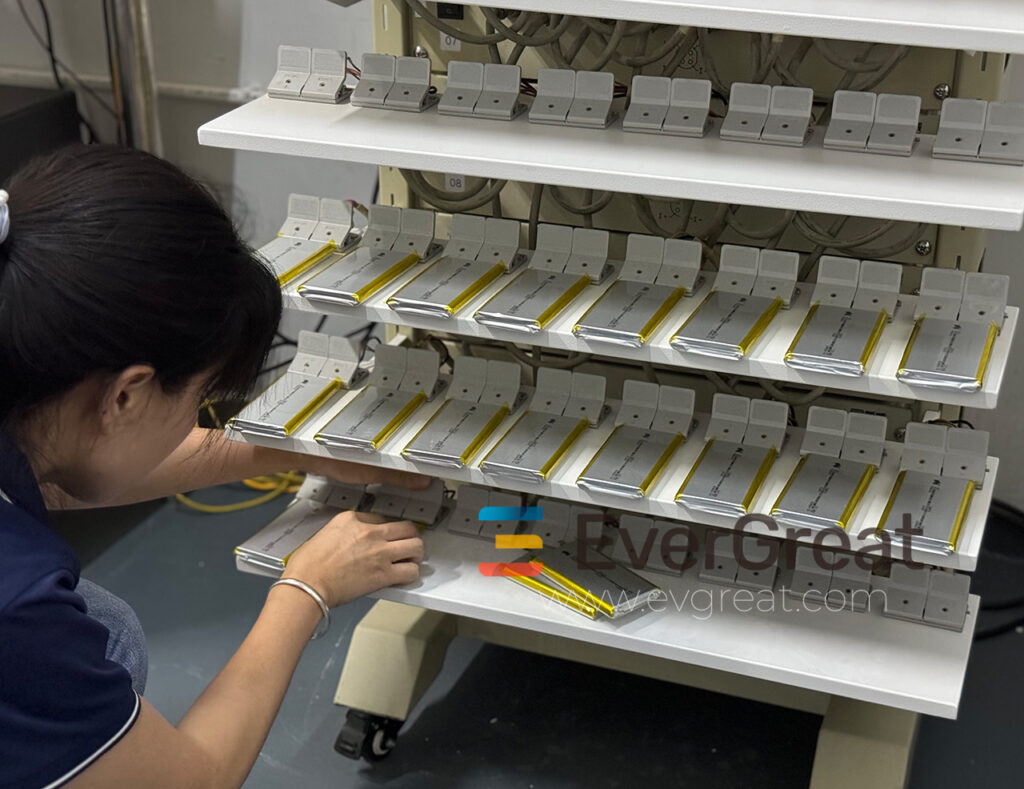
This is perhaps the most critical point I make to our clients, from wholesalers to large brands with their own designs. Safety is non-negotiable. Without thorough battery screening, you’re effectively playing Russian roulette with every power bank produced. Without thorough battery screening, power banks are susceptible to critical safety hazards. One major risk is thermal runaway, an uncontrolled, self-sustaining exothermic reaction within a battery that can rapidly increase temperature, leading to venting, smoke, fire, or explosion. Common triggers for thermal runaway include overcharging, physical damage, internal short circuits, and manufacturing defects. I’ve witnessed the devastating consequences of using unchecked cells. Internal defects, like micro-short circuits or impurities introduced during manufacturing, might not be immediately apparent. These flaws can lead to increased internal resistance, causing excessive heat generation during charging or discharging. Over time, this heat can damage the battery’s internal structure, leading to cell swelling, leakage, or in worst-case scenarios, thermal runaway—a catastrophic event that can result in fire or explosion. Battery swelling occurs due to the generation of gas inside the sealed cell, often caused by electrolyte decomposition resulting from stress, heat, damage, or poor-quality components. A swollen power bank is a significant safety warning, as internal pressure can cause the casing to rupture, potentially leading to fire, explosion, or leakage of toxic and corrosive chemicals. Using a swollen power bank can also damage connected devices due to unstable voltage output. This isn’t just about product failure; it’s about user safety and brand liability. Our commitment to strict quality control, including internal audits and third-party evaluations, is specifically designed to eliminate these risks. We know that every certification, from CE to UL, is built on the foundation of rigorous component screening. To ensure safety, power banks should meet globally recognized certifications like UL (Underwriters Laboratories), CE (Conformité Européenne), FCC (Federal Communications Commission), RoHS (Restriction of Hazardous Substances), and UN38.3 (for safe transportation). UL 2056 is a specific safety standard for power banks, addressing crucial aspects such as overcharge/discharge protection, short-circuit protection, overload testing, drop and impact resistance, and thermal safety. Many major retailers and e-commerce platforms now mandate UL certification for power bank listings. Battery quality control involves rigorous testing under simulated real-world conditions, including temperature extremes and long-term charge-discharge cycles, to identify thermal runaway risks. For me, safety isn’t a feature; it’s a prerequisite, and proper battery screening is the first line of defense.
The Critical Safety Role of Battery Screening
| Safety Aspect | Importance of Screening | Risk Without Screening |
|---|---|---|
| Overheating | Detects high internal resistance, prevents heat buildup | Uncontrolled heat, component damage, reduced lifespan |
| Thermal Runaway | Identifies internal short circuits, chemical instability | Risk of fire, explosion, severe user injury |
| Swelling/Leakage | Filters cells with structural defects, gas buildup potential | Physical damage to device, chemical exposure, device malfunction |
| Device Damage | Ensures stable voltage and current delivery to connected devices | Voltage fluctuations, overcurrent, damage to smartphones/tablets |
| Brand Reputation | Builds trust, ensures product reliability and user safety | Recalls, lawsuits, irreparable damage to brand image |
I cannot stress enough that for any brand owner, e-commerce seller, or distributor, understanding the importance of safety through proper screening is paramount. It protects customers and, ultimately, the brand itself.
Conclusion
Battery capacity grading does more than check numbers; it ensures safety, consistency, and true performance. Skipping this crucial step risks unreliable devices, rapid draining, and serious safety hazards for users, making it an essential quality control measure.