Do you worry about your new power bank failing you? Don’t let a bad start ruin your charging experience. I make sure my new power banks are ready for anything.
When you get a new power bank, start by checking for any damage. Then confirm its real capacity and charging speed. Also, look for safety signs. These steps help make sure your device is reliable and safe to use.
Getting a new power bank feels exciting. But before you plug in, a few quick checks can save you trouble later. I always take a moment to look things over. This makes sure my power bank is safe, fresh, and ready to work. Let’s look closer at what I do when I open a new device.
What should you check first when opening a new power bank?
Worried about product defects? Don’t let a faulty device surprise you. I always check my new power banks carefully right after opening the box.
When opening a new power bank, first do a visual check for damage. Next, smell the device for any unusual odors. Then, locate the batch number. These checks help you confirm the power bank is safe and fresh.
Inspecting the Exterior and Interior Indicators
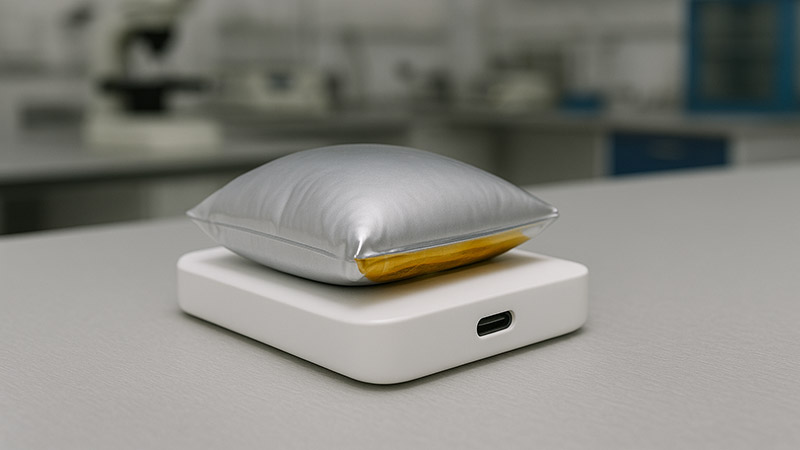
I believe first impressions matter a lot. My first step is always a visual check. I look for any signs of damage on the casing. This includes cracks, dents, or loose parts. Sometimes, shipping can be rough. A damaged case can mean internal problems. I also pay close attention to the ports. They should be clean and straight. Bent pins can cause issues. I also check for bulging, which can indicate a swollen battery, a serious safety concern. A swollen power bank poses risks such as fire, leakage of harmful chemicals, or even explosion. A professional trick I learned is to smell the device. I bring it close to my nose. If I smell anything odd, like a sweet or chemical odor, it is a bad sign. This could mean electrolyte leakage from a damaged cell. Cell damage can happen during assembly or shipping. Such a smell tells me the power bank might not be safe. I then check for the batch number. This number tells me when the power bank was made. I want to make sure the power bank has not been sitting in a warehouse for too long. A fresher product often means better battery health. The batch number is typically found on the packaging, under the battery compartment (if accessible), or printed on the device itself. Contact the manufacturer to understand how to interpret the batch number and determine the manufacturing date. These simple steps give me peace of mind. They help me know my new power bank is good.
| Check Type | What to Look For | Why It Matters |
|---|---|---|
| Visual Check | Cracks, dents, loose parts, clean ports | Indicates physical damage or poor assembly |
| Odor Check | Sweet or chemical smell | Suggests electrolyte leakage, cell damage |
| Batch Number | Recent manufacturing date | Shows product freshness and optimal battery life |
How do you confirm the power bank’s real capacity and charging speed?
Are you unsure if your power bank delivers what it promises? Don’t settle for less than advertised performance. I always verify my power bank’s actual capabilities.
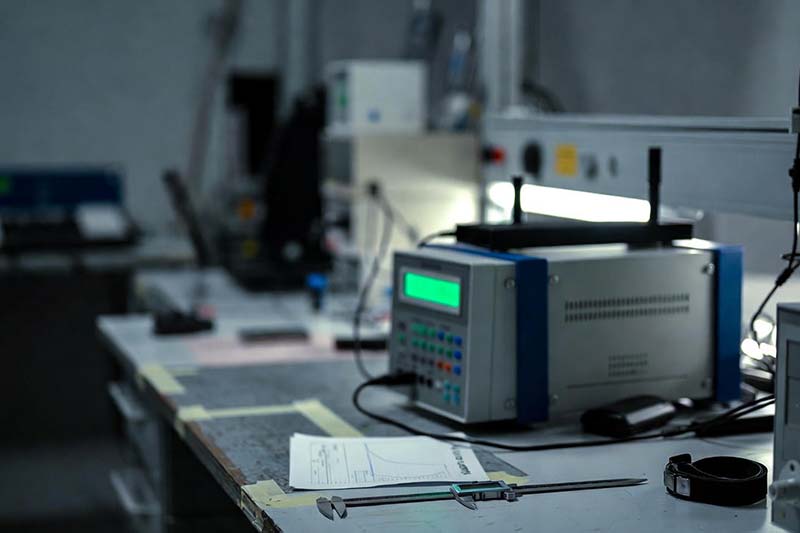
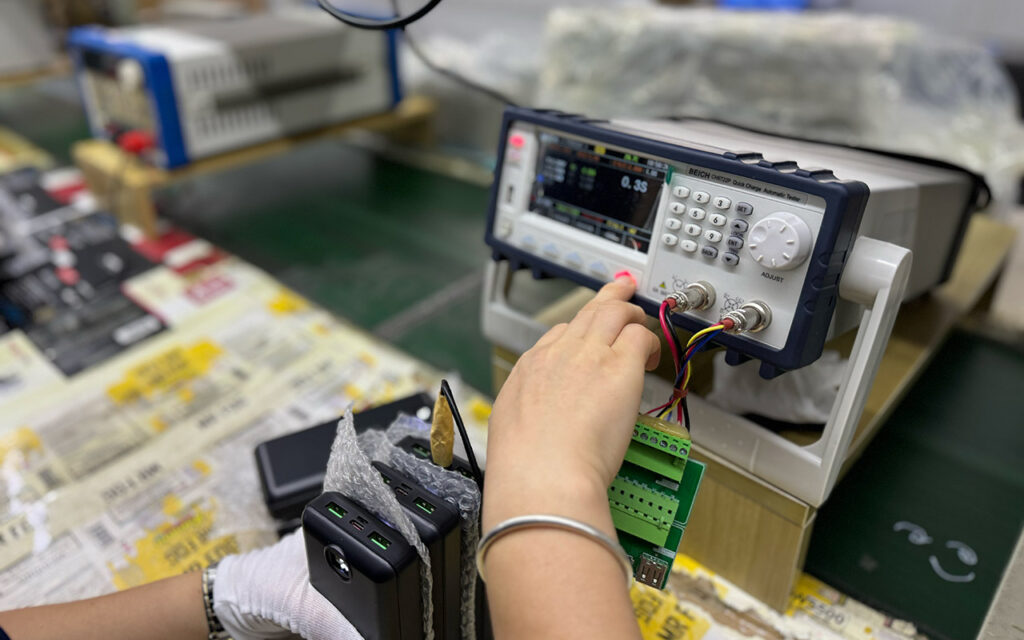
To confirm a power bank’s real capacity, I use a USB tester to monitor energy discharge during a full cycle. For charging speed, I measure the output current and voltage with the same tester. This helps me see if it meets its claimed specifications.
Verifying Specifications Through Testing
It is one thing for a power bank to claim certain specs. It is another for it to deliver. I use tools to check the real capacity and charging speed. For capacity, I need to discharge the power bank fully. Then I recharge it while using a USB power tester, also known as a USB power meter or multimeter. This tester measures the total milliamp-hours (mAh) put into the power bank. I compare this number to the stated capacity. Keep in mind that some energy is always lost. So, the measured capacity will be a little lower. A reasonable expectation is 70-90% of the advertised capacity. Some testers allow for offline or online recording of data for more accurate measurements. If the difference is too big, the capacity is not real.
For charging speed, I use the same USB tester. I connect it between the power bank and my device. I check the voltage and current output. For fast charging, I look for specific voltage and current combinations. For example, I look for common fast-charging standards like USB Power Delivery (USB-PD) and Quick Charge (QC). USB-PD supports various voltage levels, including 5V, 9V, 15V, 20V, and with Extended Power Range (EPR), 28V, 36V, and 48V. Standard Power Range (SPR) can reach up to 100W (20V/5A), while EPR can reach up to 240W (48V/5A). My phone also shows if it is fast charging. The device being charged must also support the fast-charging protocol for it to work. If the numbers are lower than expected, the power bank might not charge as quickly. Or it might not support the fast-charging protocols it claims. I find this testing crucial. It confirms if I got what I paid for.
| Measurement Type | How I Test It | What I Look For |
|---|---|---|
| Capacity | Full discharge then recharge with USB tester | Measured mAh close to advertised capacity (70-90% is common) |
| Charging Speed | USB tester between power bank and device | Voltage and current output matching fast charge protocols (e.g., 5V/3A, 9V/2A) |
| Protocol Check | Observe device screen or tester for fast charge indicators | Confirmation of active fast charging (e.g., "Fast Charging") |
What safety signs show your new power bank is reliable?
Are you worried about safety with your new power bank? Don’t risk using an unreliable device. I always look for clear signs that my power bank is safe and dependable.
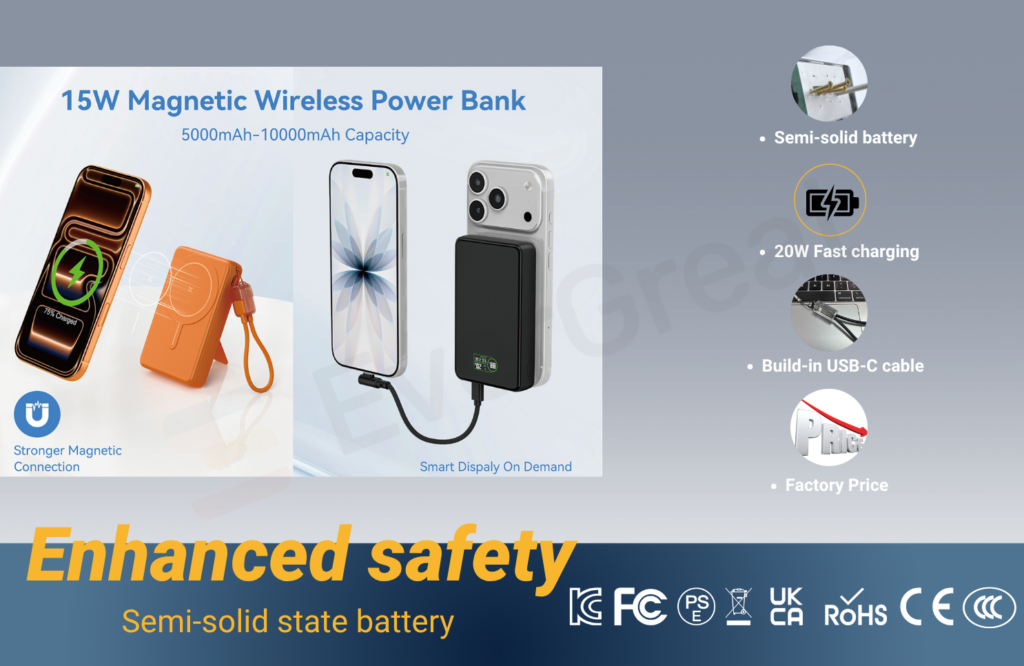
Reliable power banks show proper safety certifications, like CE, FCC, or RoHS. They also come from reputable brands with clear warranties. I check for good build quality and read reviews from other users. These signs tell me the power bank is safe.
Identifying Trustworthy Power Bank Features
Safety is my top priority for any electronic device. Especially with batteries, I need to know my power bank is safe. The first thing I check for are safety certifications. These are symbols usually printed on the power bank itself or on its packaging. I look for CE, FCC, RoHS, and sometimes UL marks. These mean the product meets specific safety standards.
- CE: Conforms to European safety standards.
- FCC: Complies with Federal Communications Commission regulations for electronic devices sold in the United States.
- RoHS: Restriction of Hazardous Substances, meaning it limits the use of certain dangerous materials.
- UL: Indicates that Underwriters Laboratories has tested representative samples of a product and determined that it meets UL’s requirements. UL 2056 is a specific UL standard for power banks.
If these are missing, I become wary. I also look for UN 38.3 (for air transport of lithium batteries), PSE (Japan), KC (Korea), and BIS (India) certifications. Next, I consider the brand. I prefer brands known for quality and customer support. A good brand often means better internal components and strict quality control. I also check for a clear warranty. A company that stands behind its product with a good warranty usually makes reliable goods. A long warranty means they trust their own quality.
I also feel the product. It should feel solid, not flimsy. The materials should look good. Bad materials can mean cheaper internal parts too. I also look for heat dissipation. Many good power banks have designs to help heat escape. Overheating is a big safety risk. Some power banks have temperature sensors and over-temperature protection circuits that shut down the device if it gets too hot. Overheating can be caused by high power output, poor ventilation, or charging in hot environments. I also look at the manual. A good manual has clear instructions and safety warnings. Finally, I read online reviews. I look for common complaints, especially about safety issues like overheating1 or swelling. If many people report problems, I avoid that power bank. It is important to note that overcharging, poor manufacturing, age and wear, physical damage, and extreme temperatures can cause a power bank to swell. A swollen2 power bank can leak harmful chemicals, catch fire, or explode. If a power bank is swollen, stop using it immediately, place it in a safe location, and dispose of it properly at an e-waste recycling center. Do not attempt to repair it. Some power banks are designed for low-temperature operation and have built-in heating functions. Ensure the power bank has overcharge protection3 to prevent damage. These steps help me choose a power bank I can trust.
| Safety Sign | What It Tells Me | Why It’s Important |
|---|---|---|
| Certifications | CE, FCC, RoHS, UL marks present | Meets international safety and quality standards |
| Reputable Brand | Well-known company with good reputation | Implies better components, strict QC, and support |
| Clear Warranty | Manufacturer offers a guarantee | Shows confidence in product quality and reliability |
| Build Quality | Solid feel, good materials, heat dissipation | Indicates durable design and better thermal management |
| User Reviews | Positive feedback, no recurring safety issues | Real-world experience confirms product safety |
Conclusion
I always check a new power bank for damage and proper function. I confirm its real capacity and look for safety signs. These steps help me ensure I have a safe and reliable device for daily use.
-
Understanding overheating in power banks is crucial for safety. Explore this link to learn about causes and preventive measures. ↩
-
Understanding the risks of a swollen power bank is crucial for your safety and device longevity. ↩
-
Overcharge protection is vital for device safety. Discover how it functions and why it’s essential for your power bank. ↩