A swollen power bank is not just ugly or inconvenient. It can signal battery damage, gas buildup, and a real safety risk.
A power bank swells when its lithium-ion battery cells are stressed, damaged, overheated, overcharged, deeply discharged, aged, or poorly manufactured. Stop using a swollen power bank immediately, keep it away from heat and flammable materials, and follow local battery recycling or disposal rules.
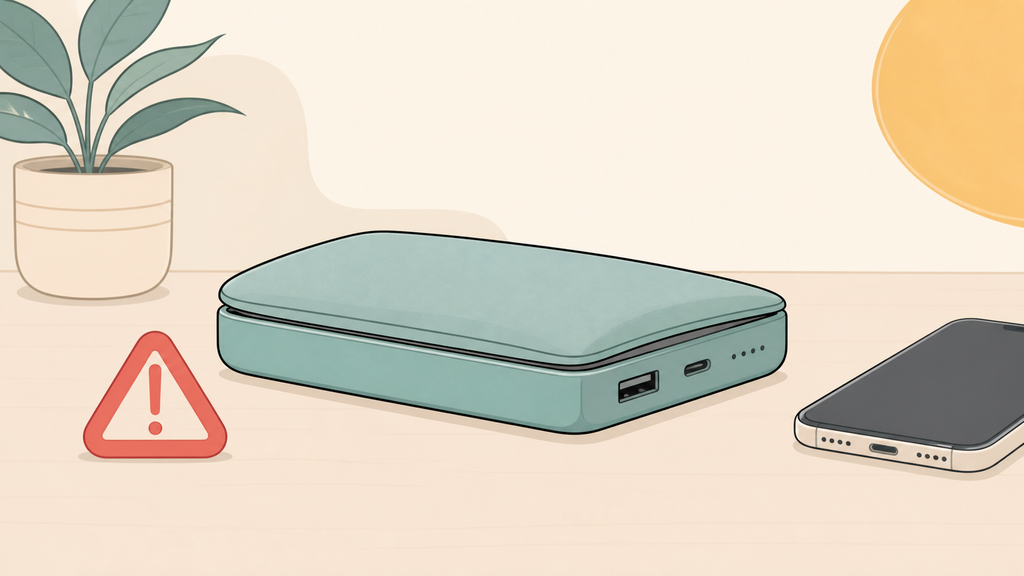
Many users first notice a raised case, separated seam, warped shell, or power bank that no longer sits flat. For a consumer, the question is urgent: is it still safe? For a brand or importer, the question goes deeper: what went wrong in cell selection, protection design, charging behavior, storage, or quality control? A swollen power bank deserves careful handling, not casual troubleshooting.
What Causes A Power Bank To Swell?
Swelling usually means the battery cell has changed internally. The outside case is only showing the symptom.
Power bank swelling is commonly caused by battery aging, overheating, overcharging, deep discharge, physical damage, low-quality cells, poor protection circuits, or long storage in poor conditions. Gas can build inside lithium-ion cells, pushing the power bank shell outward.
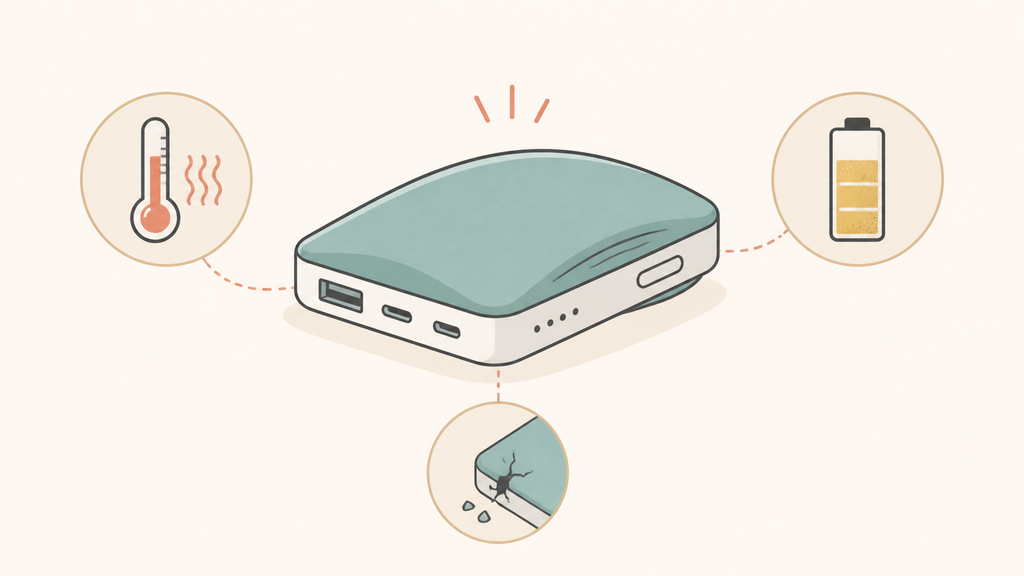
Most consumer power banks use lithium-ion or lithium-polymer cells. These cells are efficient and common, but they must be managed carefully. When a cell is stressed or damaged, internal chemical reactions can create gas. The gas has nowhere easy to go, so the pouch cell expands and pushes against the housing. In cylindrical-cell designs, the enclosure may bulge differently, but the warning is still serious.
Heat is one of the biggest triggers. A power bank left in a hot car, charged under a pillow, used in direct sun, or stored in a warehouse with poor temperature control can age faster. Apple notes that lithium-ion batteries are affected by temperature and that high heat can permanently reduce battery capacity.1 The same general principle applies to power banks: heat accelerates battery stress and can expose weak design or poor-quality cells.
Overcharging and deep discharge are also important. A good power bank should include protection against over-voltage, over-current, short circuit, over-temperature, and abnormal charging behavior. But if the protection circuit is poorly designed, the firmware is weak, the cells are inconsistent, or the user repeatedly drains and stores the product at very low charge, the battery can degrade faster.
Physical damage is another common cause. Dropping a power bank, crushing it in luggage, bending a slim magnetic model, or using a swollen device after the case starts separating can make the situation worse. The FAA warns that damaged, defective, or recalled lithium batteries should not be carried on aircraft unless properly handled under specific rules.2 That is a useful reminder: once a lithium battery is damaged, it should not be treated like normal cargo or a normal accessory.
| Cause | What it means | Practical warning |
|---|---|---|
| Heat exposure | Cell chemistry ages faster | Avoid hot cars and direct sun |
| Aging | Capacity and stability decline over time | Replace old, degraded products |
| Overcharge stress | Battery is pushed beyond safe limits | Protection design matters |
| Deep discharge | Cell voltage drops too low | Avoid long storage at empty charge |
| Physical damage | Internal layers may be harmed | Stop using after impact or swelling |
| Poor cells | Inconsistent chemistry or assembly | Supplier qualification is critical |
In my experience, swelling is rarely a single-cause problem. It is often a chain: low-grade cells, weak thermal design, long storage, aggressive charging claims, and unclear user guidance. For brands, this is why battery quality cannot be separated from packaging, manuals, logistics, and after-sales policy.
Is A Swollen Power Bank Dangerous?
Some users keep using a swollen power bank because it still charges. That is exactly the risky part.
Yes, a swollen power bank can be dangerous. It may overheat, leak, smoke, catch fire, or fail unexpectedly. Do not charge it, use it, puncture it, press it flat, or put it in household trash. Move it away from flammable materials and arrange safe disposal.
The safest advice is simple: stop using it. A swollen power bank is not a cosmetic defect that can be ignored. If the case is expanding, the cell inside is no longer behaving normally. Pressing the shell back into shape does not fix the chemistry. Puncturing it can release gas, electrolyte, heat, or flame. Charging it again can add more stress to an already compromised battery.
UL Research Institutes advises consumers to watch for warning signs such as excessive heat, odor, leakage, swelling, or change in shape when using products with lithium-ion batteries.3 Swelling is on that warning list for a reason. It means the product should be treated cautiously even if it has not failed dramatically.
The next question is where to put it. Keep the swollen power bank away from beds, paper, fabric, direct sunlight, children, and other batteries. If it is hot, smoking, hissing, leaking, or smelling unusual, the user should follow local emergency guidance. If it is cool and stable, it still should not be stored casually in a drawer for months. Contact local battery recycling services, municipal waste guidance, or the seller for proper disposal instructions.
Shipping and returns also need care. Brands should not casually ask customers to mail swollen lithium battery products back through normal channels. Many logistics providers have strict rules for damaged or defective lithium batteries. A safer after-sales process may involve photos, batch information, serial number capture, and local disposal guidance instead of physical return.
| User action | Safe or unsafe? | Why |
|---|---|---|
| Keep using it | Unsafe | More charging can increase risk |
| Press it flat | Unsafe | Can damage the cell further |
| Puncture it | Unsafe | Can release gas, heat, or flame |
| Throw in normal trash | Unsafe | Waste handling fire risk |
| Isolate and seek disposal guidance | Safer | Reduces immediate exposure |
For buyers and brands, the safety message should be printed clearly in manuals and support scripts. Customers should know that swelling, leakage, odor, smoke, or unusual heat are stop-use signs. A clear policy is not only safer; it also makes the brand look responsible when a rare failure happens.
How Can Buyers Reduce Swollen Power Bank Risk?
Swelling risk cannot be reduced by marketing language. It must be reduced through design, cell control, testing, and honest use-case planning.
Buyers can reduce swelling risk by choosing qualified cells, reliable protection circuits, good thermal design, realistic charging specifications, proper storage control, transport compliance, clear manuals, and supplier testing records for temperature, cycling, short circuit, overcharge, and aging behavior.
The first buyer question should be about cells. What cell type is being used? Who is the cell supplier? What grade is the cell? Are the cells new, consistent, and traceable? A small difference in cell quality can become a big difference after months of storage, high-temperature shipping, or repeated fast charging.
Protection design matters just as much. A power bank should not depend on the cell alone. The battery management system, IC selection, PCB layout, temperature sensing, firmware, and enclosure design all work together. When a supplier quotes a very low price for a high-capacity or fast-charging model, I usually ask what has been simplified. Sometimes the saving is harmless. Sometimes it comes from the exact areas that protect long-term reliability.
Thermal testing is especially important for slim, magnetic, laptop-capable, or high-output power banks. These products can be attractive, but they concentrate heat in a small space. If a product is designed for 30W, 65W, or 100W charging, buyers should ask how the product behaves under continuous load, high ambient temperature, input charging, output charging, and simultaneous multi-port use.
Storage and logistics are often ignored. A good product can still suffer if it sits for months in high heat, ships with poor charge level control, or moves through warehouses with weak environmental management. For large orders, buyers should discuss production date, shipping schedule, state of charge, carton labeling, and inspection timing.
| Buyer checkpoint | Why it matters |
|---|---|
| Cell supplier and grade | Reduces inconsistent battery behavior |
| Protection circuit design | Prevents abnormal charging and discharge |
| Thermal test records | Shows heat behavior under real use |
| Aging and cycle tests | Helps predict long-term reliability |
| Storage charge level | Reduces deep-discharge risk |
| Transport compliance | Avoids unsafe logistics handling |
| Manual warnings | Helps users respond correctly |
| After-sales policy | Handles rare failures responsibly |
For EverGreat projects, we usually encourage customers to match ambition with engineering. A premium high-output power bank needs stronger testing and better documentation than a simple 10,000mAh phone model. A promotional model still needs safe cells and protection, even if the price target is tight. The product category is useful and popular, but it must be treated with respect.
The best prevention strategy is not one magic certification or one attractive cell claim. It is a system: qualified components, realistic design, controlled production, practical testing, safe storage, and clear customer communication. That is how a brand reduces swelling risk before the product reaches users.
Conclusion
A swollen power bank is a stop-use warning. Handle it carefully, dispose of it properly, and prevent future risk through better battery design and sourcing.
-
Apple, Batteries – Maximizing Performance. ↩
-
Federal Aviation Administration, PackSafe – Lithium Batteries. ↩
-
UL Research Institutes, Know Your Battery. ↩