Are you feeling the pressure from new compliance rules for power banks? Many sellers face increasing hurdles, making market entry tougher than ever before.
The entry barrier for power bank compliance is rising. It is no longer just about basic certificates. True compliance now demands verifiable consistency from design to mass production. This includes a deep understanding of regulations like EU Battery Regulation 2023/1542, not just having a paper certificate.
The landscape of power bank compliance is changing fast. What was once a simple checklist is now a complex journey. It affects every step of product creation. We must look beyond surface-level claims to truly understand new market demands.
EU Battery Regulation 2023/1542 Explained: What It Means for Power Bank Sellers in 2026?
Do you sell power banks in the EU? New rules are coming in 2026 that could change how you do business. The EU Battery Regulation 2023/1542, which officially entered into force on August 17, 2023, replacing the 2006 Batteries Directive, sets a new standard. Ignorance is no longer an option.
The EU Battery Regulation 2023/1542 means power bank sellers will face stricter rules. These cover sustainability, safety, and traceability. It demands deep supply chain checks and clear product information from 2026 onwards.
We are seeing a big shift in European regulations. The EU Battery Regulation 2023/1542 is a game changer. It moves beyond just safety. This new law focuses on the entire life cycle of batteries, including those in power banks, emphasizing sustainability, safety, and traceability. It introduces mandatory due diligence obligations for economic operators, requiring them to identify, prevent, mitigate, and account for human rights, social, and environmental risks in their raw material supply chains (e.g., cobalt, lithium, nickel, graphite). These obligations begin for some aspects as early as 2024, with full mandatory enforcement for supply chain due diligence starting August 18, 2025. For power bank sellers, this means more than just a new sticker. It means rethinking how products are designed and made. This includes what materials we use and how we track them.
What the New Regulation Covers:
- Sustainability Requirements: This is a big part of the new rule. It sets mandatory minimum levels for recycled content in new batteries, specifically for materials like cobalt, lithium, and nickel. While initial targets for portable batteries (including many power banks) apply from 2028, these requirements become more stringent for other battery types from August 18, 2031 (e.g., 16% for cobalt, 6% for lithium, 6% for nickel), with further increases by 2036. This means we need to know exactly what goes into our power banks and work with suppliers who can prove their materials meet these new standards. This is a big change from simply buying components based on price.
- Safety and Performance Rules: Of course, safety remains key. The regulation makes sure batteries perform well and are safe for users. This means even more rigorous testing. It also needs clearer declarations of performance. We need to show that our products do what they say. They must do so safely, every single time.
- Traceability and Information: This is perhaps the most challenging part. The regulation requires a "digital battery passport" (DBP), intended to provide structured digital records of a battery’s identity, composition, performance, sustainability, and end-of-life handling, typically accessible via a QR code. While the DBP becomes mandatory for larger batteries (EV, industrial, LMT) from February 18, 2027, power banks, as portable batteries, will face new labeling requirements (capacity, chemistry, hazard info) from August 2026 and removability/replaceability requirements from February 18, 2027. This means tracking components from start to finish and having robust systems to manage this data. This transparency is new. It asks for a much deeper look into our supply chain than before.
I remember a client last year. They thought their power bank was ready for EU sales. But they had not considered the upcoming changes. We helped them review their material sourcing. We also set up new tracking methods for their components. This prepared them for these new rules. It showed them that early planning saves big problems later.
CE, RoHS, UN38.3: Which Certifications Are Actually Required vs. Often Misunderstood?
Are you confused about which power bank certifications truly matter? Many certificates exist, but knowing their real purpose is key. Misunderstandings can lead to big problems.
CE, RoHS, and UN38.3 are vital for power banks. CE shows compliance with EU health, safety, and environmental protection laws. RoHS limits hazardous substances. UN38.3 is crucial for safe lithium battery transport. However, a certificate alone does not guarantee compliance if production varies from tested samples.
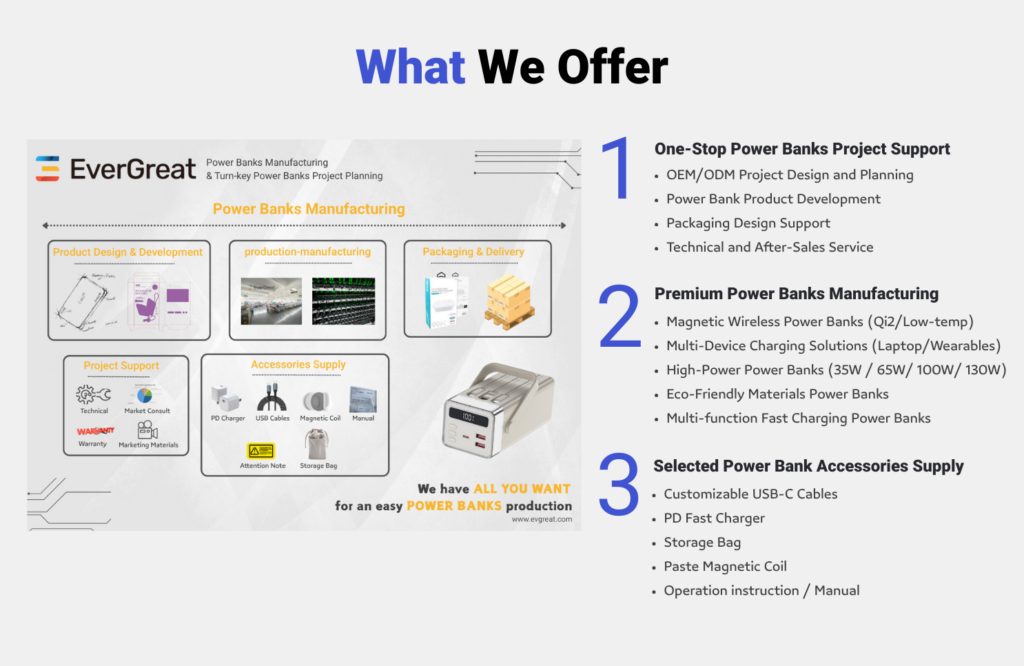
We often see buyers looking for specific certifications. They ask for CE, RoHS, or UN38.3. These are important. But the real challenge is not just getting them. It is understanding what they mean in practice. A product can have a certificate. Yet, it might still carry risk. This happens if the certification does not truly match the final design. It also applies if it does not match the materials or mass production conditions. This is a common pitfall we help clients avoid.
Breaking Down Key Certifications:
- CE Certification (Conformité Européenne): This is a manufacturer’s self-declaration that a product complies with EU health, safety, and environmental protection standards. It is required for sales in the European Economic Area. People often misunderstand CE. They think it is a quality mark. It is not. It means the product conforms to relevant directives and regulations. But the manufacturer must ensure ongoing compliance. This involves technical files and regular checks. If the product changes, the CE needs a review.
- RoHS (Restriction of Hazardous Substances): This directive (2011/65/EU) restricts the use of specific hazardous materials such as lead, mercury, cadmium, hexavalent chromium, polybrominated biphenyls (PBB), and polybrominated diphenyl ethers (PBDE). It applies to electrical and electronic equipment, including power banks. RoHS compliance ensures your power bank is safer for the environment and also protects workers. The common mistake is to assume a "RoHS compliant" component means the final product is compliant. We must check all components and the entire manufacturing process, as RoHS compliance is often a prerequisite for CE marking.
- UN38.3 (United Nations 38.3): This is a critical test standard (UN Manual of Tests and Criteria, Section 38.3) for the safe transportation of lithium batteries by air, sea, road, and rail. It involves a series of rigorous tests, including altitude simulation, thermal cycling, vibration, shock, external short circuit, impact, overcharge, and forced discharge. A valid UN38.3 report is a must-have for international shipping. Without it, your shipments can get stuck. Many suppliers have this certificate. But it must be for the exact battery cell and design used in your final product. Changes in battery type or design can invalidate an existing UN38.3 report.
I once worked with a startup. They sourced power banks. Their supplier provided all the certificates. But when we dug deeper, the UN38.3 report was for a different battery model. This meant their product could not be shipped legally. We had to fix this by re-testing the correct battery. This caused delays and extra cost. It showed how vital it is to verify what certificates truly cover.
Why Compliance Costs Are Rising: Hidden Expenses Behind Certified Power Banks?
Are you seeing your power bank compliance costs go up? It is not just about expensive tests. Beyond EU regulations, new national standards, like China’s GB 47372-2026, are also contributing to this trend. There are hidden expenses that many overlook.
Compliance costs are rising due to more than just testing. Hidden expenses include stricter material sourcing, continuous quality control, supply chain audits, and extensive documentation. These factors ensure consistent compliance, which demands greater investment across the entire production process.

When we talk about compliance costs, most people think of laboratory testing fees. These are certainly a part of it. But they are only the tip of the iceberg. The real reason costs are climbing is because compliance is no longer a one-time event, further exacerbated by evolving global standards. For instance, China’s new mandatory national standard, GB 47372-2026 "Safety Technical Specification for Power Banks," issued on March 31, 2026, and fully enforced on April 1, 2027, is expected to increase manufacturing costs by approximately 30% due to enhanced intrinsic battery safety and intelligent management requirements. Compliance is now woven into the entire product lifecycle, from the first design idea all the way through to mass production. We have learned that cutting corners here can lead to much bigger problems later, including product recalls, fines, and damage to a brand’s reputation.
Uncovering the Hidden Costs of Compliance:
- Component Selection and Verification: This is where it all begins. Choosing compliant components costs more. We must select materials that meet specific environmental and safety standards. Then, we need to verify their compliance. This means getting certifications from our component suppliers. Sometimes, we even need to conduct our own tests on incoming materials. This adds time and cost. But it ensures the final product will pass its checks.
- Production Consistency and Quality Control: Achieving compliance is one thing. Maintaining it across thousands of units is another, especially with new requirements like the nail penetration test for enhanced intrinsic battery safety, as mandated by standards like China’s GB 47372-2026. This requires robust quality control systems, with checks at every stage of manufacturing, including in-line inspections and final product audits. Any deviation in materials or processes can break compliance. Investing in automated checks and skilled QC staff is expensive, but it is essential for consistent, verifiable compliance and intelligent management requirements.
- Documentation and Traceability Systems: Modern regulations demand extensive documentation. We need to keep records of every component. We must also track every test result. This includes production batches. Setting up and maintaining these systems is a significant cost. It involves software, training, and manpower. Yet, this traceability is vital. It allows us to prove compliance and address issues quickly if they arise.
- Supplier Audits and Relationship Management: We cannot just trust our suppliers’ claims. We need to audit them regularly. This ensures they follow our standards. This includes checking their quality processes. It also means reviewing their own compliance efforts. Building strong, trusting relationships with compliant suppliers takes time and effort. This is a continuous investment. It ensures our entire supply chain is robust.
I helped a client understand their true compliance spending. They were only budgeting for final product tests. We showed them how their choice of a cheaper, less reliable battery supplier was costing them more in QC failures. It was also costing them more in re-testing. Switching to a vetted supplier with a slightly higher unit cost actually saved them money overall. It gave them better peace of mind.
Conclusion
Compliance is now a critical part of power bank development. It demands deep understanding and consistency from start to finish. Focus on verifiable compliance, not just paper certificates, to truly succeed.